
Aileen Wuornos And Charlize Theron In Monster Twenty Years Later
One woman died on a gurney in a Florida prison. Another walked across the Oscar stage in a pale gown and thanked a room full of stars.

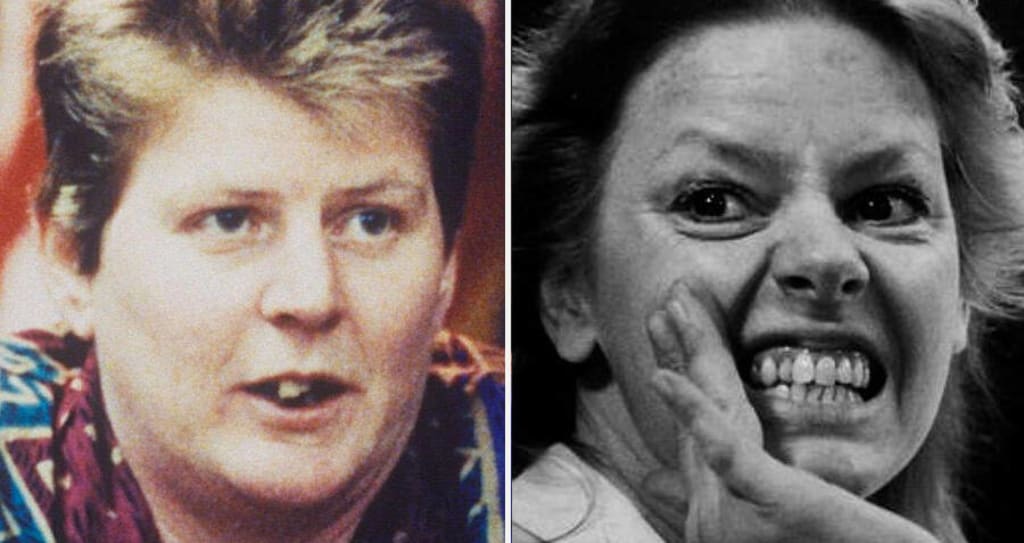
A Mugshot And An Oscar Stage
Aileen Wuornos is one of the most infamous true crime female names in America, a hitchhiking sex worker who killed seven men along Florida highways between the late nineteen eighties and early nineties. She said at first that she shot in self-defense, then changed her story multiple times, and the media turned her into something that really wasn't her.
Charlize Theron is the woman who stepped into a very serious role in a stage of her career where she wanted to transform. When she took the lead in the film Monster, she did something that made people lean forward. She did not just pretend. She vanished into Aileen.
Sometimes it feels like the real monster is not the killer, but the world that grew around her story.
This is a look at both women at the same time, the real Aileen Wuornos and the Charlize Theron performance that changed how people talk about female serial killers, true crime, and even what an actress is allowed to look like on screen.
Who Aileen Wuornos Was Before The Headlines
Before there were documentaries, podcasts, and the film Monster, Aileen was a kid who never had a steady floor under her feet. She was born in Michigan in 1956. Her father was in prison and later died there. Her mother was young and overwhelmed and left Aileen and her brother behind. They moved in with grandparents who were strict, angry, and often cruel.
By her early teens, she was living on the edge of her own home. She spent long nights outside, smoking, drinking, clinging to friends who were just as lost. She traded sex for food, cigarettes, and rides, not because she wanted to, but because survival had become a twisted kind of job. Reports from those years talk about abuse, pregnancy as a young teenager, and then being pushed out of the house altogether.
If you grow up learning that every adult is a threat, the whole world starts to look like a dark parking lot.
She drifted through small towns, slept in cars, in the woods, in motels when she could. Hitchhiking and sex work turned into her way to keep moving. When she finally landed in Florida, she was already shaped like a storm. She worked the highways, picked up clients, drank hard, and carried a lifetime of fear in her body.
Between 1989 and 1990, seven men ended up dead, their bodies found off the side of Florida roads. Police linked the killings to Aileen, arrested her outside a biker bar, and eventually confessed to a string of murders. The courts sentenced her to death. She was executed in 2002.
By that time, the cameras had turned her into something else. A mugshot. A sound bite. A symbol people could argue about without ever thinking about that homeless teenager in the snow.
If you want to see Aileen in her own words, there is a haunting interview collection here:
How Monster Turned Pain Into A Performance
Writer and director Patty Jenkins looked at this whole mess of a life and decided she did not want a simple killer movie. Monster focuses on Aileen’s last stretch in Florida, her relationship with a young woman named Selby, and the way every chance at love slides back into violence. The film gave you a little taste of what it was like to be inside the mind of a trauma patient and a sociopath.
It does not excuse the murders. People die onscreen and it is brutal. But instead of treating her like a horror movie creature, the film shows a human being who has been cut open over and over by the world and finally starts cutting back.
Monster is not asking you to cheer for Aileen. It is asking you to sit with how uncomfortable it feels to understand her for even one second.
The movie arrived before the new wave of true crime streaming series, yet it already understood something we still wrestle with. How do you tell the story of a killer without turning them into a trading card or a Halloween costume.
If you want to see the performance again with a critic’s eye, this breakdown of her acting in the film is worth watching:
How Charlize Theron Became Aileen Wuornos
For Charlize Theron, Monster was the moment everything flipped. Before this, Hollywood often cast her as the glamorous partner standing next to a male lead. Taking Aileen meant burning that polished skin on purpose.
She gained weight. She let makeup artists bleach and thin her eyebrows. She wore dentures that flattened her smile and roughened her speech. Layers of ink and color aged her face and skin. Her hair looked fried, greasy, and sun beaten. Then she did the hardest part. She watched hours of Aileen on tape, copied the way she moved her mouth, the restless eyes, the way her shoulders never quite relaxed, like she was always waiting for someone to swing.
Charlize did not chase ugly for shock value. She chased it because that is where the truth of this woman lived.
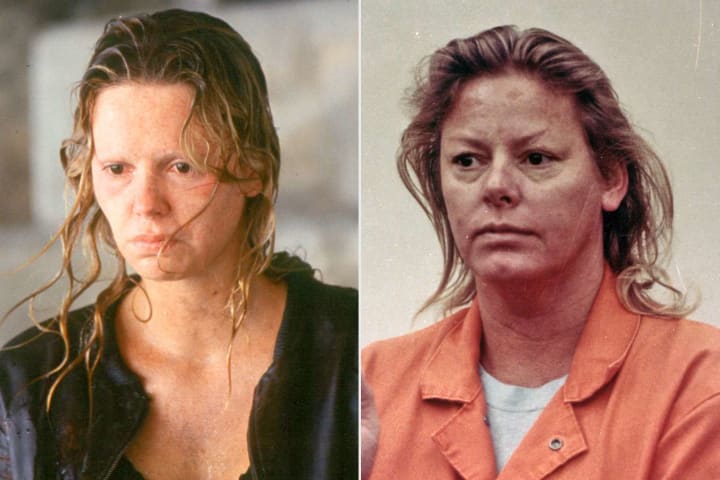
On my own site, I break that entire transformation down detail by detail here in Charlize Theron Monster makeup transformation.
There is something wild about the idea that a person who looks like a perfume ad can also disappear into a highway drifter who sleeps under billboards.
Her work in Monster earned her the Academy Award for Best Actress and a long list of other honors. More important than the trophies, it shifted how casting directors and viewers saw her. After this, she was not just the pretty face. She was the person you call when you need a character that scares you and breaks your heart in the same frame.
If you want a quick visual walk through of that makeup process, this video is a nice primer while you read:
Aileen Wuornos, True Crime, And The Stories We Tell
Since Monster came out, Aileen has never really left the culture. There were earlier documentaries like Aileen Wuornos The Selling of a Serial Killer and Aileen Life and Death of a Serial Killer that dug into her trial, her mental health, and the way people around her tried to profit off her name.
Now there is a new wave of attention with the Netflix documentary Aileen Queen of the Serial Killers, which threads together rare prison interviews, police voices, and people who knew her from the road. It asks if the justice system understood what it was really dealing with, or if they just wanted a neat villain.
The more we learn about Aileen, the harder it becomes to keep her in one simple box. Victim. Monster. Myth. None of them fit quite right.
At the same time, the true crime boom has turned real people into endless content. Podcasts, series, live reaction streams, social clips. Aileen shows up in music, art, and even memes. That can feel uneasy, especially when you remember there were seven dead men and a whole web of families behind those headlines.
Monster sits right inside this weird place, inside this uneasy tension. It is a scripted film that humanizes a killer at the exact moment the culture keeps turning her into a brand.
For more of my deep dives on film lore and strange trivia, you can always wander over to my hub of fun movie facts here on for the ultimate movie facts.
Why This Story Still Matters
So why write about Aileen Wuornos and Charlize Theron again, when you could stream a dozen other true crime series before lunch.
Because this pairing still tells us something raw about how we look at pain.
Aileen’s life is what happens when every safety net rips at once. Childhood abuse, poverty, addiction, a justice system that wanted a headline as much as it wanted the truth. None of that erases what she did, but it keeps us from pretending the killings came out of a clear blue sky.
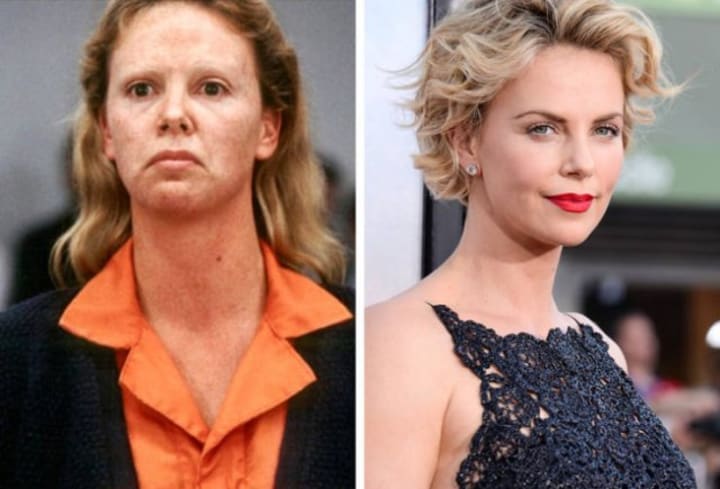
Charlize Theron’s work in Monster shows what happens when an actress refuses to smooth that pain into something pretty. She let herself look rough, swollen, weather beaten. She let herself be deeply unlikable at times. That choice gave audiences a chance to feel something more complex than simple fear or simple pity.
The performance works because you keep flipping between two thoughts. I cannot forgive her. I cannot stop seeing her as a human being.
In the end, that might be the most honest way to look at this story. Not as a warning or a legend, but as a uneasy mix of horror and sympathy that never fully settles.
Monster did not fix Aileen Wuornos’s legacy and it did not free her victims from the grave. What it did do is force people to sit with a hard truth. A person can be both broken by the world and still responsible for breaking others.
Charlize Theron stood in the middle of that truth and let the camera stare. That is why, all these years later, we are still talking about Aileen Wuornos, still arguing about the film, and still wondering where the real monster actually lives.
About the Creator
Flip The Movie Script
Writer at FlipTheMovieScript.com. I uncover hidden Hollywood facts, behind-the-scenes stories, and surprising history that sparks curiosity and conversation.
Keep reading
More stories from Flip The Movie Script and writers in Psyche and other communities.
Was the Roman Colosseum Really as Bloody as Gladiator Makes It Look?
This story was created with the partial help of AI tools and then revised by the author. When people think of ancient Rome now, a lot of them are not picturing marble statues or quiet philosophers. They are seeing Russell Crowe standing in the sand of the Colosseum, asking a roaring crowd if they are entertained. The movie Gladiator burned that image into everyone’s brain so deeply that many viewers walk away believing the arena was one nonstop slaughterhouse where every fight ended in death.
By Flip The Movie Script4 months ago in History



Comments (1)
Hey, My elder sister used to read them to me, and as I grew up, my love for stories only got stronger. I started with books, and now I enjoy reading on different writing platforms. Today, I came here just to read some stories, and that’s when I found your writing. From the very first lines, it caught my attention the more I read, the more I fell in love with your words. So I just had to appreciate you for this beautiful work. I’m really excited to hear your reply!