
12 Signs You Are Finally Healing From Narcissistic Abuse
Recovery from narcissistic abuse is a journey with distinct stages. Here are 12 powerful signs of healing, framed within a 3-stage guide to reclaiming your life.

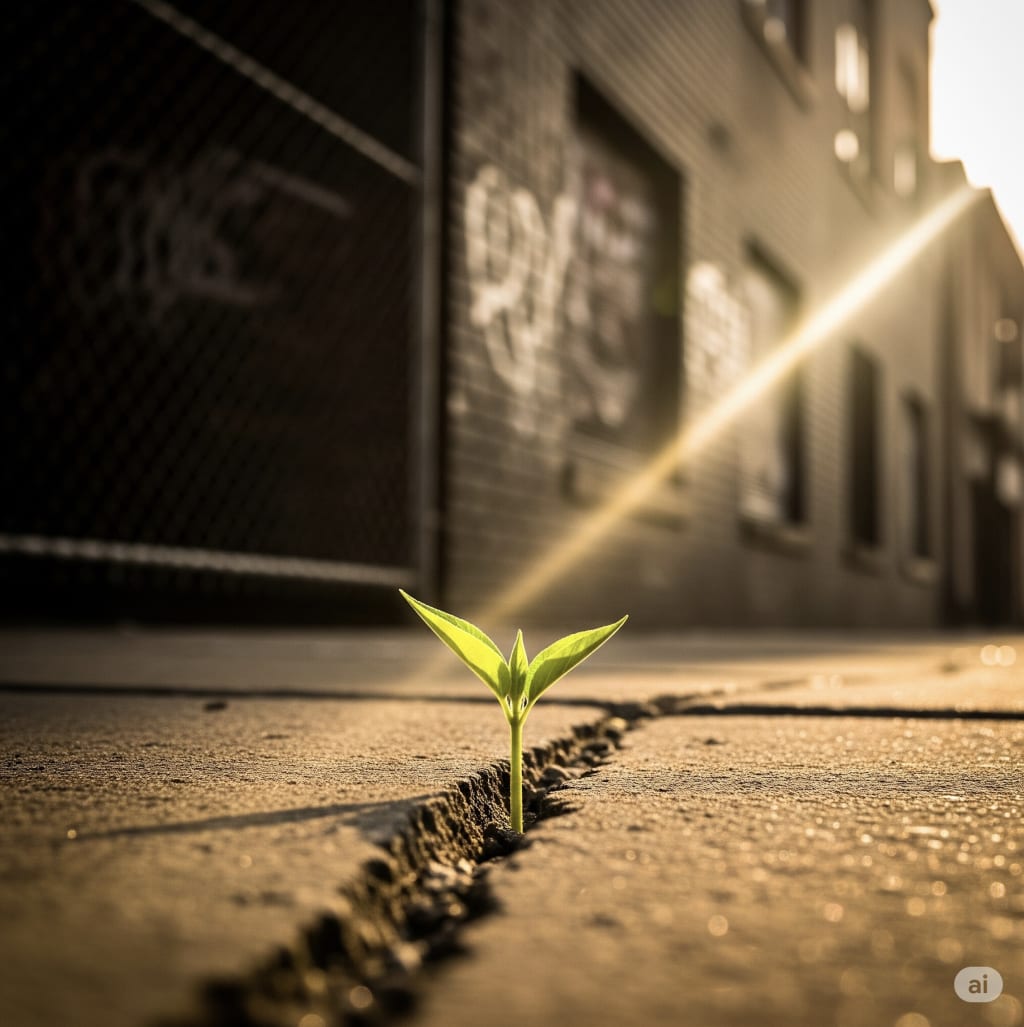
12 Signs You Are Finally Healing From Narcissistic Abuse
"The goal of healing is not to go back to who you were. It's to become who you were always meant to be."
— Sunshine Firecracker
Healing from narcissistic abuse isn't a destination; it's a journey of rediscovery. It's not a sudden event, but a series of quiet, powerful shifts that happen within you. One day, you simply realize the storm has passed, and you are standing in the quiet aftermath, stronger than before.
This journey often begins with the difficult decision to create distance, a process I explored in my article, I Finally Divorced My Mother. If you've spent time identifying the abuse in articles like 10 Signs You Grew Up With a Narcissistic Mother, this next chapter is for you. This is how you’ll know the hard work is working.
A Gentle Note on Your Journey
Before we begin, a crucial reminder: Healing is not a straight line. It is a spiral. You will have good days and bad days. The key is that the bad days become less frequent and less intense over time. A setback does not erase your progress. Be patient and compassionate with yourself. This is your journey, and you are right on time.
The 12 signs of healing often appear in three distinct stages. Use this as a map to locate yourself in the process, honor how far you've come, and see the path ahead.
Stage 1: The Awakening (Disengagement & Awareness)
This first stage is about the initial peace that comes from creating distance and observing the dynamic from a place of safety. The chaos begins to subside, and you start to reclaim your mental energy.
1. The Noise in Your Head Is Quieter
The constant, critical inner voice that sounded suspiciously like your abuser has started to fade. The mental real estate they occupied through obsessive thoughts, replayed arguments, and anxious future-planning is finally freeing up. In its place, there is a gentle quiet.
2. You No Longer Feel the Need to JADE
You've stopped feeling the compulsive urge to Justify, Argue, Defend, or Explain yourself. You now understand that your truth is your truth, and it doesn't require validation from anyone committed to misunderstanding you. This is a powerful step beyond simply using The Grey Rock Method; it's an internal belief.
3. You Feel Indifference, Not a Charge
When you think about the abuser or see their name, the old surge of adrenaline—be it fear, rage, or a desperate sadness—is gone. Instead, you feel a sense of neutrality, even boredom. Their power was in your emotional reaction, and you've reclaimed every last volt of that energy for yourself.
Stage 2: The Rebuilding (Reclaiming Self & Setting Boundaries)
This active stage is about rebuilding your inner world and outer life. You move from a passive state of non-reaction to actively defining who you are and what you will accept from the world.
4. You Trust Your Own Perception
The thick fog of gaslighting has lifted. You no longer second-guess your every memory or feeling. When you perceive something as unfair, unkind, or untrue, you trust that perception without needing a committee to co-sign it. This is a monumental step in healing from the confusion of Covert Narcissistic Abuse.
5. You Can Set Boundaries Without Guilt
Saying "no" is no longer a terrifying act that requires days of recovery. You can now state your boundaries clearly, calmly, and without apology. You understand that your needs are valid and that anyone who protests your boundaries is not respecting you.
8. Your Red Flag Detector Works Again
Your internal "red flag detector," once silenced by abuse, has been recalibrated and turned back on. You can now spot manipulative or unhealthy behaviors in new people you meet, and instead of making excuses for them, you protect your energy and walk away.
9. You Forgive Yourself
You have forgiven yourself for not knowing sooner, for not leaving earlier, for not seeing what you couldn't possibly have seen. You understand that you did the best you could with the tools you had, especially if you were conditioned to accept blame as the Family Scapegoat.
Stage 3: The Integration (Embodiment & Hope)
This is the most profound stage, where healing is no longer something you are doing, but something you are being. The lessons become an embodied part of you, and your focus shifts fully to the future.
6. Your Body Feels Calmer
The chronic state of "fight or flight" is winding down. You may notice you're sleeping better, your digestion has improved, and the constant, low-level anxiety that lived in your chest has started to dissipate. Your nervous system is learning that it is finally safe.
7. You Are Attracted to Peace, Not Chaos
The drama that once felt familiar, or was even mistaken for passion, now feels exhausting and unappealing. You find yourself drawn to calm people, stable friendships, and peaceful environments. You are actively choosing serenity over stimulation.
10. You Are Reconnecting With Your Authentic Self
You find yourself remembering old hobbies, passions, and parts of your personality that were suppressed to survive. The music, the creativity, the humor—it's all coming back. You are no longer just a survivor; you are the person you were before the storm.
11. You Can Grieve What You Lost Without Being Consumed By It
You are able to feel genuine sadness for the childhood you didn't get, or the years you lost, without it swallowing you whole. The grief is clean, a testament to what you deserved, rather than a heavy anchor of bitterness. (This is a great place to link to another Vocal author's work on grief, like Author Name's "Article on Grief".)
12. You Feel Genuine Hope for the Future
The future no longer feels like something to simply survive. It feels like a space of possibility. You find yourself making plans, dreaming of new things, and feeling a genuine sense of optimism and excitement about what lies ahead.
Further Reading & Support Resources
Experts on Trauma Recovery:
Dr. Ramani Durvasula's YouTube Channel: An essential resource for understanding the complexities of narcissistic abuse and the path to "deep healing."
Patrick Teahan's YouTube Channel: Invaluable for his work on healing childhood trauma, reparenting your inner child, and breaking dysfunctional family patterns.
Dr. Arielle Schwartz's Website: A leading expert in C-PTSD and somatic (body-based) therapy, offering practical tools for healing the physical and emotional impact of trauma.
The Crappy Childhood Fairy (Anna Runkle): Focuses on daily, practical techniques for calming dysregulation and healing the brain and nervous system after long-term abuse.
Essential Books for Rebuilding:
"The Body Keeps the Score" by Bessel van der Kolk, M.D.: A foundational book for understanding how trauma is stored in the body and the paths to releasing it.
"Complex PTSD: From Surviving to Thriving" by Pete Walker: The definitive guide for survivors of long-term trauma, offering validation and a map for recovering from C-PTSD.
"The Gifts of Imperfection" by Brené Brown: A powerful guide to overcoming the shame and perfectionism instilled by abuse and cultivating a life of worthiness.
"Self-Compassion: The Proven Power of Being Kind to Yourself" by Dr. Kristin Neff: Teaches the essential skill of self-compassion, the perfect antidote to the harsh inner critic created by narcissistic abuse.
Healing Communities & Tools:
Psychology Today Therapist Finder: A crucial tool for finding a trauma-informed therapist who can guide you through your recovery.
Somatic Experiencing Trauma Institute: For those interested in body-based healing, this site provides directories and information on finding practitioners.
Reddit - r/CPTSDNextSteps: A supportive online community for those who have moved past the initial stages of awareness and are actively working on advanced healing and rebuilding their lives.
CPTSD Foundation: An excellent organization offering daily recovery support, resources, and tools specifically for survivors of complex trauma.
Frequently Asked Questions (FAQ)
1. Is it normal to have setbacks during healing?
Absolutely. Healing is not linear. You will have good days and bad days. The key is that the bad days become less frequent and less intense over time. A setback does not erase your progress.
2. What if I don't feel all of these signs?
That is completely normal. This is not a checklist to be perfected. Think of these signs as guideposts on a long journey. Celebrate the ones you do feel, and be patient with yourself as you continue to grow.
3. What is the most important sign of healing?
While all are significant, many survivors report that the shift from intense emotion to a feeling of indifference (Sign #3) is the most profound and freeing milestone.
Share Your Story
👉 Which of these signs resonates with you the most? Share your progress in the comments to inspire someone else on their journey.
#NothingButLove ☀️🧨💛
Disclaimer: This article is for informational purposes only and is not a substitute for professional advice. If you are in physical danger, please contact a certified professional or local law enforcement.
© 2025 Sunshine Firecracker. All Rights Reserved.
This article was written from the heart to help survivors feel seen and understood. Please honor the work by sharing it responsibly. You are encouraged to share links to this page or short, attributed excerpts. Please do not republish this article in its entirety without express permission. By respecting this work, we help ensure that these resources can continue to reach those who need them.
About the Creator
Sunshine Firecracker™
Dr. Jennifer Gayle Sappington, J.D. (Sunshine Firecracker™). IFJ & NWU accredited investigative journalist. UB Law alumna utilizing rigorous statutory analysis to expose the Ephrata Enterprise, Gerlach litigation, & Lancaster corruption.
Keep reading
More stories from Sunshine Firecracker™ and writers in Psyche and other communities.
Going No Contact: Why I 'Divorced' My Narcissistic Mother
I Finally Divorced My Mother This was not an act of anger. It was the final, radical act of my own preservation. To "divorce" your mother is a jarring concept. It feels like a violation of the sacred bond we’re told should be unbreakable. For years, I believed that, too. I spent decades trying to renovate a relationship that was built on a fault line, hoping that if I just found the right words or the right therapist, the foundation would finally be safe.
By Sunshine Firecracker™7 months ago in Psyche
Top tipple tricks
Been thinking a lot about drinking, lately. Not least because of a recent episode of over-indulgence and the inevitable after effects. Some readers may recall the earlier articles I wrote about beating the booze. Here I set out an experiment in techniques for cutting down on my alcohol intake. The experiment was successful, the techniques worked, and I have armed myself with an arsenal of weapons in the war against the demon drink. I have yet to fire the first round however. It's all a question of timing (perhaps procrastination).
By Raymond G. Taylor7 days ago in Psyche
My First Time Skiing and I Got Lost, Alone, in the French Alps
Looking back, I can trace some of my life’s biggest adventures to a simple action from my sister. She’d introduced me to Tommy (a very long time ago), a colleague of hers, who had overshared his penchant for Italian-looking women, and I ticked that box.
By Chantal Christie Weiss3 days ago in Humans




Comments
There are no comments for this story
Be the first to respond and start the conversation.