
The Hidden Continent: Unveiling Earth's Lost Landmass and Its Mysteries
Exploring Earth's Lost Landmass and Its Impact on Future Supercontinents

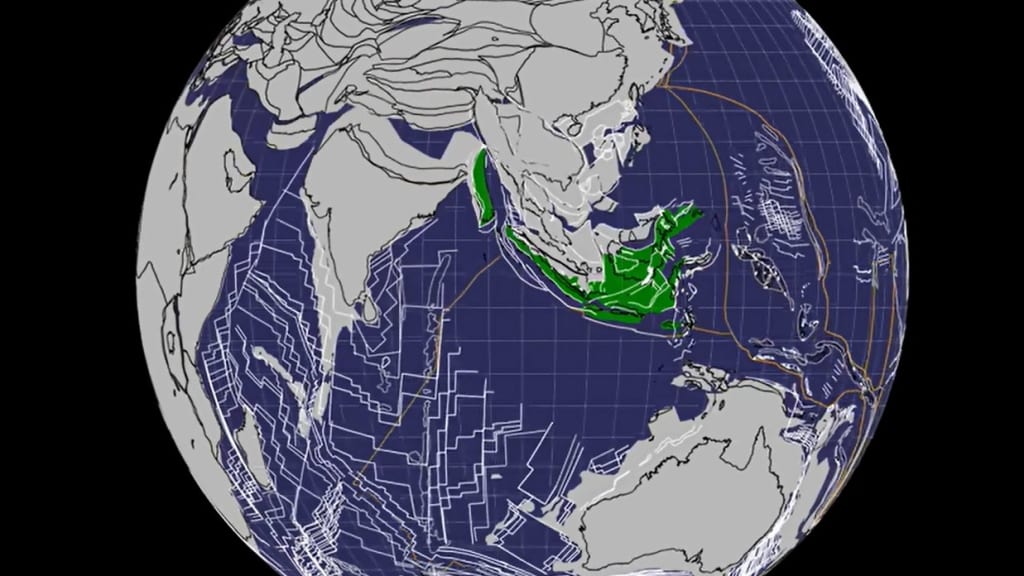
Surprisingly, there are more than seven continents on our planet. Argo Land, a hidden continent, could help us understand the future of our Earth. To uncover how it remained hidden and the secrets it holds, you'll need to stay tuned. Scientists have been on the hunt for a piece of land that vanished over 100 million years ago. While this might seem unremarkable given the constant search for Earth's historical secrets, this case stands out. One might think it was a tiny island lost in the ocean, but you’d be mistaken. This continent was as large as the entire United States.
For a long time, geologists speculated whether a massive piece of contemporary Australia had disappeared into thin air. Some believed it had sunk to the ocean floor. However, thanks to Dutch experts and seven years of investigation, we now know fragments of this lost land are mingled beneath the lush jungles of Southeast Asia. The continents we see in geography books today are like scattered pieces of a puzzle. You can even conduct a fascinating experiment yourself. Find a world map online, print it, cut out all the continents, and play with them for a while. You'll see they fit together. The most striking thing you'll notice is how South America fits perfectly with Africa when you close the oceans that have formed over the past 200 million years. The continents then resemble a giant letter "C," which scientists call the supercontinent Pangaea. It floated in an ocean called Panthalassa, and the inner part of this "C" housed a smaller body of water called the Tethys Ocean.
During the Jurassic period, this lost continent, which scientists have named Argo Land, vanished, leaving a gap in Australia now known as the Argo Abyssal Plain. Initially, geologists thought this disappearance was due to a process called subduction, where a piece of the Earth's crust dives under another and is recycled into the planet's mantle. Typically, experts track continental vanishing through offscraping, which is how they figured out that India collided with Asia, giving rise to the majestic Himalayan mountains. But for Argo Land, things were more complex. Bits and pieces appeared in places like Myanmar and Indonesia, behaving like time-traveling relics, looking much older than when Argo Land supposedly separated from Australia.
This odd behavior raised a significant question: if one continent can act so strangely, how many others might be doing the same? Fortunately, scientists have now pieced together the entire timeline of Argo Land and solved its mystery. It didn’t sink or get swallowed up; it transformed into an archipelago, breaking into smaller pieces called microcontinents and drifting away from Australia. These mini-continents then journeyed before settling in Southeast Asia’s jungles. This discovery fits seamlessly into the Pangaea puzzle, helping us better understand how continents break up and come together, all in one discovery, revealing secrets of biodiversity and climate from ages past.
If you'd like to uncover more secrets about history, civilization, or random day-to-day objects, make sure to like this video and subscribe to the channel. For instance, there's the mystery of the invisible species line in Indonesia, known as The Wallace Line, named after British explorer Alfred Russel Wallace. Over 150 years ago, Wallace traveled around the Malay Archipelago, visiting thousands of islands. He discovered that animals on one side of this invisible line were significantly different from those on the other side. This invisible line acts like a barrier between marsupials and tigers, for example, or honey eaters and trogons.
Now we know that around 35 million years ago, Australia broke away from Antarctica and collided with Asia. This continental love triangle triggered significant changes, not just altering the land but also impacting the species on each side of the Wallace Line. In more recent times, a group of specialists published a study indicating that this collision and resulting climate chaos made Asian species comfortable living in the Malay Archipelago, while Australian animals struggled with the new environment. It was too hot and wet for some, and others couldn’t adapt to the tropical island lifestyle.
This discovery of a continental shift towards Asia might also explain a recent finding of a human species that didn't make much sense initially. In a hidden cave in the Philippines, archaeologists stumbled upon a new human ancestor. About 50,000 years ago on the island of Luzon, there existed this ancient human-like species. The lead researcher believed this discovery was crucial for understanding human evolution in Asia and named this new species after the island, Homo luzonensis.
However, the bones found posed a peculiar problem. They had a strange mix of traits not seen together in any other human species: smaller teeth similar to ours, yet hands and feet more like our ancient hominid ancestors. These primitive limbs connected this human species with a long-lost southern territory. The primitive appearance of these limbs resembled those of species separated by 2 to 3 million years of time and evolution. This led to questions about whether Homo luzonensis was indeed a new species, with some experts remaining unconvinced. However, it may also highlight how living creatures are affected by the constant shifting of land beneath us.
While continents may seem stable in our lifetime, they are continuously evolving. They originated from a massive supercontinent and will likely end up in a similar configuration in the future. A geologist from a European university has even attempted to predict the future of Earth's supercontinents. Using an earthquake in Portugal from 1755 as a starting point, he researched for years and, in 2016, proposed a theory. He believed that the seams between tectonic plates might be coming apart, setting the stage for a larger rupture. It's like when a crack spreads between two points on a car's windshield.
If this happens, a subduction zone could extend from the Mediterranean to beyond Ireland, bringing volcanoes, earthquakes, and new mountains to these areas. According to this plan, the Atlantic Ocean would disappear, and the Pacific would transform into a vast body of water. Instead of the seven continents we know today, we would get a new supercontinent he called "Amasia," with Australia and the Americas at its core. This isn't the only possible scenario, though. Another potential future supercontinent, called "Novopangaea," could emerge if the Atlantic remains open and the Pacific closes. Then there's the "Aurica" scenario, which imagines the Arctic Ocean closing while the Atlantic and Pacific stay open, with everything moving north around the North Pole except Antarctica.
Finally, there's the "Pangaea Ultima" scenario, which involves slowing Atlantic expansion and a new subduction zone forming on the east coast of the Americas. Whichever scenario comes to pass, if all the continents collide again in the future, it might not be a pleasant experience. It's believed that in about 250 million years, the world could feel like being trapped in a stifling, soggy plastic bag. Strangely enough, this bag would be the best place to live on Earth, specifically the coastal areas, while inland regions would become scorching deserts. Many animal species we know today might not survive in this new environment. As for humans, we would have to be creative to withstand the heat.
We should, however, be grateful for these digital models, as they are excellent tools for testing all sorts of intriguing ideas. For instance, they can help us understand how these supercontinents would disrupt tides and, considering future space travel, can also assist in understanding the climates of exoplanets outside our solar system. That’s all for today!!
About the Creator
Nathan Talek
Welcome to a world where the cosmos meets curiosity! I’m Nathan, an avid explorer of the universe's wonders and a passionate storyteller who makes the mysteries of space accessible and exciting.
Keep reading
More stories from Nathan Talek and writers in Proof and other communities.
Kepler-22b: The Next Earth? Exploring the Potential and Challenges of Our Cosmic Neighbor
We’ve discovered Kepler-22b, an intriguing exoplanet located in the constellation Cygnus. At first glance, it might not seem remarkable, but it’s actually a significant find. It’s the first planet identified in the habitable zone by the Kepler telescope, meaning it might have liquid water and, potentially, life. Kepler-22b could be a candidate for a future human home, so let's take a closer look.
By Nathan Talekabout a year ago in Proof
Acceptance Meditation: Embracing the Present Moment
Acceptance meditation is a gentle practice that helps us welcome our present experience without judgment. It invites us to open to what is, even if it feels difficult or uncomfortable. This openness creates space for peace and clarity.
By Garold One7 days ago in Proof
Understanding the Meaning of Melting Ice in Cocktails
When it comes to cocktails, melting ice is more than just a slow drip in your glass. It’s a crucial part of the drinking experience that affects flavor, temperature, and even texture. But what exactly does melting ice mean in the world of mixology, and why should you care?
By Ava Mitchell5 days ago in Proof




Comments (1)
Awesome content