
Kepler-22b: The Next Earth? Exploring the Potential and Challenges of Our Cosmic Neighbor
Kepler-22b: The Closest Potential Second Earth?

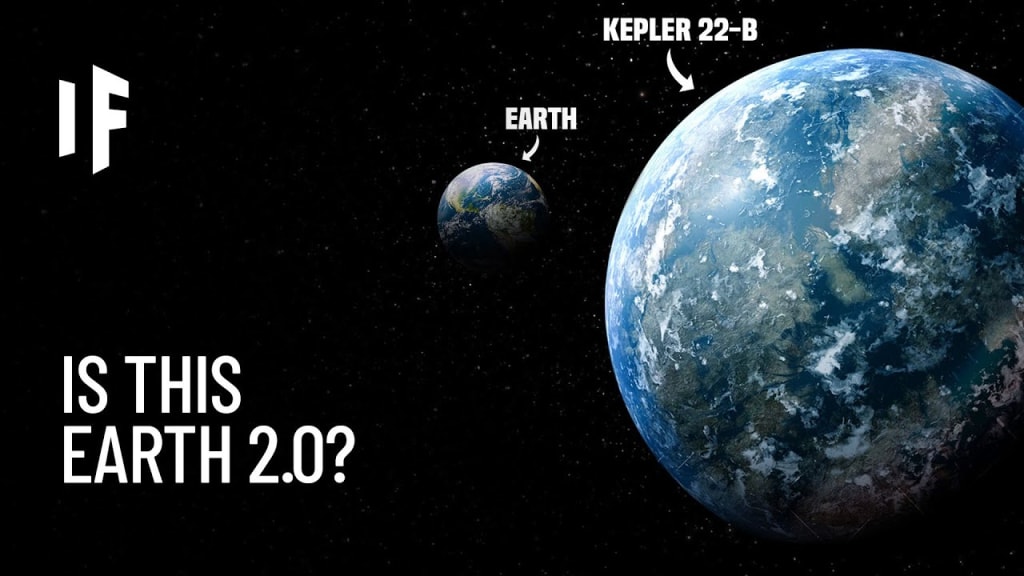
We’ve discovered Kepler-22b, an intriguing exoplanet located in the constellation Cygnus. At first glance, it might not seem remarkable, but it’s actually a significant find. It’s the first planet identified in the habitable zone by the Kepler telescope, meaning it might have liquid water and, potentially, life. Kepler-22b could be a candidate for a future human home, so let's take a closer look.
Discovering new planets is no easy task. Not all can be detected with our advanced telescopes, even the powerful Hubble. Sometimes, stars are so faint and distant that spotting them on a map becomes challenging. This was the case with Kepler-22. In such instances, scientists use a special method: they take numerous photos of a star at different times and then analyze them to identify any dark spots that could indicate a planet. These images help determine critical aspects such as the planet’s existence, size, distance from the star, and its potential for habitability.
Kepler-22b is quite similar to Earth and could potentially be a second home for us. It’s relatively close, at about 635 light-years away—roughly three quadrillion miles. Kepler-22, the star of Kepler-22b, is a yellow dwarf, much like our Sun, with a similar size, radius, and age—about 4 billion years. The main difference is that Kepler-22 is about 20% dimmer than the Sun, making it impossible to spot with the naked eye from Earth.
The planet Kepler-22b is approximately 2.4 times larger than Earth. This larger size could mean more potential for water and living space. However, traveling from one city to another would be quite a challenge—imagine a three-day flight! We don’t know Kepler-22b’s exact mass, but scientists speculate it could be up to 36 times heavier than Earth. If so, the gravity there would be about six times stronger. For example, if you struggle with lifting 20 pounds of potatoes on Earth, you'd need to lift 120 pounds on Kepler-22b. You'd have to be incredibly muscular just to move around, and this high gravity could make it hard for plants and animals to survive.
Yet, if this planet does host its own life forms, they might have evolved to handle the strong gravity—perhaps with many limbs for movement or a robust build. On the bright side, we don’t have confirmation yet. If gravity is only slightly stronger than on Earth, living there could be feasible.
Another interesting fact is that Kepler-22b orbits its star about 15% closer than Earth orbits the Sun. If it were in our solar system, it would be located between Earth and Venus. Does this mean we would all get scorched? Not necessarily. As mentioned earlier, Kepler-22’s star is relatively cool at around 10,000 degrees Fahrenheit. Therefore, the temperatures on Kepler-22b could be similar to those on Earth, assuming it orbits its star similarly to how Earth orbits the Sun.
However, if Kepler-22b’s rotation is tilted like Uranus, which rotates on its side, its climate could be extreme, with cold winters followed by scorching summers. If it’s tidally locked, living conditions might be restricted to a narrow habitable zone between these extremes. Fortunately, studies suggest that Kepler-22b could have an ocean, which would stabilize temperatures, much like how Earth's oceans helped regulate our climate billions of years ago.
If Kepler-22b has an atmosphere similar to Earth's, temperatures could average around 72 degrees Fahrenheit, making it quite comfortable. A year on Kepler-22b lasts about 290 Earth days. However, the absence of natural satellites means we’d miss out on the sight of a moon, and the Sun would appear as a distant, tiny star in the sky.
For now, we lack detailed information about Kepler-22b. We don’t know if it’s a rocky planet, a gas giant, or covered by an ocean. Scientists speculate it could be a water world, which would allow for underwater cities. If it's a gas giant like Neptune, it might be covered in a thick atmosphere with a solid core.
Other interesting exoplanets include KOI-5715.01, a planet orbiting an orange dwarf star in the constellation Cygnus. This planet is roughly twice the size of Earth, with an average temperature of 52 degrees Fahrenheit. Despite its distance of about 3,000 light-years from Earth, it’s an intriguing candidate for habitability.
Another potential candidate is KOI-3010.01, orbiting the star KOI-2010. This planet has a temperature of 67 degrees Fahrenheit and may feature an ocean covering up to 60% of its surface. Though it’s about 490 light-years away, its similarities to Earth make it a promising candidate for life.
Kepler-186f is another notable exoplanet, often referred to as Earth’s cousin. It orbits a red dwarf star and shares similar characteristics with Earth. Despite being about 490 light-years away, its stable seasons and day-night cycle make it a compelling candidate for habitability.
Finally, Kepler-62e and 62f are notable for their potential water worlds. Located about 1,200 light-years away, they might be covered predominantly by water. While we don’t yet have detailed information about their atmospheres or surface conditions, they are among the most Earth-like exoplanets discovered.
In summary, while these exoplanets present exciting possibilities, much remains unknown. As technology advances, we may one day find out more about these distant worlds and their potential to host life. For now, they remain fascinating points of interest in our quest to understand the universe.
About the Creator
Nathan Talek
Welcome to a world where the cosmos meets curiosity! I’m Nathan, an avid explorer of the universe's wonders and a passionate storyteller who makes the mysteries of space accessible and exciting.
Reader insights
Nice work
Very well written. Keep up the good work!
Top insights
Excellent storytelling
Original narrative & well developed characters
Expert insights and opinions
Arguments were carefully researched and presented
Keep reading
More stories from Nathan Talek and writers in Proof and other communities.
The Hidden Continent: Unveiling Earth's Lost Landmass and Its Mysteries
Surprisingly, there are more than seven continents on our planet. Argo Land, a hidden continent, could help us understand the future of our Earth. To uncover how it remained hidden and the secrets it holds, you'll need to stay tuned. Scientists have been on the hunt for a piece of land that vanished over 100 million years ago. While this might seem unremarkable given the constant search for Earth's historical secrets, this case stands out. One might think it was a tiny island lost in the ocean, but you’d be mistaken. This continent was as large as the entire United States.
By Nathan Talekabout a year ago in Proof
Cultivating Calm Focus for Study
Studying can sometimes feel overwhelming. Thoughts race, distractions pull you away, and focus drifts like a leaf on the wind. Yet, with a gentle practice of calm focus, you can create a steady mind that welcomes learning with ease.
By Victoria Marse5 days ago in Proof



Comments (1)
Thanks for the well detailed analysis