
The Bench by the Bakery
Sometimes, help isn ât something you ask for it is something you give without knowing what it might change.
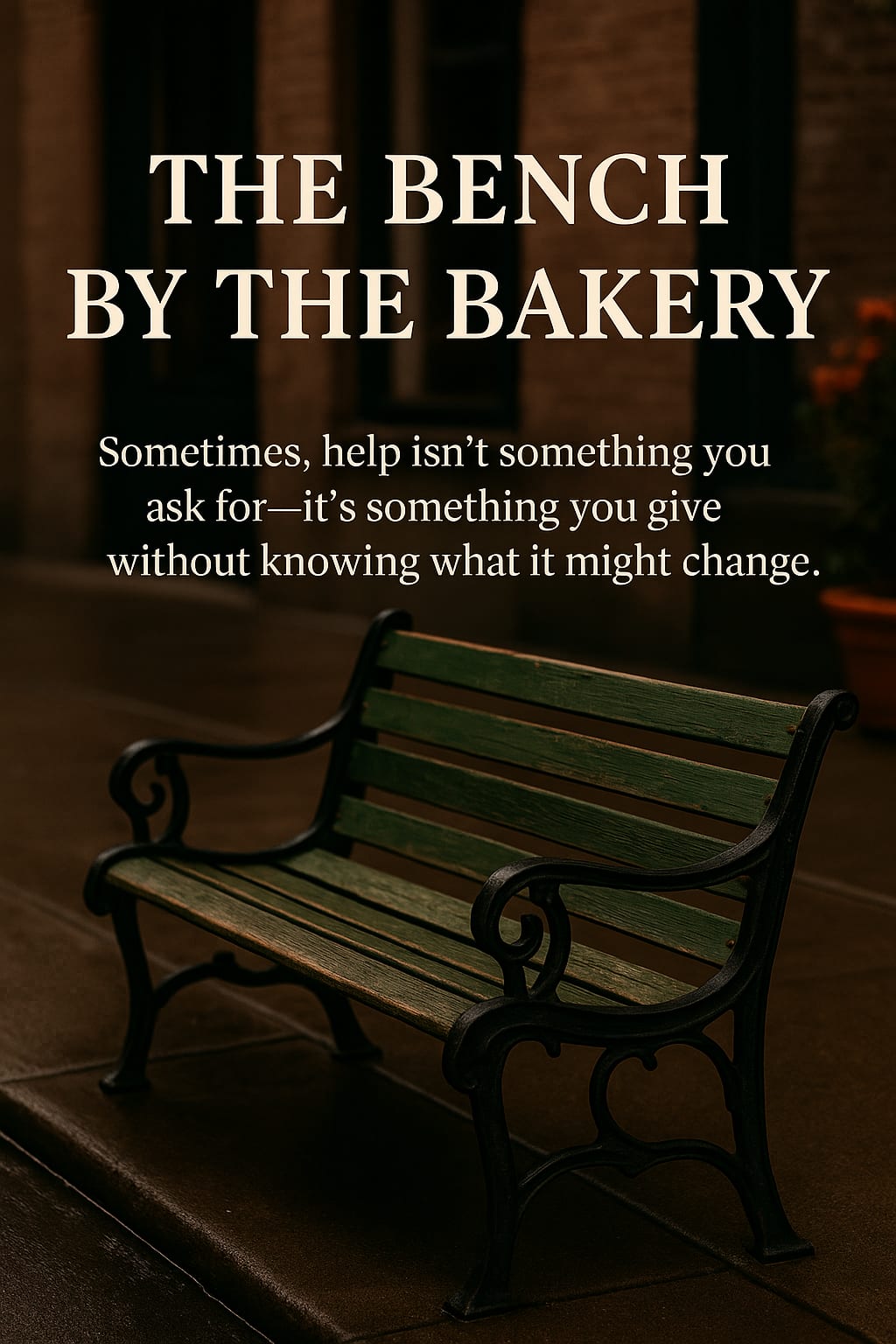
There was an old bench outside Marla’s Bakery—chipped green paint, crooked legs, and iron arms curled like vines. Most people ignored it. But not me. I noticed it every morning because of the man who sat there.
Same spot. Same navy coat. Same chipped white mug.
He never asked for anything. Not money. Not conversation. Just sat there, sipping slowly, eyes fixed on the sidewalk like he was watching something no one else could see.
For three weeks, I passed him without a word. Until the rain.
That Tuesday, the sky broke open. I slipped on the pavement, and my tote bag exploded—papers soaked, reports ruined. I was frantic, cursing under my breath, when a hand reached down and handed me a folder.
The man nodded. No words. Just kindness.
“Thanks,†I said, taken aback.
He nodded again.
The next morning, I brought an extra cup of coffee.
“For yesterday,†I said, placing it beside him.
He didn’t speak, but he smiled—just a little. It was enough.
That became our thing. Every day, I’d bring coffee. Some mornings, a muffin. He never asked, but he never turned it down. We didn’t talk. Not at first. But there was comfort in the silence.
Weeks passed.
Then, one morning: “My name’s Henry.â€
I smiled. “I’m Tasha.â€
We started slow. A few words here. A sentence there. Over time, I learned he used to be a history teacher. He lost his wife to cancer. He had a son. They hadn’t spoken in years.
“He warned me about a decision I made. I didn’t listen. We fought. I left. He never called,†Henry said one morning, staring into his mug.
I wanted to help, but what could I do?
That night, I found his son.
It took some online searching, piecing together the details Henry had shared. I sent a short message. I didn’t expect a reply. I just said that Henry was alive, nearby, and might want to reconnect.
Two weeks passed. Nothing.
Then, one morning, I saw Henry sitting with someone.
A younger man. Same eyes. Same calm posture. Different weight in the air.
Henry stood when I approached.
“This is my son, Aaron,†he said, voice shaking just enough to break my heart.
I handed them both coffee. Aaron looked at me, a little stunned.
“You reached out, didn’t you?â€
I nodded.
“Thank you,†he said. “I didn’t know how to fix it. I just needed a way back in.â€
Henry smiled at me, more alive than I’d ever seen him.
“Sometimes,†he said, “help comes from the most unexpected places.â€
Now, Henry’s bench is rarely empty. Sometimes he’s there with Aaron. Sometimes he’s not there at all—off spending time with his son, catching up on years lost.
One morning, I found a note on the bench, folded neatly under my usual cup:
“To the stranger who became a friend: Thank you for reminding me that help isn’t always asked for—it’s given. – H.â€
About the Creator
Conscious Breathing: A Path to Present Awareness
Breathing is something we do every moment without thinking. Yet, when we bring conscious attention to our breath, it becomes a powerful tool to anchor us in the present moment. Conscious breathing helps calm the mind, relax the body, and open space for clarity and peace.
By Garold One6 days ago in Proof
Nature Inspired Drinks: Cocktails That Capture the Outdoors
When you think of nature-inspired drinks, imagine cocktails that celebrate the fresh, earthy, and botanical flavors of the great outdoors. These drinks often highlight herbs, flowers, fruits, and natural elements that bring a refreshing vibe and a little wild magic to your glass. Whether you're sipping by a campfire or just want a taste of nature in your city apartment, these cocktails connect you with the earth in the most delicious way.
By Ethan Chen5 days ago in Proof




Comments (1)
good for me it was first so halp