
Itikaf Rules for Females: A Spiritual Guide to Devotion in Islam
Discover the essential Itikaf rules for females, including location, permissions, menstruation guidelines, and spiritual benefits. Learn how women can observe Itikaf at home during Ramadan.

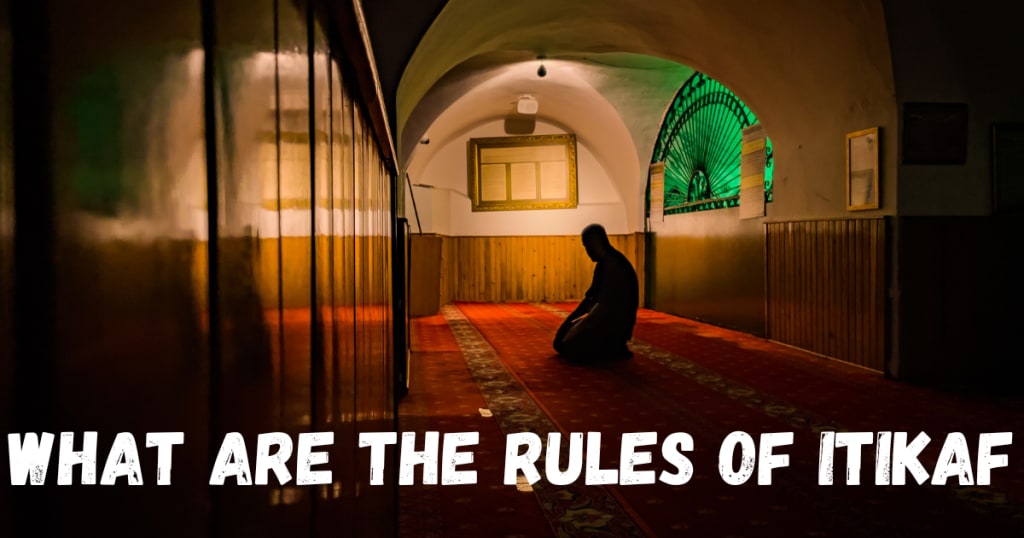
Itikaf, a profound act of worship in Islam, involves secluding oneself to focus entirely on connecting with Allah. While commonly observed during the last ten days of Ramadan, this spiritual retreat holds immense rewards and transformative potential. For women, Itikaf rules are tailored to accommodate their unique roles and responsibilities, ensuring ease without compromising spiritual growth. This guide explores the principles, permissions, and practices of Itikaf for females, rooted in Islamic tradition.
Also Read: Learn the Virtues and Rules of Itikaf
What is Itikaf?
Itikaf (اعتكاف) is a voluntary act of worship where Muslims isolate themselves in a mosque or designated space to engage in prayer, Quran recitation, and dhikr (remembrance of Allah). Its primary purpose is to seek Laylat al-Qadr (the Night of Decree) during Ramadan and deepen one’s relationship with the Divine. Prophet Muhammad (PBUH) emphasized Its significance:
“Whosoever performs Itikaf for Allah’s sake, even for one day, Allah will place between them and Hellfire a trench wider than the heavens and Earth.” (Al-Tabarani)
Types of Itikaf
Sunnah Itikaf: Observed during Ramadan’s final ten days, following the Prophet’s tradition.
Nafl Itikaf: Optional retreats at any time of the year.
Wajib Itikaf: Mandatory if one vows (nadhr) to perform it.
General Rules of Itikaf
Before addressing female-specific guidelines, here are universal principles:
Intention (Niyyah): A sincere intention is mandatory.
Location for Men: Must be in a mosque.
Cleanliness: Maintain wudu and physical purity.
Activities: Focus on worship—prayer, Quran, and supplication.
Women’s Itikaf: Overcoming Challenges
While Itikaf is a deeply rewarding act of worship, women may face unique challenges in observing it. Household responsibilities, childcare, and societal expectations can make it difficult to dedicate uninterrupted time to spiritual seclusion. However, Islam provides flexibility, allowing women to perform Itikaf within their homes. To overcome these challenges, planning ahead is essential. Informing family members, preparing meals in advance, and setting clear boundaries during Itikaf can create a more focused environment. Additionally, involving children by teaching them about Itikaf can turn this into a spiritually enriching family experience.
The Reward of Sincere Intention
In Islam, actions are judged by intentions, and this principle applies profoundly to Itikaf. Even if a woman faces interruptions or can only perform Itikaf for a short duration, her sincerity holds immense value in the sight of Allah. The Prophet Muhammad (PBUH) said:
"Indeed, actions are based on intentions, and everyone will get the reward according to what they intended." (Sahih Bukhari)
By dedicating time to worship, engaging in dhikr, and seeking Allah’s mercy, women can transform their homes into sanctuaries of spirituality. No matter the duration, sincere devotion during Itikaf brings peace, blessings, and closeness to Allah, making it a truly rewarding experience.
Itikaf Rules for Females: Key Considerations
1. Location: Home as a Sacred Space
Unlike men, women perform Itikaf at home, as stated by scholars. This ruling acknowledges their roles in household management and childcare. A quiet, dedicated space—such as a prayer corner—should be allocated, free from distractions.
Hadith Reference:
“The Prophet’s wives performed Itikaf at home after his passing.” (Sahih Bukhari)
2. Permission from Family
Married Women: Require their husband’s consent to ensure marital harmony.
Unmarried Women: Should seek approval from parents or guardians.
Permission ensures responsibilities are managed and fosters family support.
3. Menstruation Guidelines
Women must pause Itikaf during menstruation, as they cannot perform Salah or fast. However:
They may continue dhikr, dua, and Quran reflection (without physical touch).
Missed days can be made up post-Ramadan, though this is debated among scholars.
4. Permissible Activities
Quran Recitation: With translation for deeper understanding.
Dhikr and Dua: Focus on spiritual reflection.
Islamic Lectures: Listening via digital platforms.
Avoid idle talk, social media, or chores unrelated to necessity.
5. Leaving the Itikaf Space
Women may briefly exit for:
Essential needs (food, bathroom).
Childcare or urgent household tasks.
Medical emergencies.
Minimize outings to preserve the retreat’s sanctity.
Spiritual Benefits of Itikaf for Women
Proximity to Allah: Isolation fosters mindfulness and repentance.
Laylat al-Qadr: Maximizes chances of earning blessings equivalent to 1,000 months.
Mental Reset: Disconnecting from worldly stress enhances inner peace.
Family Role Modeling: Demonstrates devotion, inspiring loved ones.
Addressing Common Questions
Q: Can women perform Itikaf in a mosque?
A: Traditionally, no. Exceptions exist in some schools if facilities are available, but home Itikaf is widely recommended.
Q: What if family duties interrupt Itikaf?
A: Islam prioritizes compassion. Temporarily pause Itikaf for urgent responsibilities, then resume.
Q: Is Nafl Itikaf valid outside Ramadan?
A: Yes, but Ramadan’s Itikaf holds greater merit.
Conclusion
Itikaf offers women a structured path to spiritual renewal within their homes. By adhering to its rules—securing permissions, designating a sacred space, and balancing worship with duties—they can unlock profound blessings. This practice not only draws one closer to Allah but also reinforces the Islamic ethos of balance, ease, and devotion.
About the Creator
Jamia Saeedia Darul Quran
Jamia Saeedia Darul Quran is a renowned Islamic institution dedicated to Quranic education, Hadith, and Islamic teachings. Serving for over 25 years, it nurtures students with religious and academic knowledge.
Keep reading
More stories from Jamia Saeedia Darul Quran and writers in Proof and other communities.
Fasting: Objectives, Benefits, and Virtues
Fasting is the third fundamental pillar of Islam, refining a Muslim through spiritual struggle (mujahida) and discipline (riyazat), transforming them into a purified soul. Fasting was made obligatory for the Ummah of Prophet Muhammad (صلى الله عليه وسلم) on the 15th of Sha'ban in 2 AH. Allah (سبحانه وتعالى) declared:
By Jamia Saeedia Darul Quranabout a year ago in Proof
Actor Lukas Gage joined Jameson Irish Whiskey and KidSuper designer Colm Dillane to Celebrate St. Patrick’s Season for a pre-holiday kick off party in Brooklyn
The collaboration between KidSuper and Jameson Irish Whiskey shows how the holiday is moving beyond bars and into fashion driven culture spaces. by NWO Sparrow
By NWO SPARROWabout 20 hours ago in Proof
Cryptocurrency Explained: Pros and Cons of Investing – A Guide by Topwaynews
Cryptocurrency has become one of the most talked-about financial innovations of the modern era. Over the past decade, digital currencies have transformed the way people think about money, online transactions, and investments. From individual investors to major financial institutions, interest in cryptocurrency continues to grow worldwide. However, before investing in digital assets, it is important to understand how cryptocurrencies work and what benefits and risks they carry. This guide by Topwaynews explains the basics of cryptocurrency along with its major advantages and disadvantages for investors.
By Pink salt wall3 days ago in Proof


Comments
There are no comments for this story
Be the first to respond and start the conversation.