
10 Longest Railway Tunnels In The World
Engineering Marvels That Redefine Connectivity Across Continents


Railway tunnels have long captured the imagination of engineers and travelers alike, representing the intersection of ambition, ingenuity, and progress. Spanning vast distances and cutting through formidable terrain, these tunnels are not just transportation links but also symbols of human perseverance. Below is a list of the ten longest railway tunnels in the world, each an engineering marvel in its own right.
1. Gotthard Base Tunnel (Switzerland)

Length: 57.1 kilometers (35.5 miles)
The Gotthard Base Tunnel, completed in 2016, holds the title of the longest railway tunnel in the world. Located beneath the Swiss Alps, it facilitates efficient travel between northern and southern Europe. The tunnel’s two parallel tubes were constructed over 17 years and are designed to withstand the immense geological pressures of the mountains. This engineering triumph significantly reduces travel time and promotes sustainable transport across the continent.
2. Seikan Tunnel (Japan)

Length: 53.9 kilometers (33.5 miles)
Connecting the Japanese islands of Honshu and Hokkaido, the Seikan Tunnel is the longest undersea railway tunnel in the world. Opened in 1988, it stretches 23.3 kilometers (14.5 miles) under the seabed of the Tsugaru Strait. Built to withstand earthquakes and harsh marine conditions, the tunnel is a testament to Japan’s advanced engineering capabilities.
3. Channel Tunnel (United Kingdom/France)
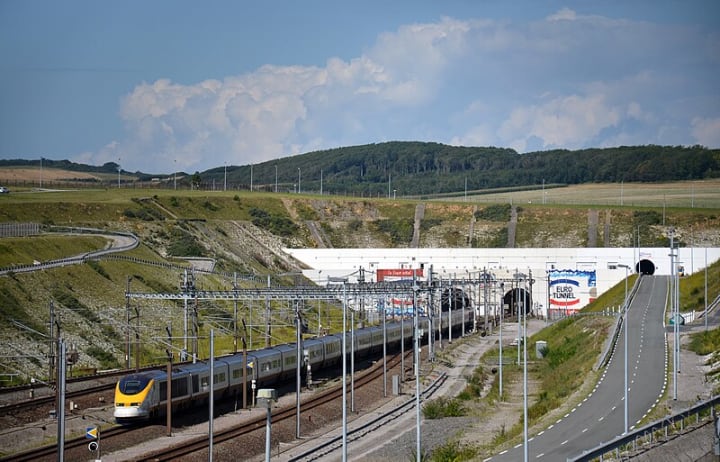
Length: 50.5 kilometers (31.4 miles)
Also known as the "Chunnel," the Channel Tunnel connects Folkestone in the United Kingdom with Coquelles in France, running beneath the English Channel. Opened in 1994, it’s a critical link between mainland Europe and the UK. The tunnel features three tubes: two for rail traffic and one service tunnel. It’s a marvel of international cooperation and a cornerstone of European connectivity.
4. Yulhyeon Tunnel (South Korea)

Length: 50.3 kilometers (31.3 miles)
Opened in 2016, the Yulhyeon Tunnel is part of South Korea’s high-speed rail network. It connects Seoul and Busan, significantly reducing travel time between the country’s capital and its southern regions. The tunnel showcases South Korea’s dedication to cutting-edge infrastructure development.
5. Songshan Lake Tunnel (China)

Length: 38.7 kilometers (24.1 miles)
China’s Songshan Lake Tunnel is an essential component of its extensive high-speed rail network. Located in Guangdong Province, it connects the cities of Guangzhou and Shenzhen. Opened in 2019, the tunnel underscores China’s rapid progress in infrastructure and its commitment to enhancing domestic connectivity.
6. Guadarrama Tunnel (Spain)
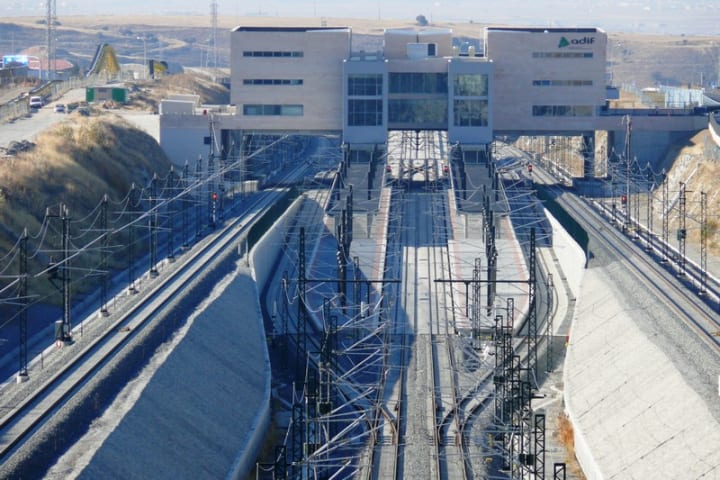
Length: 28.4 kilometers (17.6 miles)
The Guadarrama Tunnel, part of Spain’s high-speed rail network, runs through the Sierra de Guadarrama mountains, connecting Madrid and Valladolid. Opened in 2007, it comprises two parallel tubes, ensuring efficient and safe passage through challenging terrain. The tunnel’s construction was pivotal in expanding Spain’s AVE network.
7. Taihang Tunnel (China)

Length: 27.8 kilometers (17.3 miles)
Located in northern China, the Taihang Tunnel cuts through the Taihang Mountains. It’s part of the Shijiazhuang-Taiyuan Railway, a critical link between Hebei and Shanxi provinces. Opened in 2008, the tunnel showcases advanced engineering techniques used to traverse rugged landscapes.
8. Hakkōda Tunnel (Japan)

Length: 26.5 kilometers (16.5 miles)
Another remarkable Japanese achievement, the Hakkōda Tunnel, is part of the Tohoku Shinkansen line. It runs through the Hakkōda Mountains and was completed in 2010. The tunnel’s construction reflects Japan’s commitment to enhancing its high-speed rail network.
9. Lötschberg Base Tunnel (Switzerland)

Length: 34.6 kilometers (21.5 miles)
Although shorter than the Gotthard Base Tunnel, the Lötschberg Base Tunnel is another Swiss masterpiece. Opened in 2007, it improves connectivity between northern and southern Switzerland. Its efficient design and advanced safety features make it a cornerstone of European rail transport.
10. Simplon Tunnel (Switzerland/Italy)

Length: 19.8 kilometers (12.3 miles)
Connecting Switzerland and Italy, the Simplon Tunnel was the longest railway tunnel in the world when it opened in 1906. Running beneath the Alps, it paved the way for modern tunnel engineering. Despite being over a century old, it remains an integral part of European rail infrastructure.
Conclusion
These tunnels are more than just conduits for trains; they are monuments to human ambition and perseverance. Each one is a story of overcoming natural challenges, employing innovative engineering solutions, and fostering international collaboration. As technology advances, new tunnels are being planned and constructed, pushing the boundaries of what’s possible. These feats of engineering not only connect distant places but also bring people and cultures closer together, redefining the way we travel and interact with the world.
About the Creator
Keep reading
More stories from INFO INSIDER and writers in Proof and other communities.
10 Most Expensive Fruits In The World
When you think of fruit, you probably envision a quick, healthy snack or the perfect addition to a balanced diet. However, in certain parts of the world, fruit is more than just sustenance; it’s a status symbol. Some fruits fetch staggering prices due to their rarity, cultivation techniques, or unique flavors. Let’s delve into the world of opulent produce with this list of the 10 most expensive fruits in the world.
By INFO INSIDER about a year ago in Proof
The Bottle I Was Afraid to Open
I am not a whiskey person. In fact, I’m barely an alcohol person at all. I might have a drink once or twice a year—usually at a wedding, a holiday dinner, or when someone insists I “at least try it.” Even then, I’m the person who nurses the same glass for an hour while everyone else orders a second round.
By Jhon smith5 days ago in Proof
At Will
Section 1 Pollen and the bright sun anesthetized color - muting almost every color to its equivalent shade in pastels. James stood by the window of his apartment at Bayside Village, adjusting his tie and checking the time - it was 8:30 AM. On his phone, a message from the Recruiting Agency, Eastridge. Cassie assured him that the partners at Sidley Austin, a corporate law firm, had asked for him by name - which never happened so he should be excited. It was a request that had never occurred in his ten years as a paralegal, a sudden, specific gravity pulling him into their orbit.
By James L. Royer3 days ago in Proof


Comments
There are no comments for this story
Be the first to respond and start the conversation.