
The True Story and Double Life of Billy Tipton
Reclaiming the Story of a Forgotten Jazzman
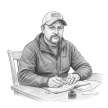


When Billy Tipton died, the world finally noticed him—but not for his music.
It was January 1989, in Spokane, Washington. Billy collapsed in the small home where he'd quietly raised a family. Paramedics arrived too late. He was 74. A jazz musician, semi-retired, father to three adopted sons, partner to a woman named Kitty. To anyone who knew him—really knew him—he was a gentle, private man who had lived a decent, ordinary life. The kind of man who made spaghetti from scratch, taught his boys to balance a checkbook, and still tinkered on the piano at night.
Then the autopsy came.
The coroner's report revealed that Billy Tipton had been assigned female at birth. That single fact unraveled the life he had built and turned it into a national spectacle. The press descended like vultures. Headlines screamed Jazzman Was a Woman!, Lived a Lie for 50 Years!, Fooled Them All! His family—especially his sons—were stunned. Grief turned to confusion, then to a very public kind of pain.
But I’ve always hated those headlines. They missed the story. They missed him.
Billy Tipton wasn’t a hoax. He was a person. A working musician. A father. A man who shaped his life on his own terms in a time that offered almost no space for that kind of freedom.
And he was, as it turns out, a distant cousin of mine—on the Tipton side.
I didn’t grow up hearing his name. He wasn’t the kind of relative passed down through family lore. There were no photos on mantels, no holiday stories, no proud mentions of his jazz albums. It wasn’t until much later—after I began looking into my family’s roots—that I stumbled across him. A few searches, a few archival notes, and suddenly there he was: Billy Lee Tipton. The musician. The mystery. The “secret.”
But to me, he wasn’t a curiosity. He was kin.
Billy was born in Oklahoma City in 1914, named Dorothy Lucille Tipton. After his parents split, he was raised mostly by his grandparents and an aunt. He started playing piano as a child and fell hard for jazz during his teens. That was his first rebellion—falling in love with music that refused to follow rules.
He tried joining his high school jazz band but was rejected. They didn’t allow girls. So he started to push back, dressing more masculine, cutting his hair, performing as a man. It wasn’t a costume. It wasn’t temporary. It became his path. His becoming.
In the 1930s and '40s, Billy played clubs across the West and Midwest. He was good—warm, rhythmic, confident behind the piano. He joined traveling bands and led his own. Sometimes, people asked questions. Sometimes they didn’t. But the music world had its own kind of code: if you showed up on time, played well, and kept things professional, your private life stayed your own.
By the 1950s, he had recorded several albums with the Billy Tipton Trio and turned down the chance to go on a major tour. Bigger fame might have meant more scrutiny, more exposure, and that was a risk he couldn’t take. Instead, he chose family.
He settled down with Kitty Kelly and adopted three boys. They moved to Spokane. He booked gigs at local clubs, gave up touring, and became a father. His sons knew him as kind but reserved, always dressed sharply, always with a pen in his shirt pocket. He taught them to respect hard work, to listen to music closely, and to speak with care. They called him Dad. He signed school forms that way. He was, to them, nothing less than that.
And then came his death. The secret. The circus.
I often wonder what it would have felt like to be one of those boys, standing in the kitchen as the phone rang, hearing a stranger’s voice tell you your father was someone else entirely. But the truth is, he wasn’t someone else. He was the same person they’d loved the day before. It was the world that insisted otherwise.
The world wanted a neat box to place Billy in. Female or male. Honest or deceptive. Real or fake. But his life didn’t fit those binaries. He didn’t “pretend” to be a man. He was one—long before the language we now have for trans identity was available to him. In a different time, he might’ve had support, understanding, even pride. Instead, he had to make his own way through silence, improvisation, and self-preservation.
What people forget—what they still miss—is that Billy Tipton didn’t live a double life. He lived one life. It was consistent. It was full. It was real. The only “secret” was one imposed by a society that would have denied him everything if they had known.
In the years after his death, Billy’s story became something else: a footnote in queer history, a topic for college seminars, a name in the margins. His music was briefly reissued, not for the sound, but for the spectacle. People asked all the wrong questions: Why didn’t anyone know? How could someone live like that?
But I think the better question is: How could someone live like that, and do it with such grace?
Because it was grace. Billy chose stability over stardom. He chose love over legacy. He built a family, worked the gigs, paid his taxes, and lived on his own terms. That shouldn’t be a scandal. It should be a blueprint.
And maybe that’s why I feel so strongly about him now—not just as a historical figure, but as family. Maybe our bloodline carries something of that resilience, that improvisational courage. Maybe Billy’s story was buried because it challenged the comfort of the people around him. But if family means anything, it means remembering our own, fully.
I wish I could have met him. I wish I could have sat beside his piano and listened—not just to the music, but to the man himself. What stories would he have told, if he’d been allowed? What laughter did he keep to himself? What pride did he swallow down just to make it to the next day?
I think of him now, not as a headline, but as an echo. A rhythm that lingers under the surface. A quiet chord struck deep.
Billy Tipton didn’t live a lie. He lived the truth he was allowed to live.
And now, finally, we can tell it.
About the Creator
Tim Carmichael
I am an Appalachian poet and cookbook author. I write about rural life, family, and the places I grew up around. My poetry and essays have appeared in Beautiful and Brutal Things, My latest book. Check it out on Amazon
Keep reading
More stories from Tim Carmichael and writers in Pride and other communities.
Hottest in the Office
Dear Rafi, You’re very distracting to work around. For the first second I saw you the other day, I thought you were some type of executive. It took a moment to realize no, you were just the new guy, dressed up for the job he wants. Be still, my heart.
By Gabriel Shames5 days ago in Pride
The Forsyth House Fire
Since 1851, Forsyth House has stood on the corner of Union Street and Gordon Street in the heart of Glasgow. Its iconic, or was... because on Sunday 8th of March, 2026, a fire broke out in a small, seemingly un-named shop in the building and tore all that history down. As I write, the rubble is still unsettled and the street is still blocked off. Central Station is quiet on the upper level, and around 30 small businesses have quite literally gone up in smoke.
By S. A. Crawford2 days ago in The Swamp



Comments (17)
This story was so sad, but still hopeful. How interesting to find out about your family. So glad you embraced him.
omg this so heartbreaking, but such an interesting read, idk who this is but really cool that you are related. i think i might check him out, huge music lover! i subscribed plz lmk what you think of my poem plz thanks!
My heart stands with you and Billy. That story broke my heart. I hope that this world finds strength in Billy's story, enough to learn lessons so that everyone can live comfortably in their own, bodies and minds, no matter who they are.
This was a great story.
I hadn’t heard of this artist before. I like jazz. I’ll have to give him a listen. It’s so cool that you’re related.
This absolutely broke me. The weight of concealing that secret... I can't imagine it. In another time maybe they could have lived openly as lesbians, and still adopted children, and Billy could still have been a respected musician. Probably not today, though. A source of shame for us all, really, that homophobia and misogyny run so deep, and are seemingly impossible to get rid of.
Well deserved TS, Tim! Congrats. You really do justice to Billy. I saw a doc on him called "No Ordinary Man", made by some fellow Canucks. You've written a beautiful article, and so fascinating that you're related.
All for the love of music. What an amazing story. I can't believe that if he was talented enough as a man that he wouldn't have been talented enough as a woman. He shouldn't have had to sell his identity to do what he loved. Nicely Done.
Thank you for sharing. Amazing story.
What a gorgeous tribute! Thank you for sharing his true legacy and story.
What a sweet tribute to him! It’s a shame he was misrepresented that way.
I've never heard of Billy Tipton before, but this was so interesting! Congrats on Top Story!
A second time read to say congrats on TS, but also to see that MY FIRST COMMENT NEVER POSTED. How rude of vocal ugh. But aside from that, you’ve written this truly beautifully, and I think he’d be real proud to know that someone in his family viewed him with such grace in return :)
1) I've listened to Billy Tipton's pieces before and did not know this 2) CONGRATS ON TOP STORY MATE!!!
A wonderful tribute! So poignant!
amazing story
good writing