Pride Month
"Beyond the Sands of Time: Unearthing LGBTI+ Narratives in Ancient Mesopotamian Art and Literature"
Section 5: Artistic and Literary Expressions of LGBTI+ Diversity in Ancient Mesopotamia Introduction: Art and literature provide valuable insights into the cultural values and expressions of a society. In ancient Mesopotamia, artistic and literary works reflect a surprisingly open and accepting attitude towards LGBTI+ diversity. In this section, we will explore the representation of LGBTI+ themes in the art and literature of ancient Mesopotamia.
By Gustavo Sanchez3 years ago in Pride
"Beyond Traditional Bonds: Exploring the Revolutionary Relationships of Ancient Mesopotamia"
Section 4: Marriage and Relationships in Ancient Mesopotamia Introduction: In ancient Mesopotamia, marriage and relationships were a fundamental aspect of society. The ancient Mesopotamians recognized and practiced various forms of unions, including those that went beyond the conventional heterosexual model. In this section, we will delve into the diverse practices and perspectives surrounding marriage and relationships in ancient Mesopotamia.
By Gustavo Sanchez3 years ago in Pride
"Unearthing Mesopotamia's Forgotten Past: The Vibrant Intersection of Religion and LGBTI+ Diversity"
Section 3: Religion and LGBTI+ Diversity in Ancient Mesopotamia Introduction: In ancient Mesopotamia, religion played a significant role in shaping the beliefs and values of the society. Understanding the religious perspectives of the time is crucial in comprehending how LGBTI+ diversity was perceived and accepted. In this section, we will explore the religious beliefs of ancient Mesopotamia and their influence on gender and sexuality.
By Gustavo Sanchez3 years ago in Pride
"Embracing Diversity in Ancient Mesopotamia: Rewriting the Narrative of Gender and Sexuality"
Section 2: Understanding LGBTI+ Diversity in the Mesopotamian World Introduction: In the ancient Mesopotamian world, there existed a surprising degree of recognition and acceptance of LGBTI+ diversity. As we delve into the culture and society of Mesopotamia, we discover that these civilizations valued and respected a wide range of gender identities and sexual expressions. This open-mindedness and tolerance challenged conventional notions of gender and sexuality and offer a fascinating glimpse into the historical acceptance of LGBTI+ individuals.
By Gustavo Sanchez3 years ago in Pride
"Unlocking the LGBTI+ Secrets of Mesopotamia: Unveiling the Birthplace of Civilization"
Section 1: "Historical and Geographical Context of the Mesopotamian Era" Introduction: The Mesopotamian era holds a significant place in human history, encompassing a rich and fascinating civilization that flourished in the region known as Mesopotamia, located in modern-day Iraq, parts of Syria, Iran, and Turkey. This section aims to provide a comprehensive understanding of the historical and geographical context of the Mesopotamian era, highlighting its significance and impact on the development of human civilization.
By Gustavo Sanchez3 years ago in Pride
Self-Acceptance for all who identifies as LGBTQ++
Amelia sat on the edge of her bed, her mind filled with a swirl of emotions. Pride month was in full swing, and while she had always admired the courage of those who embraced their true selves, she couldn't help but feel a pang of envy deep within her. For years, she had battled with a secret she was terrified to confront—the truth about her own identity and sexuality.
By Joshua de Zilwa3 years ago in Pride
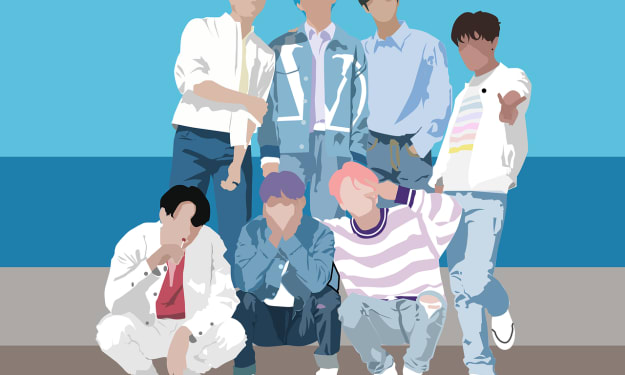
VKook A troubled love story
It was a rainy afternoon in Seoul when Jungkook and Taehyung coincidentally met in a small café. The two members of BTS locked eyes, filled with surprise and curiosity. Although they had shared countless moments together as part of the musical group, they had never felt such an intense connection before.
By Sergio Juarez3 years ago in Pride
Celebrating Love And Acceptance. Content Warning.
Introduction: Today, as we remember the struggles endured for decades in the fight against prejudice, it is essential to acknowledge and accept individuals for who they are, irrespective of their identity or sexual orientation. While not everyone may support this movement, we aim to demonstrate that love knows no boundaries. How others love, how they choose to dress, or how they wish to express their identity should not be a cause for judgment. Instead, let us strive for tolerance and understanding. In the spirit of inclusivity, we will also share some lesser-known facts about homosexuality. Stay with us until the end to broaden your knowledge on this topic.
By Redmark Foreal3 years ago in Pride
Is July 4th Truly a “Freedom Rings” Holiday in 2023?
As I sit in a local coffee shop on July 4th, in a strange but familiar city after having just fled the state of Florida to escape the horrific and detrimental anti-trans legislation, I can’t help but feel the anger boiling up inside of me. Today is supposed to be the celebration of freedom, yet here me and my people are, running to escape persecution and targeted discriminatory legislation in the United States. In less than a month, I had to empty a 12 12 storage unit with my entire life inside, taking only what fit in my van with me; I had to turn in my resignation to my career job and tell my team-which was the most difficult part of it all, and I had to say goodbye to my friends-turned-family and say goodbye to the life I built myself.
By River Garman3 years ago in Pride
Pride and Resilience:
Titleaconfesilien Once upon a time in a small town, nestled amidst rolling hills, there lived a young girl named Lily. From an early age, Lily knew she was different. Her heart beat to a rhythm that society deemed unconventional. She was a budding flower in a garden of conformity, yearning to bloom authentically.
By Usman yinusa3 years ago in Pride