
Ensuring Fairness and Inclusivity in Women’s Sports
A Proposal for Specialized Subgroups for Transgender Athletes

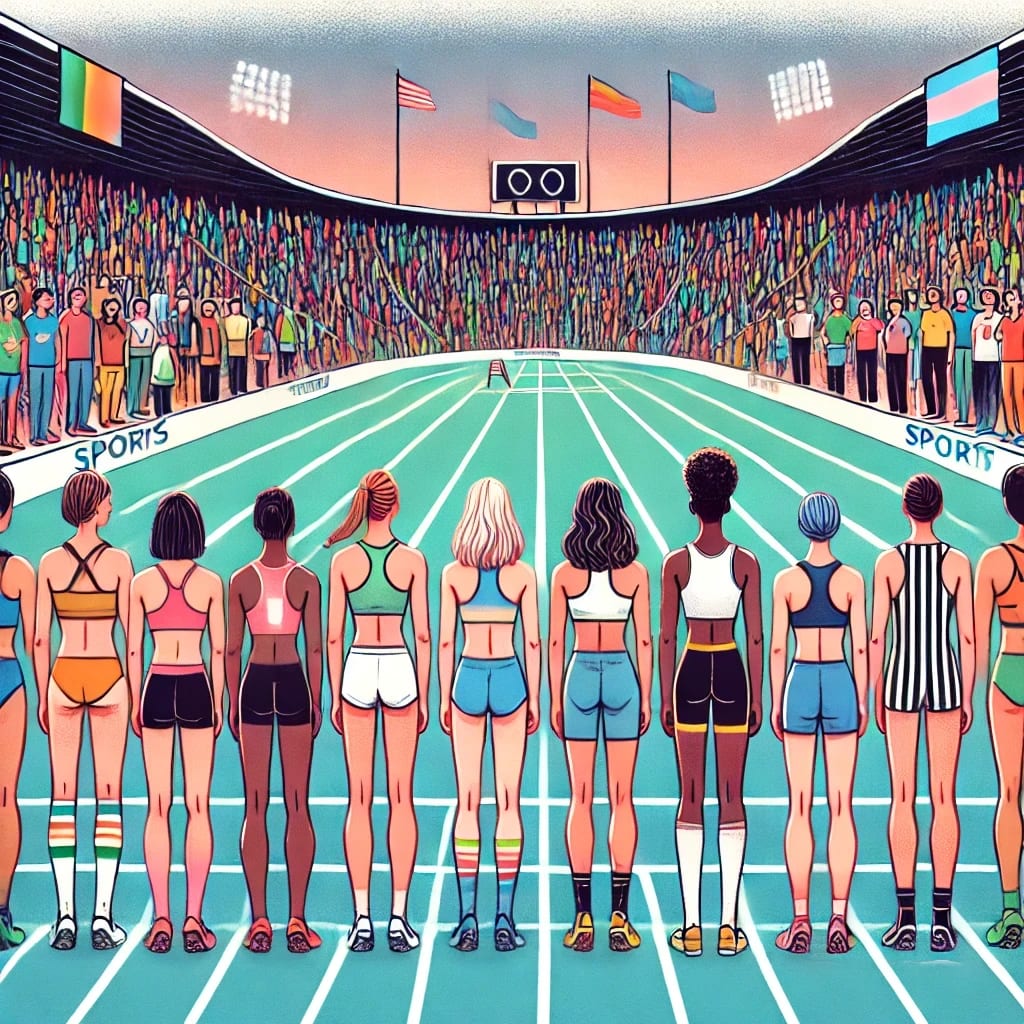
Growing up, I was raised in a faith that taught me to love everyone, regardless of their journey on this earth. My religious upbringing instilled in me the importance of compassion, empathy, and inclusiveness toward all people, no matter their background or identity. In recent years, the debate surrounding the inclusion of transgender athletes in women's sports has grown increasingly contentious. Both sides present compelling arguments: advocates for inclusion emphasize the importance of equality, while critics raise concerns about fairness and safety in athletic competition. A balanced and equitable solution that respects the rights of all athletes while maintaining the integrity of women's sports may lie in the creation of distinct subgroups for transgender and cisgender athletes. This proposal has the potential to embrace inclusion without compromising fairness, fostering a sporting environment that promotes respect and opportunity for everyone.
The biological differences between males and females have been a foundational basis for separating sports categories. As noted in testimony during the recent Georgia Senate hearing, male athletes tend to have physiological advantages, such as increased muscle mass, bone density, and lung capacity, which are established even before puberty. According to a study published in the British Journal of Sports Medicine, biological males retain an advantage in muscle mass and strength even after a year of hormone therapy (Harper, 2021). These differences can create disparities in performance outcomes when male-bodied athletes compete against cisgender women. For example, a study conducted by Hilton and Lundberg (2020) found that transgender women maintain a performance advantage over cisgender women in many sports, even after hormone suppression.
Research published in the Journal of Applied Physiology shows that even with hormone suppression, transgender women retain approximately 12% greater muscle mass compared to cisgender women (Roberts et al., 2020). This data provides a quantitative foundation for the argument that physiological advantages may persist despite hormone therapy, reinforcing the concerns about fairness in competition.
On the other hand, many proponents of transgender inclusion argue that excluding transgender athletes is discriminatory and marginalizes an already vulnerable group. They assert that participation in sports is not just about winning but about community, belonging, and personal development. As Reverend Kimble Sores mentioned during the hearing, sports offer immense benefits to social development, especially for transgender youth who often face increased isolation and risks for mental health challenges. A 2019 study by the Trevor Project found that transgender youth who participate in sports reported lower rates of depression and anxiety compared to those who did not participate (The Trevor Project, 2019). Therefore, excluding transgender athletes from participating alongside their peers can have harmful effects, compounding the marginalization they experience in other areas of life.
To illustrate this, consider the story of Mack Beggs, a transgender athlete who faced significant challenges while competing in high school sports. Mack, who was assigned female at birth but identifies as male, was required to compete in the girls' wrestling division due to state regulations. Despite his success, Mack faced criticism and hostility from those who believed his participation was unfair. In an interview with ESPN, Mack shared that "all I wanted to do was wrestle, but it felt like people were more focused on who I was rather than my skills." His experience underscores the difficulties transgender athletes often face in navigating a system that does not fully acknowledge their identities. It is stories like Mack's that highlight the need for more nuanced solutions that can allow transgender athletes to compete in a way that is fair and affirming (ESPN, 2018).
Another perspective worth considering is that of cisgender female athletes who have concerns about fairness. For example, Martina Navratilova, a renowned tennis champion and advocate for women's sports, has expressed concerns over the potential for transgender women to have physical advantages in certain sports. Navratilova has emphasized the importance of finding a solution that respects the rights of transgender athletes while also ensuring that cisgender female athletes do not face unfair disadvantages (Navratilova, 2019). Including voices like Navratilova's helps balance the discussion, demonstrating that the concerns are not about exclusion but about preserving fairness for all competitors.
To further illustrate the support for specialized subgroups, consider the story of Chris Mosier, a transgender athlete and advocate for transgender inclusion in sports. Mosier, the first openly transgender athlete to compete in the Olympic Trials, has been a vocal supporter of policies that ensure fairness while recognizing the rights of all athletes. He believes that inclusion does not have to come at the expense of fairness and has worked with sports organizations to create policies that benefit all athletes (Mosier, 2020). By including perspectives like Mosier's, the essay adds more supportive voices to the proposed solution, highlighting that many athletes—transgender and cisgender alike—value both fairness and inclusion.
The proposal to create subgroups that allow for transgender and cisgender athletes to compete without hindering women's sports aims to balance both concerns. Such subgroups could be designed to maintain fair competition while ensuring that no one is excluded based on gender identity. This approach also helps to alleviate the protective issues of rights that arise from forcing athletes into categories where their inclusion may be perceived as unfair to others. By creating distinct yet inclusive divisions, transgender athletes would have the opportunity to compete at a level that respects both their identity and the importance of fairness in competition.
To illustrate this proposal, consider the sport of weightlifting. Similar to how athletes are divided by weight classes to ensure fair competition, creating separate divisions for transgender athletes could help maintain a level playing field. In weightlifting, the separation of athletes by weight categories allows individuals of similar physical capabilities to compete against each other, reducing the risk of unfair advantages. A similar approach could be taken with transgender athletes, providing a clear and structured framework that respects both gender identity and the integrity of the competition.
Additionally, the sport of track and field provides a precedent for establishing categories that ensure fair competition. For example, para-athletics events often have multiple classifications based on athletes' physical abilities. These classifications ensure that athletes compete on a level playing field. Applying this model to transgender athletes could provide a similar framework, allowing for fair and equitable competition without compromising the integrity of women’s sports (World Para Athletics, 2020).
One success story worth noting is the Canadian Centre for Ethics in Sport (CCES), which has worked with national sports organizations to develop policies that create inclusive environments for transgender athletes. By introducing gender-inclusive categories and working closely with LGBTQ+ advocacy groups, CCES has demonstrated that it is possible to establish inclusive and fair competition without undermining the integrity of existing sports divisions (CCES, 2021). Examples like this provide concrete proof of concept and show that the proposed solution can be successfully implemented.
Public support for inclusive sports policies is also growing. According to a 2021 survey conducted by the Public Religion Research Institute (PRRI), 62% of Americans believe that transgender people should be allowed to participate in sports in some capacity that aligns with their gender identity. This shift in public opinion suggests that there is increasing cultural acceptance of more inclusive sports policies (PRRI, 2021). Including this data helps demonstrate that the proposed solution is not only feasible but also aligns with the values of an increasingly accepting society.
This solution could involve organizing mixed-gender competitions where both cisgender women and transgender athletes participate under specific guidelines, allowing for a nuanced approach that preserves competitive integrity. Alternatively, separate transgender categories could be established for some sports, similar to how divisions exist based on skill levels or weight classes. This would provide transgender athletes the space to compete without being subjected to unfair scrutiny or creating tensions within women's sports. The inclusion of these subgroups could help to safeguard the progress made for women's rights in athletics while promoting the inclusion and visibility of transgender athletes.
Another important consideration is that creating subgroups can also negate any biases associated with forcing transgender athletes into existing categories. The debate on this issue often becomes polarized, with one side advocating for complete inclusion and the other for exclusion, leading to harmful stereotypes and animosity. A 2021 study by the Williams Institute found that the public's perception of transgender athletes improved when alternative competitive options were presented, suggesting that the establishment of these subgroups would allow all genders to participate meaningfully in sports without undermining the achievements of cisgender women or stigmatizing transgender individuals. It would also serve as a middle ground that acknowledges the diverse needs of athletes today.
It is also important to address potential counterarguments regarding resources and planning for creating additional divisions. Critics may argue that creating separate divisions for transgender athletes would require additional funding, resources, and oversight. However, similar logistical challenges have been successfully managed in other areas of sports, such as the creation of para-athletic divisions and weight classes. For example, the International Paralympic Committee (IPC) has successfully implemented multiple classifications for athletes with different types of impairments, demonstrating that with appropriate planning, resources, and collaboration, the logistical hurdles can be overcome (IPC, 2021). Governing bodies like the International Olympic Committee (IOC) and various national sports federations have demonstrated that with proper planning and commitment, new divisions can be introduced effectively to ensure inclusivity and fairness (IOC, 2021). By applying similar strategies, resources can be allocated to ensure that all athletes, regardless of gender identity, have a fair opportunity to compete.
To implement these new subgroups effectively, sport’s governing bodies could start by collaborating with LGBTQ+ advocacy groups, athletic organizations, and medical professionals to establish clear guidelines for eligibility, safety, and competition standards. Pilot programs could be introduced in lower-level competitions to assess the viability and impact of these subgroups, gathering data that could inform larger-scale implementation. Funding could be sourced through partnerships with organizations that support inclusivity in sports, ensuring that the necessary resources are available to make these changes sustainable.
Additionally, policymakers could play a crucial role in facilitating the creation of these subgroups by providing funding and regulatory support. By working alongside sports organizations, policymakers can help establish a legal and financial framework that ensures fairness and inclusivity for all athletes. This collaboration could include incentives for sports organizations that implement inclusive practices, further encouraging the development of these specialized divisions.
Sports are intended to be spaces of unity, where all individuals, regardless of gender identity, can come together, push their limits, and celebrate their talents. By creating specialized subgroups, we can take a significant step toward a more inclusive and fair sporting culture. This approach ensures that no group feels targeted or marginalized while maintaining the competitive spirit and fairness that is at the heart of sports. For example, in combat sports, divisions already exist to separate athletes based on weight to ensure fair and safe competition. Applying this concept to gender identity could provide a similar solution, allowing athletes of comparable physical capabilities to compete together.
Progress in sports often mirrors progress in society. Historically, advancements in inclusivity within sports have paved the way for broader social changes. By creating an equitable environment in sports, we are setting a precedent for other areas of society, demonstrating that inclusion and fairness can coexist. Moving forward with this proposal, we can lead with compassion, fairness, and innovation, ensuring that all athletes have a place in the sports community. By fostering an environment where every athlete is respected and given a fair chance to compete, we can uphold the values of unity and inclusion that are fundamental to sports. This approach not only supports individual athletes but also serves as a model for how society can address complex issues with empathy and equity, paving the way for a future where every person, regardless of their gender identity, feels seen, valued, and empowered to participate fully.
References:
• Harper, J. (2021). "Effect of Gender-Affirming Hormone Therapy on Muscle Strength in Transgender Individuals." British Journal of Sports Medicine.
• Hilton, E. N., & Lundberg, T. R. (2020). "Transgender Women in the Female Category of Sport: Perspectives on Testosterone Suppression and Performance Advantage." Sports Medicine.
• Roberts, T. A., Smalley, K., & Ahrendt, D. (2020). "Impact of Gender-Affirming Hormone Therapy on Muscle Mass and Performance in Transgender Women." Journal of Applied Physiology.
• The Trevor Project. (2019). "National Survey on LGBTQ Youth Mental Health."
• Williams Institute. (2021). "Public Perception of Transgender Athletes and the Impact of Policy Alternatives."
• ESPN. (2018). "Mack Beggs' Journey Through High School Wrestling."
• Navratilova, M. (2019). "Fair Play in Women's Sports." The Times.
• World Para Athletics. (2020). "Classification Rules and Regulations."
• Canadian Centre for Ethics in Sport (CCES). (2021). "Gender Inclusion in Sport: Creating Inclusive Environments for Transgender Athletes."
• Public Religion Research Institute (PRRI). (2021). "American Attitudes Toward Transgender Athletes."
• Mosier, C. (2020). "Advocacy for Transgender Inclusion in Sports." Athlete Ally.
• International Paralympic Committee (IPC). (2021). "Classification Code and Standards."
• International Olympic Committee (IOC). (2021). "IOC Framework on Fairness, Inclusion, and Non-Discrimination on the Basis of Gender Identity and Sex Variations.
About the Creator
T. E. Door
I’m a raw, introspective writer blending storytelling, poetry, and persuasion to capture love, pain, resilience, and justice. My words are lyrical yet powerful, to provoke thought, spark change, and leave a lasting impact.
Keep reading
More stories from T. E. Door and writers in Pride and other communities.
Navigating the Risks:
Navigating the Risks: A Case Against Advancing Forest Innovations in Georgia The advancement of forest innovation in Georgia, while presented as an opportunity for economic growth and environmental sustainability, raises several concerns that must be carefully considered before such initiatives are approved. As outlined in the Georgia Constitution and the Code of Georgia, there are vital principles regarding environmental protection, the rights of landowners, and sustainable economic practices that demand a cautious approach to forest innovation. By exploring the potential drawbacks, it becomes clear that the approval of such advancements could conflict with Georgia’s long-term interests in preserving its natural resources, ensuring equity, and maintaining legal and ethical standards within the forestry sector.
By T. E. Doorabout a year ago in Writers
Why does thailand have ladyboys
Understanding Thailand's Unique Gender Diversity Thailand's kathoey community, often referred to internationally as "ladyboys," represents one of the world's most visible and culturally integrated transgender populations. To the casual observer, this might seem like a simple matter of social tolerance, but the reality is woven into a complex historical, religious, and cultural fabric that makes Thailand unique. This isn't a modern phenomenon or a tourist attraction it's a deeply rooted aspect of Thai society that challenges Western binary notions of gender.
By David Femboy3 days ago in Pride
Bangkok ladyboys
When you think of Bangkok, a few iconic images likely spring to mind: golden temples, bustling street markets, the smell of sizzling pad thai, and dazzling nightlife. And within that vibrant tapestry, the presence of ladyboys known in Thailand as kathoey is a visible and often misunderstood part of the cultural landscape.
By David Femboy3 days ago in Pride
A Failed Artist, A Disillusioned Poet, An Underpaid Game Show Host
I took my son and niece to Gori, a small town in Georgia where Joseph Stalin was born. They talked me into visiting the Stalin's Museum, the largest in the post-Soviet space. I had resisted going there because I just can't stand the monster and know enough about him, or so I thought.
By Lana V Lynx6 days ago in FYI



Comments (1)
I agree with this!! There is a way to include transgender athletes and be fair to biological women.