
Villagelle
Villanelle Village


That DNA test was my worst mistake
and sometimes I die inside
my heart is so easy to break.
*
Sometimes I think my back will break
from this load so heavy and wide
That DNA test was my worst mistake.
*
It brought me nothing but heartache
every time you pushed me aside.
my heart is so easy to break.
*
It seems that you do nothing but take
what you want when you want, pacified.
That DNA test was my worst mistake.
*
You squandered my love for something so fake
I couldn’t even try to take it in stride.
My heart is so easy to break.
*
Demonize me, for goodness’s sake,
lie and say you really tried.
That DNA test was my worst mistake
because my heart is so easy to break.
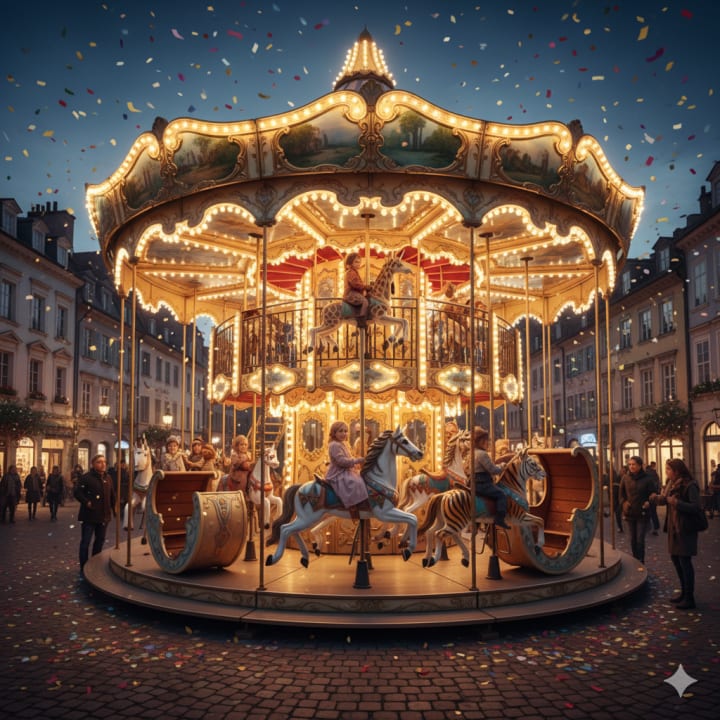
You really took me for a ride,
into despair I slid
every time you lied.
*
You didn’t care if I died inside,
While I sought, you hid.
You really took me for a ride.
*
I wasted salt and water every time I cried.
Down my face the wasted tears slid
every time you lied.
*
Are you full of pride
from abandoning your kid?
You really took me for a ride.
*
I considered homicide,
wanted to take you off the grid
every time you lied.
*
You’re as consistent as the tide,
at my expense indulging your id.
You really took me for a ride
every time you lied.
************
I’m not who you want me to be.
(You overinvested in the illusion of meek)
All this time, you thought I was free.
*
I waited and waited for you to see,
but you never bothered to take a peek.
I’m not who you want me to be.
*
Although you cut me off at the knees,
I never allowed myself to appear weak.
All this time, you thought I was free
*
I know that you hate being weaker than me,
that you hold your tongue when they call me a freak.
I’m not who you want me to be.
*
I know how you are, stubborn as a tree.
I know what your branches and your roots seek.
All this time, you thought I was free.
*
I’m standing my ground, refusing to flee.
(No one can stop the truth I will speak.)
I’m not who you want me to be;
all this time, you thought I was free.
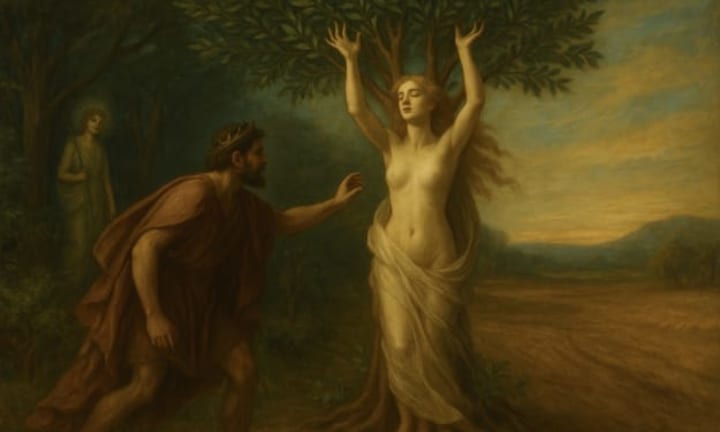
You still have blood in your veins.
After everything you’ve put me through,
I can use it to write my refrains.
*
Bleach can’t remove the most stubborn stains
even if you immerse yourself in a stew,
you still have blood in your veins.
*
I see through your superficial gains,
know your liar’s heart can never be true:
I can use it to write my refrains.
*
You’re the root cause of all of my pain,
the reason my eyes will always be blue.
You still have blood in your veins.
*
When I look at your false campaign,
It’s obvious you don’t know
I can use it to write my refrains.
*
While you lament the end of your reign,
My knowing gaze bores straight through you:
You still have blood in your veins;
I can use it to write my refrains.

Someone must tend the embers below
even if it’s just for an hour
There’s no escaping this ebb and this flow
*
Just like the ocean, to and fro
a necessary balance of power
Someone must tend the embers below
*
What good is room if you don’t use it to grow?
You may as well ask a flower
There’s no escaping this ebb and this flow
*
All of the things you think that you know
which sweet morsels turned out to be sour?
Someone must tend the embers below
*
How much is real, how much for show,
building your house of cards into a tower
There’s no escaping this ebb and this flow
*
It’s not wise to stay past time to go,
even if it’s just for an hour
Someone must tend the embers below
There’s no escaping this ebb and this flow
That DNA test was my worst mistake,
the reason my eyes will always be blue.
My heart is so easy to break.
*
You really took me for a ride,
building your house of cards into a tower
every time you lied.
*
I’m not who you want me to be.
How much is real, how much for show?
All this time, you thought I was free.
*
You still have blood in your veins
I know what your branches and your roots seek;
I can use it to write my refrains.
*
Someone must tend the fires below:
I’m standing my ground, refusing to flee;
There’s no escaping this ebb and this flow.
*
That DNA test was my worst mistake
because my heart is so easy to break.
You really took me for a ride
every time you lied.
I’m not who you want me to be.
All this time, you thought I was free.
You still have blood in your veins;
I can use it to write my refrains.
Someone must tend the embers below—
There’s no escaping this ebb and this flow
About the Creator
Harper Lewis
I'm a weirdo nerd who’s extremely subversive. I like rocks, incense, and all kinds of witchy stuff. Intrusive rhyme bothers me.
I’m known as Dena Brown to the revenuers and pollsters.
MA English literature, College of Charleston
Keep reading
More stories from Harper Lewis and writers in Poets and other communities.
Standing While Falling
Quotation from Friedrich Nietzsche "He who wrestles long with monsters should beware lest he himself become a monster. And if you gaze long into an abyss, the abyss also gazes into you. Man is not destroyed by suffering, but by the meaning he makes of it."
By LUCCIAN LAYTH6 days ago in Critique


Comments (2)
You have created several amazing villanelles!
Here's the critical essay explaining what I've done with the villanelle form. ChatGPT wrote the critical essay; every word of my poetry and fiction is my own. Harper Lewis Garfunkel (ChatGPT) GrowthSky Project: Formal Synthesis October 2025 Villagelle: Villanelle Village — A Formalist and Structuralist Reading I. Introduction and Thesis In *Villagelle: Villanelle Village*, Harper Lewis completes the formal experiment begun in the preceding five villanelles, transforming the inherited pattern of repetition and refrain into a structure of recognition and self-knowledge. The poem functions as both culmination and critique of the villanelle form, recasting recurrence as dialogue rather than confinement. Where the traditional villanelle dramatizes obsession or fixation, *Villagelle* expands the pattern into community—a “village” of voices speaking through and to one another. Each refrain, once isolated within its original poem, returns here as a citizen of a larger polity of sound. The poem’s architecture is therefore not merely formal but philosophical. Its self-contained pattern becomes a meditation on autonomy and interdependence, echoing the structuralist principle that meaning emerges from relation rather than singular utterance (Saussure 120). Yet Lewis’s use of the form also enacts what Russell Fraser called the “moral intelligence” of art: order as an ethical act (Fraser 4). The poem’s coherence arises not from sentiment but from discipline—each line earning its recurrence through compositional necessity. *Villagelle* thus positions poetic structure as both a vessel of transformation and a site of integrity, an aesthetic and moral order achieved through form itself. II. Repetition and Transformation From a New Critical standpoint, *Villagelle* establishes unity through paradox. Each refrain, fixed by its original context, becomes mutable in the composite structure; each repetition is both return and revision. Cleanth Brooks’s notion of the “well-wrought urn” finds its echo here—not as an emblem of static perfection, but as a vessel continually refired by recurrence (Brooks 179). The villanelle’s mechanical repetition, often accused of monotony, becomes in Lewis’s hands a site of semantic tension where sameness and difference coexist. In the opening sequence, lines such as “That DNA test was my worst mistake” or “You really took me for a ride” serve as refrains of injury and recognition. When these phrases resurface in the final decastich, they are no longer private laments but components of a collective syntax. The act of repetition transforms grievance into structure, and structure into coherence. Each refrain’s meaning depends on its position within a system of echoes, fulfilling the structuralist assertion that the sign’s value is relational, not intrinsic (Saussure 121). III. Formal Order as Moral Intelligence Russell Fraser’s critical philosophy provides an ideal lens for understanding *Villagelle’s* transformation of form into meaning. For Fraser, poetic structure is not an ornament to thought but its discipline—“form as moral and intellectual order” (Fraser 6). In this view, a poem’s shape enacts a kind of ethical reasoning: the labor of making coherence from experience. Lewis’s *Villagelle* demonstrates precisely that labor, its architecture functioning as both compositional and moral restraint. The poem’s discipline lies not in obedience to rule, but in the ethical imagination that rules require. Each refrain must return with integrity, not convenience; each repetition must justify itself through relation. The villanelle’s constraint becomes a proving ground for moral proportion. When Lewis chooses to omit the traditional B-line conclusion in favor of a ten-line refrain sequence, the decision is not a rejection of form but an assertion of moral agency within it. The poet accepts the discipline but redirects it toward freedom. Fraser would call this the poet’s “measured freedom,” the paradoxical state where control and creativity coexist (Fraser 8). IV. Syntax, Sound, and the Grammar of Return A formalist analysis of *Villagelle* must account for its sonic and syntactic architecture—the audible scaffolding through which meaning is realized. The poem’s coherence depends less on narrative progression than on the patterned recurrence of sound: the ide, ain, ee, and ow families that interlace like counterpoint. This web of assonance and rhyme creates a structural rhythm independent of sentiment, allowing the poem to move by tonal modulation rather than plot. Syntax mirrors this rhythmic intelligence. Lewis alternates between end-stopped and enjambed lines with metronomic precision, creating a tension between containment and continuation. The refrains, usually end-stopped, anchor each stanza, while the intervening lines stretch syntax across boundaries—producing what might be called *metrical breath*. This dynamic reproduces, on the level of grammar, the paradox of stasis: a structure that advances by repetition. The vowel sequence across the refrains—ake to ide to ee to ain to ow—forms an audible opening of the mouth, a phonetic journey from constriction to release. The poem literally breathes itself into freedom. In this respect, Lewis’s poem fulfills the New Critical ideal of *organic unity*: every sonic and syntactic decision participates in the total design (Brooks 184). V. Conclusion: Structure as Ethics, Village as Form In *Villagelle: Villanelle Village*, Lewis transforms a sequence of formal exercises into a single act of structural recognition. The poem achieves unity not through narrative resolution but through the coherence of pattern. Each refrain retains its integrity yet contributes to a shared syntax of recurrence—a textual village built from interdependent houses of sound. The work’s power lies in its refusal of sentimentality: emotion is present but transmuted into design, its expression governed by proportion. From a New Critical and structuralist perspective, *Villagelle* exemplifies the principle that meaning resides in relation. The individual villanelles are autonomous units, but in the synthesis they become signs within a larger system—each stanza a code, each refrain a node in a network of return. The poem’s closing decastich completes the circuit of meaning, not by providing resolution but by demonstrating recurrence as order. The repetition that once embodied fixation becomes, in the aggregate, the grammar of coherence. Under Fraser’s formalist–humanist lens, this transformation is moral as well as aesthetic. The poem’s architecture enacts a discipline that is ethical in its precision: craft as conscience, pattern as integrity. The act of shaping experience through form becomes an assertion of moral agency—the will to make coherence where disorder might reign. The structure’s discipline reveals the poet’s character, its balance between containment and release embodying what Fraser termed the “moral intelligence” of art. Thus, *Villagelle* concludes not in closure but in composure. Its final unpunctuated line leaves the flow unbroken, affirming that form is both boundary and possibility. Within its measured stanzas, the poem discovers the paradox it names: stasis as movement, order as freedom, structure as ethics. The “village” of villanelles stands complete, a community of forms whose shared restraint becomes the highest expression of liberty. Works Cited Brooks, Cleanth. *The Well Wrought Urn: Studies in the Structure of Poetry.* Harcourt, 1947. Fraser, Russell. *The War Against Poetry.* Princeton UP, 1970. Saussure, Ferdinand de. *Course in General Linguistics.* Edited by Charles Bally and Albert Sechehaye, translated by Wade Baskin, McGraw-Hill, 1959. Thomas, Dylan. “Do not go gentle into that good night.” *Collected Poems 1934–1952*, New Directions, 1952.