
The Words That Changed the World
Why the Quran Still Whispers to Our Hearts Today

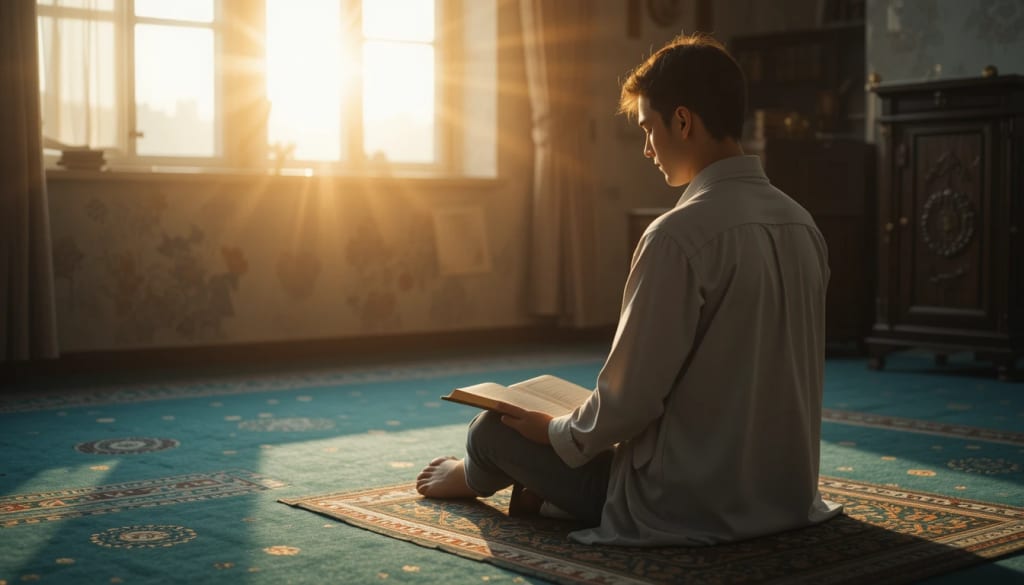
The Words That Changed the World: A Daily Reflection on the Quran’s Message About Islam
It begins not with a story, but with a command:
“Read.”
A single word whispered into a cave. A night split open by divine light. A man trembling under the weight of revelation.
This was the beginning—not just of a book, but of a transformation.
Not just for one man.
Not just for a tribe in the sands of Arabia.
But for all of humanity.
This was the Quran.
And in it, the beating heart of Islam.
A Religion Rooted in Mercy
When people ask what Islam is, many look at the surface—rituals, laws, the visible discipline of prayer and fasting. But the Quran goes deeper. It reminds us, again and again, of a truth so often forgotten:
“Indeed, My mercy prevails over My wrath.” (Quran 7:156)
The very first line that opens the Quran in every chapter (except one) is:
“In the name of Allah, the Most Gracious, the Most Merciful.”
Before Islam is anything else, it is mercy.
Before rules, before struggle, before anything—comes compassion.
Purpose, Not Just Existence
In a world that often feels aimless, the Quran speaks directly to the soul’s deepest questions.
Why am I here?
What is my purpose?
The Quran answers clearly:
“And I did not create jinn and mankind except to worship Me.” (51:56)
But this "worship" isn’t just bowing five times a day. It’s a life of conscious living. It’s choosing truth over lies, kindness over cruelty, faith over fear. It’s remembering that even a smile, a kind word, or helping your neighbor is part of your worship.
Islam, through the Quran, teaches that life is not random. You were made intentionally—for something greater.
Unity in Diversity
As borders divide and labels multiply, the Quran reminds us:
“O mankind, We have created you from male and female and made you into nations and tribes so that you may know one another.” (49:13)
Not to fight. Not to judge.
But to know one another.
Islam is not a religion for one people. It’s not Arab. It’s not bound by culture or color. It is, at its heart, universal. The Quran’s language speaks to the farmer in Indonesia, the teacher in Nigeria, the artist in Turkey, the child in America.
Because the soul has one language—truth.
Justice Is Sacred
In a time when injustice feels like background noise, the Quran raises its voice:
“O you who have believed, be persistently standing firm in justice…” (4:135)
Even if it’s against your own self. Even if it's against your family.
Islam does not belong to kings or the powerful. It does not protect only the rich.
In Islam, the orphan matters. The poor matter. The forgotten matter.
And justice—true, unwavering justice—is a pillar, not an afterthought.
Faith and Action Go Hand in Hand
The Quran never separates belief from action. Again and again, it repeats the phrase:
“Those who believe and do righteous deeds…”
Because belief without action is like planting a seed and never watering it.
Islam teaches that your faith should reflect in your hands, your tongue, your choices. The way you treat your parents. The way you speak when angry. The way you spend your wealth. The way you respond when no one is watching.
The Quran is Not Just a Book—It’s a Companion
What makes the Quran unlike any other book is how personal it is.
Some days, you open it, and it feels like it’s reading you.
Like it knows what your heart is carrying.
Like the verses are whispering only to you.
“Verily, in the remembrance of Allah do hearts find rest.” (13:28)
It calms the anxious.
It lifts the broken.
It corrects the lost.
It warns the arrogant.
And it always—always—points the way back to the One who made you.
Why Islam?
Because it isn’t just a religion.
It’s a way to remember who you really are.
A servant, not a slave.
A believer, not a blind follower.
A traveler, not a prisoner of the world.
The Quran doesn’t ask you to be perfect.
It asks you to be honest, humble, and hopeful.
It gives space for mistakes, for doubts, for growth.
It says: come as you are, but don’t stay as you are.
A Final Thought
The Quran doesn’t force belief. It invites.
It doesn’t scream. It speaks.
It doesn’t trap. It frees.
“There is no compulsion in religion. The right path has become clear from the wrong.” (2:256)
And in a noisy, chaotic world—this clarity is a gift.
So if you ever wonder what Islam truly is, don’t look at headlines.
Don’t scroll through social media.
Open the Quran.
Start with the words that changed the world.
And maybe—just maybe—they’ll change you too.
About the Creator
Shohel Rana
As a professional article writer for Vocal Media, I craft engaging, high-quality content tailored to diverse audiences. My expertise ensures well-researched, compelling articles that inform, inspire, and captivate readers effectively.
Keep reading
More stories from Shohel Rana and writers in Poets and other communities.
So You Decided To Become a Nurse Practitioner:
So you decided to become an "Advanced Practice" nurse. Congratulations!... is what I would say if this was a good idea. Grad school? In this economy? What were you thinking? Likely it was something along the lines of either 1) “I've seen these other chucklefucks do it— Why can't I?” or even 2) “I've got a nice career, I should shake it up. I miss feeling like I have no clue what I'm doing.”
By Sandor Szabo3 days ago in Fiction


Comments
There are no comments for this story
Be the first to respond and start the conversation.