
The Reign of King Jamshid and Zahhak the Serpent-Shouldered
From Ferdowsi’s Shahnameh (The Book of Kings), Part III

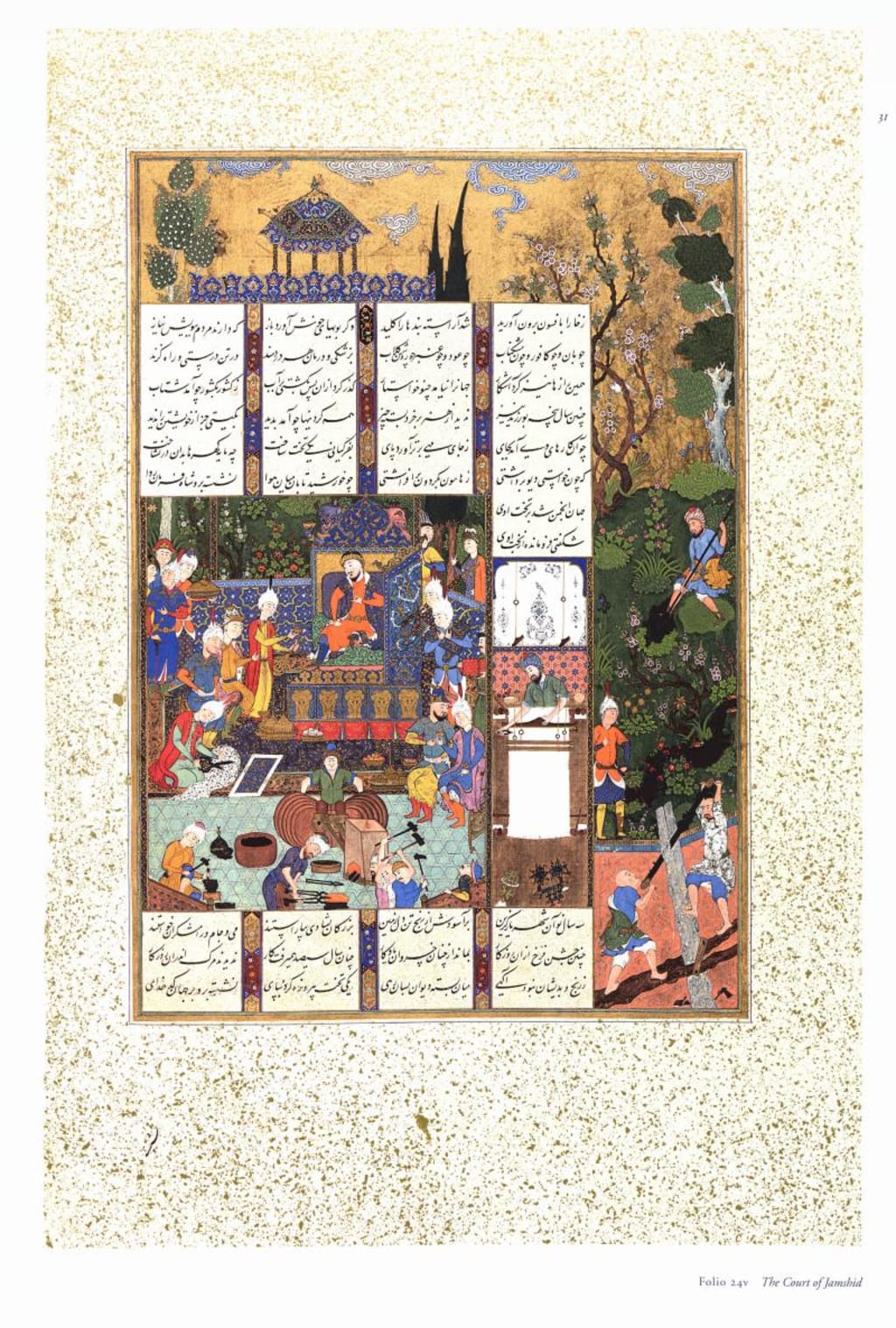
The Legend of King Jamshid — The Second Part of the Shahnameh
After the death of King Tahmuras, his son Jamshid ascended the throne. Not only humans, but even the fairies and demons accepted Jamshid as their king. At the dawn of his reign, Jamshid was proud and confident, yet over time, he devoted himself more deeply to the prosperity of his kingdom. With the sacred fire that had been discovered before him and the iron drawn from the mountains, he and his people forged weapons, crafted shining armor, and for the first time in history, they made armor for their horses to protect them in battle. From the threads they spun, they wove beautiful carpets and garments finer than any seen in the world. For fifty years, Jamshid labored to build and perfect these wonders.
Then he divided his people into four great classes:
The first were the holy priests, pure of heart, who dedicated their lives to the worship of the Almighty and served as guardians of the sacred fire.
The second were the warriors — brave, fearless men who defended the borders and the lives of the people.
The third were the farmers, who tilled the soil and fed the nation with the bounty of their crops.
And the fourth were the craftsmen — skilled creators of weapons, fabrics, tools, and all manner of useful goods.
Thus were the four pillars of civilization established by Jamshid during his golden reign.
In his next endeavor, Jamshid called upon the demons and fairies once more. He commanded them to mix earth and water to build magnificent palaces, grander than any ever seen. Around his lands he ordered high walls to be raised, strong enough to repel all enemies. The people dug deep into the mountains and brought forth rubies, gold, and precious stones. They built ships and sailed to faraway lands, spreading knowledge and prosperity.
During Jamshid’s rule, the art of healing flourished. His people learned the secrets of herbs and plants, extending life and easing pain. From the sweetest flowers, they made perfume — and from the heart of nature, beauty itself. Under Jamshid, humanity reached its peak — the first truly civilized age since the dawn of Kiomars, the first king of the world.
When all these achievements had come to pass, Jamshid decided to celebrate. He ordered a grand throne to be built and commanded the demons and fairies to lift him high into the heavens. As he sat upon his golden seat, birds circled around him in the bright sky and the people below cheered in joy and awe. Jamshid proclaimed that day to be a festival of gratitude to God for all His blessings — and that day became the first day of spring, the sacred celebration of Nowruz, the ancient New Year that Persians still honor to this very day.
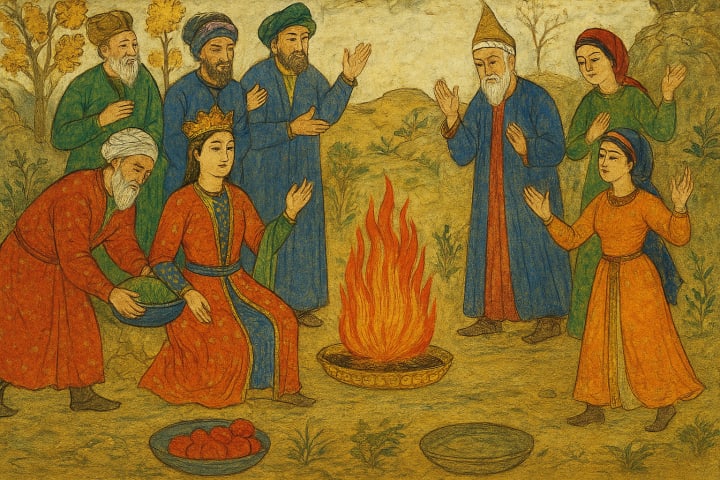
Jamshid ruled for three hundred years in peace and prosperity. No one was idle, no one hungry, and the world shone with light and joy. But as time passed, pride returned to his heart. He began to believe that all glory and abundance were because of him alone.
One day, he summoned the nobles of his court. As they gathered before his radiant throne, he cried out in arrogance:
"All that you have — your life, your comfort, your knowledge — you owe to me! From this day forth, it is I whom you shall praise, not the unseen God above!"
The priests and wise men fell silent. None dared speak against him, yet all turned their hearts away from their king. From that day, the divine glory — the Farr-e Izadi — that had blessed Jamshid, departed from him. His armies scattered, his people rebelled, and chaos spread through the once-holy land. Jamshid realized his mistake too late.
And in that dark hour, when the light of righteousness had faded, a new figure emerged from the desert — Zahhak, the serpent-shouldered prince.
Zahhak was the son of Merdas, a just and God-fearing ruler of a sun-scorched land — the realm known today as Arabia. Merdas was righteous, but Zahhak was young, ambitious, and reckless. He rode across the endless desert with a thousand horses, dreaming of power.
One night, a handsome stranger appeared before him — none other than Ahriman, the spirit of evil, disguised in human form. He whispered temptations into Zahhak’s heart:
"You are destined to rule the world. But your father still lives — and as long as he breathes, the crown will never be yours."
At first, Zahhak resisted. But Ahriman’s words wrapped around his soul like a serpent. Eventually, the prince agreed to the unholy pact.
Merdas, as was his custom, went each night to his garden to pray beneath the stars. Ahriman, in his deceit, dug a deep pit along his path. When the old king passed, he fell into the darkness and perished. And thus Zahhak became king of the desert realm, wearing his father’s crown — but his soul already enslaved to evil.
About the Creator
ALI ABBASI
“Here, the greatest and most authentic stories of history are written, turning into legends.”
Keep reading
More stories from ALI ABBASI and writers in Poets and other communities.


Comments
There are no comments for this story
Be the first to respond and start the conversation.