
T.S. Eliot (1888–1965): A Visionary Poet of the Modernist Era
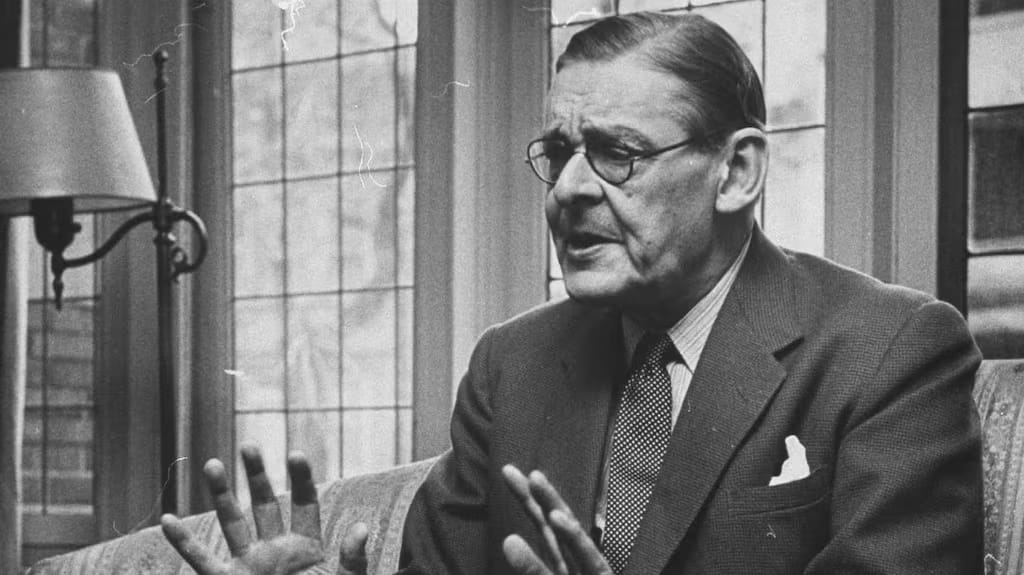
Thomas Stearns Eliot, better known as T.S. Eliot, is regarded as one of the most significant poets of the 20th century. His innovative approach to poetry, profound exploration of the human condition, and masterful use of language established him as a central figure in the Modernist movement.
Early Life and Background
Eliot was born on September 26, 1888, in St. Louis, Missouri, into a prominent family with New England roots. His early education was shaped by his family’s emphasis on intellectual achievement and religious values. After attending Harvard University, Eliot studied philosophy at the Sorbonne in Paris and later at Merton College, Oxford. His transatlantic upbringing and education exposed him to a wide array of cultural and intellectual traditions, which would deeply influence his work.
In 1914, Eliot moved to England, where he settled permanently. He worked as a teacher, then as a banker, and later as an editor for the influential literary magazine The Criterion. In 1927, Eliot became a British citizen and converted to Anglicanism, both of which had a profound impact on his later poetry.
Major Works
Eliot’s body of work includes poetry, plays, and essays, but his reputation primarily rests on his groundbreaking poetic achievements. Some of his most celebrated works include:
"The Love Song of J. Alfred Prufrock" (1915)
Often considered the poem that marked the beginning of the Modernist movement, this dramatic monologue delves into the psyche of a self-conscious and indecisive protagonist. Eliot captures the alienation and paralysis of modern life through vivid imagery, fragmented structure, and an innovative use of free verse. Famous lines like “Do I dare disturb the universe?” encapsulate the speaker’s existential dilemma.
"The Waste Land" (1922)
Widely regarded as Eliot’s magnum opus, The Waste Land is a dense, multi-layered poem that portrays the spiritual desolation of the post-World War I world. The poem’s fragmented structure, extensive use of allusion (to works like Dante’s Divine Comedy, the Bible, and Shakespeare), and shifting voices reflect the chaos and disarray of modernity. Its famous opening line, “April is the cruellest month,” subverts traditional notions of renewal and rebirth, setting the tone for the poem’s exploration of decay and spiritual longing.
"The Hollow Men" (1925)
This poem is a haunting meditation on human emptiness and moral vacuity. Famous for its chilling closing line, “This is the way the world ends / Not with a bang but a whimper,” the poem underscores Eliot’s preoccupation with spiritual desolation and the search for meaning.
"Ash-Wednesday" (1930)
Marking Eliot’s turn toward religious themes, Ash-Wednesday reflects his struggles with faith and spiritual redemption. The poem’s introspective tone and lyrical style signal a departure from the fragmented structure of his earlier works.
"Four Quartets" (1943)
Comprising four interconnected poems (Burnt Norton, East Coker, The Dry Salvages, and Little Gidding), this work is a profound meditation on time, faith, and the eternal. Rooted in Eliot’s Christian beliefs, Four Quartets explores the cyclical nature of life and the possibility of spiritual renewal. It is often considered one of his most mature and accomplished works.
Themes and Style
Eliot’s poetry is renowned for its complexity, erudition, and depth. His work addresses a wide range of themes, including:
Modern Alienation and Fragmentation
Eliot vividly captures the disorientation and fragmentation of life in the modern age. His characters often grapple with feelings of isolation, purposelessness, and spiritual emptiness, reflecting the anxieties of the 20th century.
Time and Eternity
A recurring theme in Eliot’s poetry is the tension between temporal existence and the eternal. He often contrasts fleeting human experiences with the timeless truths of religion and philosophy.
Spiritual Quest
Many of Eliot’s works reflect his personal journey toward faith and redemption. His exploration of spiritual desolation and renewal resonates deeply with readers searching for meaning in a secular world.
Myth and Allusion
Eliot’s poetry is dense with references to classical literature, mythology, religion, and philosophy. By drawing on these traditions, he connects the struggles of the modern individual to universal human experiences.
The Search for Order
Amid the chaos and fragmentation of modern life, Eliot seeks patterns and meaning, often turning to religion as a source of stability and coherence.
Stylistically, Eliot was a pioneer of Modernist poetry. His innovations include:
Fragmented Structure: Reflecting the disarray of the modern world, Eliot often employs disjointed narratives, abrupt transitions, and multiple voices.
Free Verse: He breaks away from traditional metrical patterns, allowing for greater flexibility and expression.
Imagery and Symbolism: Eliot’s vivid and often surreal imagery evokes powerful emotions and ideas.
Allusion and Intertextuality: His work is rich with references to other texts, creating layers of meaning that reward close reading.
Influence and Legacy
T.S. Eliot’s impact on literature cannot be overstated. He was a key figure in the Modernist movement, alongside contemporaries like Ezra Pound, James Joyce, and Virginia Woolf. Eliot’s poetry challenged conventional forms and introduced a new way of thinking about literature, inspiring generations of poets and writers.
In addition to his poetry, Eliot’s essays on literary criticism, such as “Tradition and the Individual Talent” (1919), have shaped the way we think about literature and the role of the poet. His argument that great poets draw on the literary tradition while contributing something new remains influential to this day.
Eliot’s work also had a significant cultural impact. His play Murder in the Cathedral (1935) and his contributions to verse drama revitalized the genre. Furthermore, his influence extends beyond literature; his poem Old Possum’s Book of Practical Cats (1939) became the basis for Andrew Lloyd Webber’s hit musical Cats.
Criticism
While Eliot’s work has been widely celebrated, it has also faced criticism. Some have accused him of elitism, arguing that his dense allusions and intellectual approach make his poetry inaccessible to the average reader. Others have critiqued his conservative political views and controversial statements on race and culture. Despite these critiques, Eliot’s contributions to literature remain undeniable.
Conclusion
T.S. Eliot’s poetry is a testament to his brilliance as a thinker and writer. By capturing the complexities of modern life and exploring timeless themes, he created works that continue to resonate with readers worldwide. Whether delving into the alienation of The Waste Land, the introspection of Ash-Wednesday, or the spiritual insights of Four Quartets, Eliot’s poetry offers a rich and rewarding journey into the depths of human experience.
About the Creator
Mr Ali
Hello EveryOne..!!




Comments
There are no comments for this story
Be the first to respond and start the conversation.