
Homer: The Legendary Poet of Ancient Greece
Exploring the Life, Works, and Legacy of the Father of Western Literature

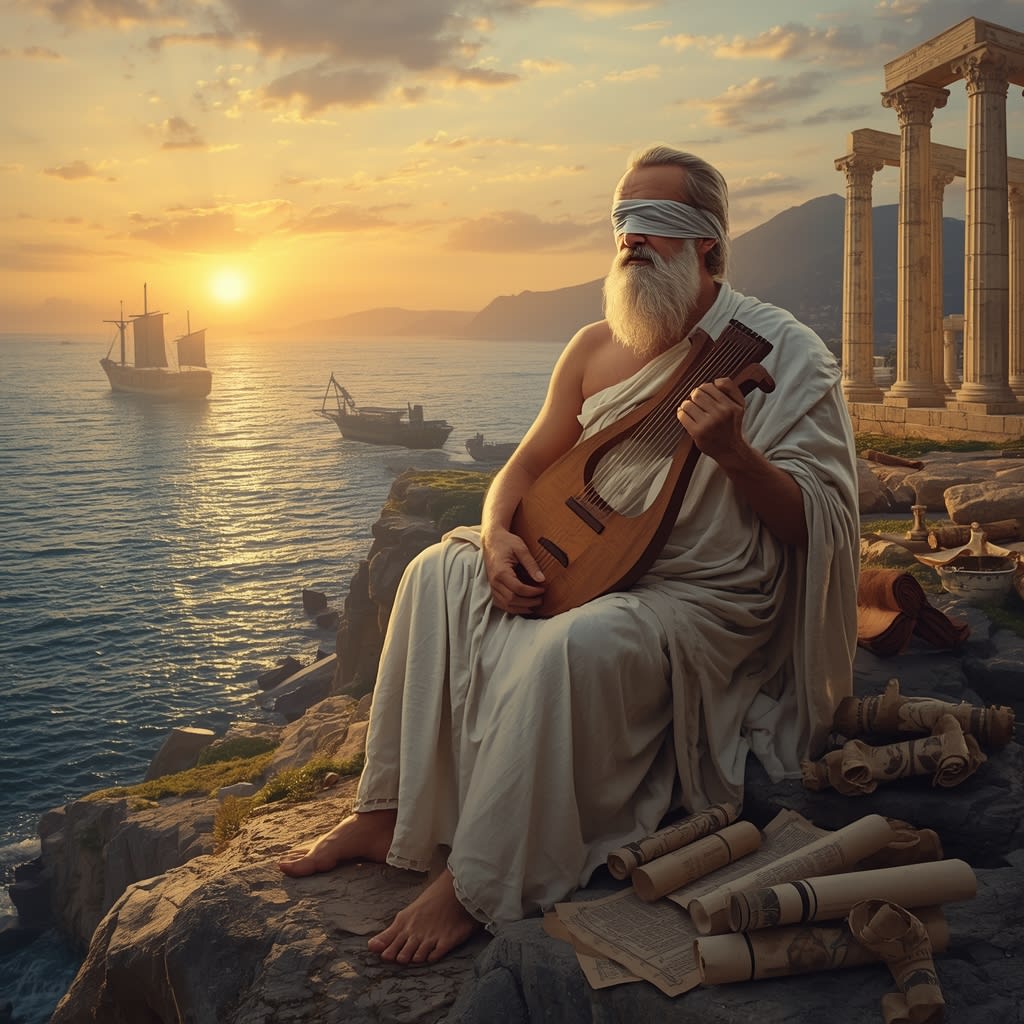
Introduction: Who Was Homer?
Homer is one of the most influential figures in world literature. As the author of The Iliad and The Odyssey, two of the greatest epic poems in history, Homer’s work laid the foundation for Western storytelling, poetry, and even philosophy. His name echoes through the ages, despite the fact that little is known about his life.
Believed to have lived around the 8th century BCE, Homer’s epics shaped Greek identity and inspired countless generations of poets, artists, and scholars. But who was Homer really? Did he exist as a single person, or was “Homer” a symbolic name for a group of poets? In this article, we dive deep into Homer’s life, his epic poems, and his everlasting cultural legacy.
The Mystery of Homer’s Identity
One of the most fascinating aspects of Homer is that his true identity remains a mystery. Ancient sources often disagree about his birthplace, with cities like Chios, Smyrna, and Ionia all claiming him as their own. Some say he was blind, an idea possibly inspired by the tradition of blind bards, or perhaps derived from the character Demodocus in The Odyssey, a blind poet.
There is even a theory called the "Homeric Question" — the scholarly debate over whether Homer was a single individual or a collective name for several oral poets. According to this theory, The Iliad and The Odyssey may have been shaped over generations by many contributors before finally being written down.
The Iliad: A Poem of War, Honor, and Tragedy
Homer's first major work, The Iliad, is a powerful epic set during the Trojan War. Contrary to popular belief, it doesn't tell the entire story of the war, but focuses on a few intense weeks near the end, especially the conflict between Achilles, the greatest Greek warrior, and Agamemnon, the Greek commander.
Key Themes in The Iliad:
Honor and Glory: Achilles struggles between personal pride and duty.
Fate vs. Free Will: The gods interfere, but human choices drive the narrative.
The Tragedy of War: Homer doesn’t glorify war — he presents its horror and human cost.
Not only is The Iliad a thrilling war epic, but it is also a deep philosophical text. Homer weaves poetry, psychology, and politics together in a narrative that feels timeless.
The Odyssey: A Journey of Adventure and Homecoming
Following the tragic war story of The Iliad, The Odyssey shifts focus to Odysseus, the clever Greek king of Ithaca, and his ten-year journey home. The poem blends myth, fantasy, and reality as Odysseus faces monsters, gods, and temptations in his struggle to return to his wife, Penelope.
Major Highlights of The Odyssey:
The Cyclops Polyphemus: One of the most famous encounters in world literature.
Circe and Calypso: Sorceresses who both delay and challenge Odysseus.
The Power of Intelligence: Odysseus wins with cunning, not brute force.
The Idea of Home: At its heart, The Odyssey is about the universal human desire to return home.
Odysseus is a hero unlike Achilles — thoughtful, strategic, and emotionally complex. Through him, Homer explores resilience, loyalty, and identity.
Homer’s Style and Oral Tradition
Homer’s poetry was part of an oral tradition, meaning it was composed and passed down by word of mouth before being written down. His works are structured in dactylic hexameter, a rhythmic scheme that helped singers and bards remember the verses.
Features of Homeric Poetry:
Epic Similes: Long, vivid comparisons to illustrate action or emotion.
Epithets: Repeated phrases like “swift-footed Achilles” or “rosy-fingered Dawn.”
Repetition: Useful for memorization in oral performance.
Divine Intervention: The gods are active characters, shaping human destiny.
This poetic style not only made the epics easier to remember but also gave them a musical and dramatic quality that continues to enchant readers today.
Homer’s Lasting Legacy
Homer’s impact on Western literature and culture cannot be overstated. From Virgil’s Aeneid in ancient Rome to James Joyce’s Ulysses in modern literature, Homer’s themes, characters, and structures have been reused, reimagined, and revered.
Homer’s Influence Can Be Seen In:
Philosophy: Plato and Aristotle often referenced Homer.
Theatre: Greek tragedies echo Homeric themes of fate and morality.
Modern Literature: Many novels and films borrow Homer’s “hero’s journey” framework.
Education: For centuries, Homer was at the core of classical education in Europe and the Middle East.
Even today, Homer’s stories resonate with audiences worldwide. His characters are flawed, heroic, emotional, and entirely human — which is perhaps why they endure.
Conclusion: Why Homer Still Matters Today
Homer may have lived nearly 3,000 years ago, but his poetry feels remarkably relevant. Whether you’re drawn to the raw emotion of Achilles, the clever survival of Odysseus, or the timeless struggle between destiny and choice, Homer speaks to the universal human experience.
As long as people tell stories of war, love, loss, and homecoming, Homer’s voice will continue to echo — not just as a relic of the past, but as a living guide to understanding ourselves and our world.
SEO Keywords Used:
Homer the poet
The Iliad and The Odyssey
Ancient Greek epic poetry
Homer biography
Homeric tradition
Greek literature
Homer’s influence
Who was Homer?
Homer’s legacy
About the Creator
Alexander Mind
Latest Stories
Keep reading
More stories from Alexander Mind and writers in Poets and other communities.


Comments
There are no comments for this story
Be the first to respond and start the conversation.