
Allama Iqbal’s Critique of Western Civilization: A Timeless Call to Awaken the Self
Unveiling the West’s Soul: Iqbal’s Poetic Rebellion

Introduction: A Poet’s Bold Vision
“Raise yourself to such heights that even God,
Before decreeing your fate, asks, ‘What is your wish?’”
(Asrar-e-Khudi, Allama Iqbal)
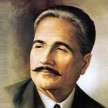
Allama Muhammad Iqbal, often called the “Poet of the East,” was more than a literary figure. He was a philosopher and visionary who dared to challenge the foundations of Western civilization through his poetry and prose. His critique was not born of resentment but of a profound desire to awaken humanity to its higher potential. What was the heart of Iqbal’s critique? Was it the West’s obsession with materialism, its spiritual emptiness, or its colonial dominance? This article explores the essence of Iqbal’s message and asks: in a world driven by consumerism and globalization, does his voice still resonate?
Materialism: The Chains of the Modern Soul
Iqbal saw Western civilization’s greatest flaw in its relentless pursuit of material progress at the expense of the human spirit. In his seminal work Asrar-e-Khudi (Secrets of the Self), he wrote:
“The West’s knowledge and art do not touch the heart;
Only the light that springs from the soul can reach the soul.”
This verse captures Iqbal’s belief that the West’s industrial and scientific triumphs, while impressive, reduced humans to cogs in a machine, enslaved by desires for wealth and comfort. He argued that materialism stripped individuals of Khudi—the concept of selfhood, or the inner strength that defines human purpose. For Iqbal, true progress lay not in accumulating possessions but in cultivating the self.
Reflection: How often do we, in our modern lives, chase fleeting pleasures—new gadgets, social media validation—while neglecting our inner growth? Iqbal’s warning feels strikingly relevant.
Spiritual Void: A Civilization Without a Soul
Beyond materialism, Iqbal critiqued the West’s spiritual bankruptcy. In his famous poem Shikwa (Complaint), he challenged the arrogance of a civilization that prided itself on progress while ignoring the divine:
“This knowledge, this wisdom, these governments, this power—
Did you assume all this is yours alone?”
Iqbal saw the West as a culture that had lost touch with the transcendent, replacing faith and introspection with rationalism and self-interest. He urged humanity—particularly the Muslim world—to reclaim spirituality, not as blind dogma but as a source of purpose and unity. His philosophy of Khudi emphasized that true strength comes from aligning the self with divine purpose, a stark contrast to the West’s secular individualism.
Reflection: In today’s world, where mental health struggles and existential questions abound, could Iqbal’s call for spiritual awakening offer a path to meaning?
Colonialism: The Theft of Identity
Iqbal’s critique also targeted Western colonialism, which he saw as both a political and intellectual shackle. Living under British rule in India, he witnessed how colonial powers stripped colonized nations of their cultural and spiritual identity. In Jawab-e-Shikwa (Response to the Complaint), he rallied:
“Arise, for the time of action has come;
The days of Western bondage are over.”
Iqbal’s 1930 Allahabad Address, where he proposed the idea of a separate Muslim state, was a direct challenge to colonial domination. He believed the West’s intellectual hegemony had alienated Eastern societies from their heritage, urging them to reclaim their autonomy through cultural and spiritual revival.
Reflection: In an era of cultural globalization, where Western values often dominate, does Iqbal’s call for self-determination still inspire?
Relevance Today: A Mirror for Our Times
Iqbal’s critique of Western civilization is not a relic of the past—it’s a mirror for our present. His warnings about materialism resonate in a world obsessed with consumerism, where social media metrics often define self-worth. His emphasis on Khudi offers a antidote: a call to prioritize inner growth over external validation. Consider this verse from Asrar-e-Khudi:
“The self is not found in the mirror of others;
It is forged in the fire of struggle and faith.”
In a globalized world, Iqbal’s critique of colonialism translates to resisting cultural homogenization. His vision encourages us to celebrate our unique identities while seeking universal human values. Whether you’re navigating the pressures of modern life or grappling with questions of identity, Iqbal’s message is clear: true power lies in knowing and strengthening your inner self.
Conclusion: A Call to Awaken
Allama Iqbal’s critique of Western civilization—its materialism, spiritual void, and colonial oppression—was not just a condemnation but a call to action. His strongest message, the philosophy of Khudi, invites us to rise above fleeting desires and reclaim our spiritual and intellectual freedom. In a world distracted by the glitter of modernity, Iqbal’s words challenge us to pause and ask: Are we nurturing our souls, or are we lost in the race for more? His poetry is an invitation to awaken, to forge our own destinies, and to live with purpose. As Iqbal said, “Nations are born in the hearts of poets.” Perhaps it’s time we let his words ignite our own.
About the Creator
Iqbal
Iqbal was a visionary poet
Fair Exchange, No Robberies
Dark Memoirs - Index There are at least two kinds of people in the world: those who write this half-arsed kind of intro to a story that looks to separate the rare and the norm, and those who realise it's an overused framing device and don't.
By Paul Stewart6 days ago in Chapters


Comments (1)
Iqbal's take on the West's flaws hits home. His view on materialism making us cogs and the spiritual void is spot-on. We often get caught up like he said, chasing things and forgetting our inner selves.