
The West's "Prosperity": Built on Exploitation or True Progress
Iqbal's Uncomfortable Truth: The Hidden Cost of Your Economic Empire.
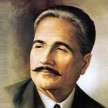

In the grand narrative of Western civilization, economic prosperity is often presented as the ultimate triumph. Skyscrapers pierce the clouds, markets buzz with activity, and innovation drives unprecedented wealth creation. This dazzling display of material abundance is frequently held up as irrefutable proof of a superior system. Yet, Allama Muhammad Iqbal, with his profound insight into both Eastern spiritual wisdom and Western economic thought, offered a chilling counter-narrative. He argued that beneath the gleaming surface of this prosperity lay a system fundamentally built on **exploitation**, a structure that devoured human dignity and widened the chasm between the rich and the poor.
Iqbal was not merely observing from a distance; he had studied Western economics and political science. He understood the intricate mechanisms of capitalism, the drive for profit, and the relentless pursuit of market expansion. What troubled him was not the concept of wealth itself, but the *method* of its accumulation and its *distribution*. He saw how the industrial revolution, while creating immense riches for some, simultaneously condemned vast populations to poverty, squalor, and a life of servitude. For Iqbal, this wasn't an unfortunate side effect; it was an inherent feature of a system that prioritized capital over humanity.
He eloquently captured this stark reality in verses that expose the hypocrisy of a civilization that prides itself on freedom while perpetuating economic bondage:
> **"Yeh sehar jo kabhi farda hai kabhi hai imroz,"**
> **"Nahin maloom ke hoti hai kahan se paida."**
> **"Woh sehar jis se larazta hai shabistan-e-wujood,"**
> **"Hoti hai banda-e-momin ki azan se paida."**
>
> *(This dawn, which is sometimes tomorrow and sometimes today,)*
> *(It is not known from where it originates.)*
> *(That dawn, which makes the chamber of existence tremble,)*
> *(It originates from the call to prayer of the believer.)*
While these lines speak to a spiritual awakening, they also subtly critique the false dawns offered by purely materialistic systems. The "dawn" of Western economic progress, though seemingly bright, lacked the true liberating power for the masses. It was a dawn that benefited a few, leaving the majority in the "chamber of existence" trembling under the weight of economic injustice.
Iqbal's critique extended to the very concept of **labor and capital**. He saw how labor, the very engine of production, was reduced to a mere commodity, its worth determined by market forces rather than human dignity. Capital, on the other hand, gained an almost sacred status, accumulating power and influence, often at the direct expense of the working class. This imbalance, he argued, created a society where the "haves" perpetually enriched themselves by exploiting the "have-nots."
Consider his poignant observation on the "charms" of modern civilization:
> **"Tehzeeb-e-nau ke karishmay ayyan hain sab ke liye,"**
> **"Iqbal ne yeh bhi kaha tha ke is ki bunyadon mein"**
> **"Gurbat-o-iflas-o-nadari-o-muhtaji ke"**
> **"Hain anboh-e-ghareeb-o-miskeen-o-nadeeda ke khaimey."**
>
> *(The wonders of the new civilization are evident to all,)*
> *(Iqbal also said that in its foundations,)*
> *(Of poverty, destitution, indigence, and helplessness,)*
> *(Are the tents of the poor, the needy, and the unseen masses.)*
This imagery is powerful. While the "wonders" of modern civilization are visible to everyone – the grand buildings, the consumer goods, the technological advancements – Iqbal pulls back the curtain to reveal the hidden reality. The very foundations of this splendid edifice are built upon the suffering of the impoverished. The "tents of the poor" are not just a metaphor for physical slums but for the systemic marginalization and invisibility of those who fuel the economic engine but reap little of its benefits. This is a direct challenge to the notion that Western prosperity is a universal good; instead, it highlights its exclusionary nature.
Iqbal believed that a truly just economic system should foster human flourishing for all, not just a select few. He envisioned a society where wealth was circulated, where the dignity of labor was upheld, and where compassion guided economic policy. The Western model, in his view, was fundamentally flawed because it lacked this moral compass, leading to an inevitable cycle of boom and bust, and perpetual social unrest fueled by economic disparity.
His critique is particularly relevant today as discussions around wealth inequality, corporate greed, and the gig economy's impact on workers dominate global discourse. Are we still building our "wonders" on the "tents of the poor"? Has the "fragile branch" of a purely materialistic economic system grown stronger, or are its cracks becoming more apparent?
Iqbal's insights compel us to look beyond the dazzling lights of economic success and question the human cost. His voice serves as a timeless reminder that true progress must be measured not just by material accumulation, but by the well-being and dignity of every individual within a society. In the next article, we will explore another critical aspect of his thought: his views on Western democracy and its perceived shortcomings.
About the Creator
Iqbal
Iqbal was a visionary poet
Winterthorne
Winterthorne stood alone at the edge of the park. The beautiful snow that had surrounded him was all trampled now, from the feet of all of the children who had built him. He missed the sparkly clean snow blanket, but he was happy that so many children had come out to make him.
By Laura DePace7 days ago in Fiction



Comments
There are no comments for this story
Be the first to respond and start the conversation.