
The Nubia Z70 Ultra and Vivo X200 Ultra demonstrate that 35mm is the future of camera phones.
With another phone manufacturer abandoning the 23mm smartphone camera standard, would the 35mm cameras of the future be found in Vivo's X200 Ultra and Nubia's Z70 Ultra?


The resurgence of 35mm equivalent focal lengths in smartphone cameras is shaping up to be a major trend in 2024, and devices like the Nubia Z70 Ultra and Vivo X200 Ultra are leading the charge. Here’s why 35mm is becoming the new standard for mobile photography and how these phones prove it.
Finally, we are moving toward a 35mm smartphone future. After last year's Nubia Z60 Ultra made the switch, the recently announced Nubia Z70 Ultra and Vivo X200 Ultra are breaking away from the 23mm status quo that’s overstayed its welcome.
For the longest time, smartphones have saved their best hardware for the primary 23mm equivalent focal length cameras – and this made perfect sense back in 2015, when phones had one camera.
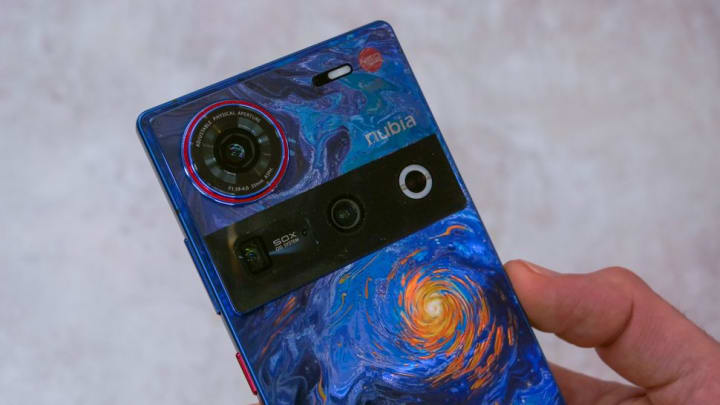
After all, 23mm is very versatile. Wide but not too wide; great for group shots while minimizing distortion; anyone who wishes to zoom can pinch in; and there is no real need for an ultra-wide, as recent smartphones, such as the Razr 50 Ultra, demonstrate by eliminating it in order to save space.
Why 35mm? The Sweet Spot for Mobile Photography
1. Natural Perspective – The 35mm focal length (full-frame equivalent) closely matches the human eye’s field of view, making images feel more immersive and natural compared to ultra-wide or standard 24-28mm smartphone lenses.
2. Better Composition – It’s wide enough for environmental shots yet tight enough to avoid distortion, making it ideal for street photography, portraits, and everyday scenes.
3. Low-Light Advantage – Many 35mm lenses in smartphones (like the Z70 Ultra’s f/1.6 aperture) gather more light than ultra-wide or periscope zooms, improving night shots.
4. Cinematic Appeal – 35mm has long been a favorite in filmmaking, and smartphone brands are leveraging this for more cinematic video and photo styles.
Nubia Z70 Ultra: A 35mm Powerhouse
• Main Camera: A 35mm f/1.6 lens with a large 1/1.4" sensor (likely Sony IMX800 or similar), optimized for street and portrait photography.
• Software Enhancements: Nubia’s NeoVision tuning emphasizes natural bokeh and film-like color science, making the 35mm shots stand out.
• Multi-Focal System: While it includes ultra-wide and telephoto lenses, the 35mm is the star, proving that brands are prioritizing this focal length over the traditional 24-26mm main cam.
Vivo X200 Ultra: Leica-Tuned 35mm Excellence
• Co-Engineered with Leica – Following the Xiaomi-Leica partnership, Vivo’s X200 Ultra is rumored to feature a Leica-tuned 35mm lens with advanced optics.
• Large Sensor + Aperture – Likely a 1-inch-type sensor (IMX989 or similar) paired with a bright f/1.4-f/1.8 aperture for DSLR-like depth control.
• Pro-Level Processing – Vivo’s V3 imaging chip enhances dynamic range and texture in 35mm shots, rivaling dedicated cameras.
The Shift Away from Ultra-Wide Dominance
For years, smartphone brands pushed wider = better, leading to 12-14mm ultra-wide lenses that often suffered from distortion and soft edges. Now, with 35mm, we’re seeing a shift toward quality over extremes:
• More usable focal length for daily shooting.
• Better low-light performance than ultra-wide or periscope lenses.
• Professional-grade rendering that appeals to enthusiasts.
The Future: 35mm as the New Default?
With Apple (iPhone 16 Pro rumors), Xiaomi, and OPPO also exploring 35mm variants, this could become the new default focal length for flagship phones. The Nubia Z70 Ultra and Vivo X200 Ultra are just the beginning—soon, we might see 35mm overtake 24-28mm as the primary lens in high-end devices.
Final Verdict
If you love natural-looking photos with great depth and composition, the 35mm trend is a game-changer. Phones like the Z70 Ultra and X200 Ultra prove that smartphone photography is maturing—moving beyond gimmicks to deliver DSLR-like versatility in your pocket.
Would you prefer a 35mm main lens over a traditional wide-angle? Let me know your thoughts!
About the Creator
Keep reading
More stories from Rajib Parial and writers in Photography and other communities.
Longest Sea Beach in the World
Cox's Bazar Beach is the longest natural beach in the world. It is located in the southeast of Bangladesh and extends to about 120 km (5 miles) on the banks of the Bay of Bengal. Cox's Bazar beach is one of the largest and the world's longest natural beaches in Bangladesh. Its history is quite rich and involved in various historical and geographical changes.
By Rajib Parial9 months ago in Wander
My Year, in Prattling and Photos
It's been a year since... last year. Ironically, it seems I've found myself a new tradition of getting sick during the New Year holidays. At least, this year (that is, this inter-year period remarkable for its shiny decorations in the streets and houses, and closed supermarkets and pretty much everything), I'm doubtlessly doing better: I've managed to come visit my friends in Germany for Christmas (which I failed to do last year) and—after having some good quality time eating machanka, playing Munchkin and swinging machetes (the last one obviously crept into this checklist only for the sake of the phonological form)—I came back home via proverbial Deutche Bahn and probably less known Schweizerische Bundesbahnen, my body hosting a family of viruses, virions and who knows what other tiny critters somewhere inside my chest.
By Andrei Z.19 days ago in Photography
A Lifetime of Shakas
For more than three decades as a part-time freelance news and sports photographer in Hawaiʻi, I’ve captured countless moments across the islands — and a few on the mainland. Along the way, almost without realizing it, I built an ever-growing photo archive of people flashing the shaka sign.
By Tim Wrightabout 7 hours ago in Photography
Silver Screen Magic with Mae West
American actress and singer Mae West became a popular film actress during the Great Depression. She started entertaining in vaudeville, then performed on Broadway, and finally went to Hollywood. She signed up with Paramount Pictures and made her debut in the 1932 film “Night After Night.” She also starred in musicals, comedies, and crime dramas. The American Film Institute named her one of the best classic Hollywood actresses.
By Rasma Raisters6 days ago in Geeks




Comments
There are no comments for this story
Be the first to respond and start the conversation.