
Why do dogs chew on things? How to stop dogs from destructive chewing?
Dogs may chew on household items ranging from shoes, furniture to valuable belongings. Teaching a dog not to chew on things at home is crucial to stop the destructive behavior.

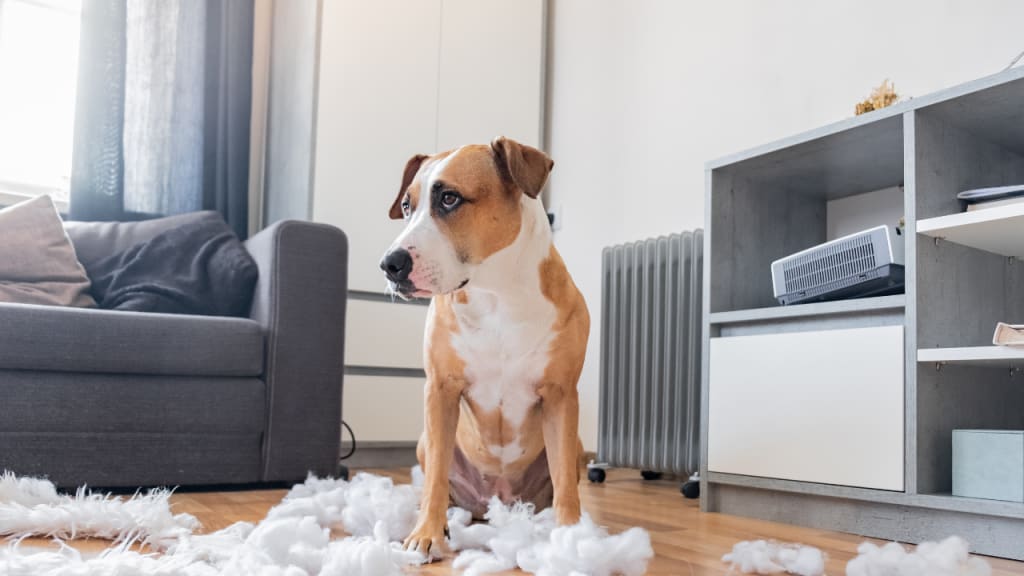
1. Why do dogs chew on things?
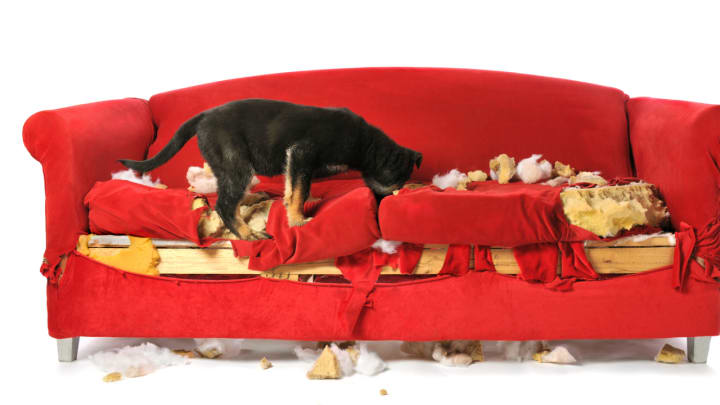
Dogs may chew on things at any age due to different reasons, but commonly include:
Teething: Like children, puppies go through a teething process from 3-6 months of age, and they often feel uncomfortable, itchy, and this drives them to seek relief by chewing on things.
High energy level not released: Destructive chewing may come from dogs with high energy levels that are always busy and looking for something to do. Chewing and gnawing on objects is a way to release their energy.
Left alone for too long, no attention or playtime: Boredom is the most common reason for dogs to chew on things. When left alone or not given attention by the owner, dogs may seek out objects to chew on as a way to alleviate their boredom and seek attention.
Lack of calcium in the diet: Dogs may chew on hard objects due to a lack of calcium in their daily diet, but this cause is not very common.
2. What to do when dogs chew on things?
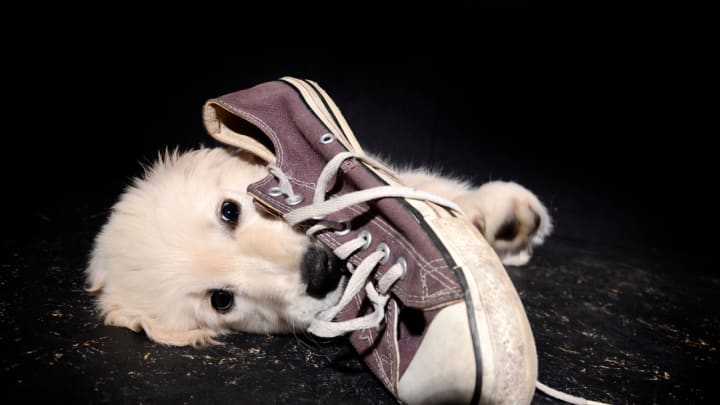
The attitude and approach when encountering a dog chewing on things are crucial to the behavior and habits of the dog in the future. So, what should you do when you see your dog chewing on things?
When catching a dog chewing on things, immediately give a strong command to stop such as "No," "Stop," or "Don't." At the same time, firmly push the dog away from the object being chewed on, and never let the dog continue chewing on the object just because it is already damaged. This will make the dog unable to distinguish between right and wrong behavior and continue to chew on things in the future.
Actions to avoid when catching dogs chewing on things:
Yelling, scolding, or hitting the dog when it chews on things. This may make the dog fearful, anxious, or even aggressive, making the behavior worse.
Do not tug on the items that the dog is biting and tearing apart, use a command to order the dog to stop. When the dog hears the command, it will understand that this behavior is wrong and will stop biting the items. However, if you play tug-of-war with them, the dog will understand that you are playing and having fun with them.
Do not use tape, ropes, or any other items to gag or tie up the dog, as this can affect their health and the dog will not understand what they did wrong.
3. Effective ways to treat dog biting objects
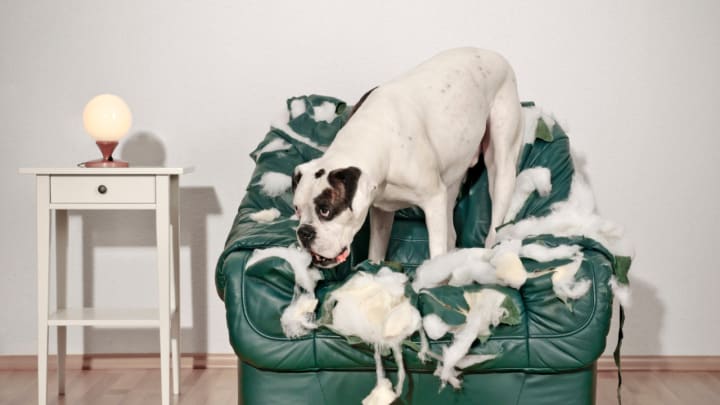
3.1. Provide separate toys for dogs
Buying toys for dogs is one of the most effective ways to prevent them from biting and damaging objects in the house. There are many types of dog toys on the market that can be chewed, gnawed, and bitten without worry. Choose toys made of durable, tear-resistant materials such as solid rubber to protect their teeth. Note that when you see the dog playing with their toys, praise them with words like "Good," "Well done," "Right," or pet them.
3.2. Train dogs to distinguish between objects
Dogs that bite objects may not be able to distinguish which objects can be bitten and which cannot, as they think everything around them is a toy. You can train your dog to distinguish between their toys and household items that should not be bitten by simply presenting two types of objects: one type is their toy, and the other is a household item like shoes, bags, books, etc. Play with them using their toys, and when they grab a household item, give the command to stop and take the item back. After several repetitions, the dog will recognize some items that should not be bitten.
3.3. Take your dog for a walk and exercise regularly
Regular exercise to release energy is essential for any dog. Exercise helps the dog's mood become happy, enthusiastic, and directs their attention to positive activities. They will no longer feel bored, anxious, and resort to biting objects. Note that you can put your dog in a cage or pen while providing some toys to prevent them from biting objects when you cannot monitor them. However, this is only temporary, do not lock them up for more than 1 hour per day, as the dog can become stressed and more likely to bite objects.
3.4. Do not leave dogs alone for too long
Being alone for a long time will cause loneliness, boredom, anxiety, and dogs tend to bite objects to relieve stress. Spend more time with your dog, if you have to go on a long business trip, send them to a pet hotel or leave them with a trusted friend.
3.5. Actively protecting household items
In addition to teaching your dog not to chew on household items, it's safer to proactively protect your items before your beloved pet sets its sights on them.
Create noise: Dogs are often afraid of loud noises, so you can use aluminum foil placed around the sofa or shoe rack to create a rustling sound when the dog approaches. Gradually, the dog will automatically avoid that area.
Have a separate play area for your dog: Don't play with your dog in areas with items that dogs commonly chew on, such as tables, chairs, bookshelves, and shoe racks. Provide a designated play area for your dog to have fun in. The dog will feel excited and tend to stay in that area to play.
Use anti-chew spray: There are many types of safe and bitter-tasting sprays on the market to prevent your dog from chewing on household items. You can use them to spray on shoes, racks, or furniture to keep your dog from chewing on them.
Keep valuable items out of reach: For example, keep your wallet, phone, and headphones in a place that is out of sight and out of reach for your dog.
See how to train smart dogs here>>>
About the Creator
Off the Leash: The Essential Gear Guide for Adventurous Dogs
There’s something wildly freeing about unclipping the leash and letting your dog move the way they were built to. If you’re hiking in areas that truly allow off-lead exploration, your gear list shifts. No harness. No leash dragging through dust. Instead, it’s about smart, lightweight essentials that keep your dog safe, hydrated, and easy to manage when adventure gets messy. Long walks off lead are less about control and more about preparation.
By Shabbir Ahmad5 days ago in Petlife



Comments
There are no comments for this story
Be the first to respond and start the conversation.