
What No One Tells You: Owning a Parrot (Part 1)
Owning a Parrot Takes More Work Than You'd Imagine.
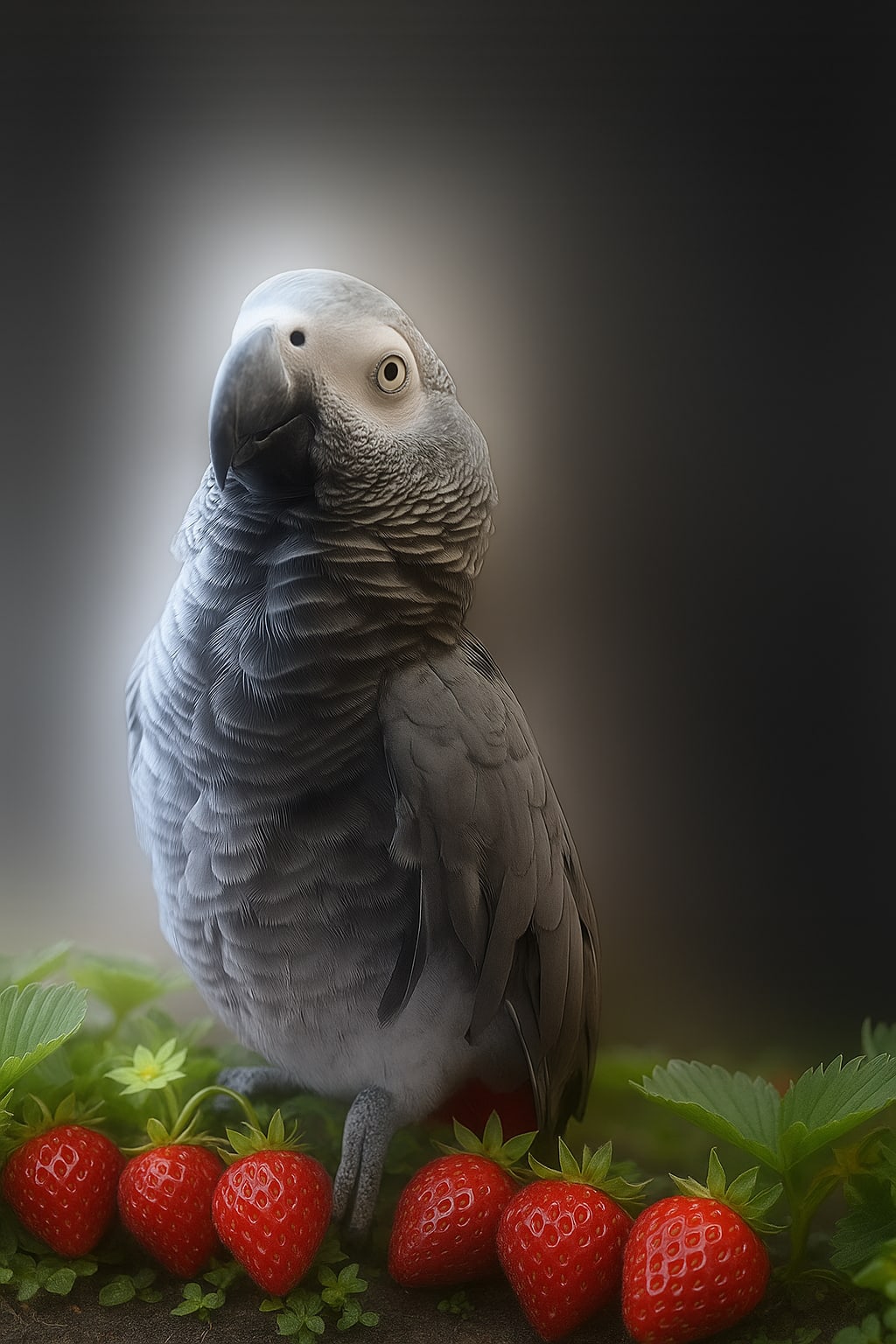
The adage of ‘feathered toddler’ isn’t lost to me and my fellow parrot owners. Their intelligence is truly unmatched in the animal kingdom (apart from corvids), and it wasn’t until I owned one that I understood the level of care required to keep them healthy and happy. I’ve heard it all:
1.“Does it speak?”
2.“I want one just like that, but if he bites me, I’m giving him away. They do that with dogs!”
3. “If your bird loves you, he won’t fly away.”
4. “It’s just a bird. Feed it seeds and it’ll be fine.”
5. “If it dies, you can get another one. There are so many of them.”
6. (When we tell people we can’t just get up and leave for a weekend away) “Just give him enough food and water and he’ll be fine! Enjoy yourselves!”
7. (After telling people we plan to immigrate in a few years) “The paperwork and money will be a pain, just leave it here and get a new one in the new country.”
8. “Your bird is adorable. I think I’m going to buy my daughter/son/partner one for their birthday. What do you think?”
9. “What a cute bird, can I touch him?”
10. “Where can I get one like yours?”
There are lots more but I’d run out of characters if I listed all the things people have said to me. I thought I’d focus on those that made me question my friendships with these people who clearly believe a living, breathing, animal is for my entertainment, and that this creature is completely expendable. The parrot we have is an African Grey (a Congo African Grey for those who know the difference), and at this time (November 2025), African Greys are on the endangered species list. They are also very close to going back to critically endangered, like they were in 2012.
With all of this above, I thought I’d address these topics for those of you who read the above list and thought: “That doesn’t seem that bad, the writer is just overprotective.” It’s important to remember that each bird and owner (although the word ‘owner’ might be a bit strong with African Greys, I don’t know who owns whom in our house!) is different, and these should be considered general rules and explanations instead of a foolproof method of handling these grey balls of intelligence and spite.
1. “Does it speak?”
Most parrots (including budgies, which are also a type of parrot) have the ability to speak like humans, but not all of them do. The larger parrots like Macaws, Cockatoos (not cockatiels!), Amazons, and African Greys, are more likely to speak like humans compared to budgies and cockatiels, but this doesn’t mean all parrots in captivity will speak to you if you get one. Whether or not your bird will speak depends on a few things, most importantly, how you react when they speak. If you prefer quiet and have a bird that speaks, the subconscious reaction could be that you ignore your bird when they speak or ask them to keep quiet. Birds take in more than what most of us realize so these cues could be a factor; they might just be quiet in general, like that quiet friend who only speaks when they have something important to say.
Our parrot used to speak a lot more than he does now. He used to say “Go to shop” and “Close the door” apart from “Hello” which he still says today. I don’t know why he doesn’t speak as often anymore (he's technically still a very young bird so his vocabulary might improve as he ages), but even if he didn’t speak like a human, it wouldn’t matter. He is a parrot and he speaks his own parrot language all the time. It’s just us silly humans who can’t understand him (most of the time). Getting a parrot because you want a talking bird is generally a bad idea: They could speak the ear off a donkey, or they could only speak their parrot language. Both options are perfect because parrots who speak like humans is for our benefit, not theirs.
2. “I want one just like that but if he bites me, I’m giving him away. They do that with dogs!”
Parrots aren’t dogs or cats. They will always be wild (and sometimes feral) and there is nothing you or I can do about that. Sure, they can learn cool tricks and learn to use a specific spot in their cage for the toilet, but you can’t train instinct out of them. The species of birds that are alive today are with us because of millions of years of natural selection and survival of the fittest. There are two things you can’t train away when training birds: Biting and flying. I’ll discuss the flying part in the next point, but with the biting? Look at it from their perspective.
Some birds, like budgies, weigh 1 ounce/30 grams, the weight of an AA battery. Larger birds like large species of macaws (like the hyacinth macaw) can reach up to 3,5 lbs/1,7 kg, the weight of a standard brick. As humans, we tower over these parrots, and that can be intimidating for them. It would be like a giant trying to pick us up; naturally, we’d try to protect ourselves. The issue is that a bite from a budgie is a lot more manageable than the bite of a macaw, which can send you to the ER, depending on where they bite you and how hard they bite.
Back to the instincts: Birds will bite you. You can have them for their whole life, and you could have a really good bond, but if pushed, or sometimes just because (it happens more than people realize), your bird WILL bite you. It’s not because they hate you. It’s because they can’t help it, or sometimes they just want to be mean. I’ve heard of stories where a bird bit their owner really hard and the owner decided to rehome the bird. The issue is that if that happens every time a bird bit their owner's hard, that poor bird would have 10 homes by the time they are 5. Giving birds away because of their behavior, like biting or screaming, leads to all sorts of behavioral issues for the bird and stresses them out more than we realize.
This is even more serious when this happens to protected birds like African Greys and the Yellow-Crested Cockatoo. Stress kills birds more than outside influences (apart from cats), and an African Grey or Yellow Crested-Cockatoo who has been rehomed 6 times because of the biting (African Grey) and noise levels (Cockatoo) might not live to see their seventh home. Birds bite and they make noise. Before looking into getting a bird, make peace with this fact (and the fact that your home will never be spotless again).
3. “If your bird loves you, he won’t fly away.”
If only it were this simple. This has nothing to do with love. As explained above, you can’t train a bird’s instincts out of them. This is true for companion birds as well. Birds are meant to fly (wing clipping is another story that I won’t get into now), and they are built for it. From their sleek shape to their beaks, feet, and the shape of their feathers, birds need to fly like insects need to crawl. Their entire anatomy is built for flight, including their bones which are hollow for most species.
This is something they do without thinking, and this means that they won’t think about you if they get scared off a branch and fly away because “They’ve never flown far before” or “They can’t fly, I haven’t seen them fly once”. This doesn’t mean they will fly away to get away from you (unless you abuse them, and in that case, they are probably better off in the wild) on purpose. It’s just that they see the skies and their tiny bodies go “Ooh, open sky! Must do what my ancestors did” or in cases of fear, they could fly away from a scary noise or a fly that buzzed too close to their ear hole.
Birds fly. That’s what they are designed to do, quite literally. There are some birds who free fly with their owners, but this is (or should be) only done after months, sometimes years, of training. Even then, the owner and the bird need to be aware of any predators (like birds of prey or snakes) in the area. Also, free flying is never (or at least I haven’t seen or heard of this) done with skittish birds like African Greys. If any of you have or know of an African Grey, you’ll understand why. They are scared of their own shadow and will leap to safety (wherever that is) if they see a fly that is slightly larger than the one they saw yesterday.
This “if your bird loves you, he won’t fly away” nonsense is usually said by people who don’t own birds, or who do own birds and assume that the bond they have with their bird supersedes their instinctual pull to the sky. This isn’t the case for birds. Don’t be that person who loses a bird after opening a window (on purpose or by accident) and saying: “My bird loves me, they will come back.” They won’t, and they’ll die in the gardens around you.
This is much longer than intended, so I’m going to do this piece in parts. I’ll post Part 2 of What No One Tells You: Owning a Parrot next Thursday. If you’ve made it this far, thank you! People have told me reading comprehension is disappearing but I think it depends on the group of people.
Violet.
About the Creator
Keep reading
More stories from writers in Petlife and other communities.
Keeping your pets safe (and calm) this holiday season
The holiday season may be magical for some humans, but for pets it only means confusion, changed routines, overstimulation, extra noise, guests or pet sitters come and go, and sometimes the festive season means danger for pets.
By Susan Fourtané 16 days ago in Petlife


Comments
There are no comments for this story
Be the first to respond and start the conversation.