
What Is the Bite Force of a Great Pyrenees?
Explaining the Bite Power of This Calm and Protective Breed

The Great Pyrenees is a large and powerful dog breed. It is best known for its calm nature, thick white coat, and strong protective instincts. Many people see this dog as gentle and friendly, but this breed also has a strong physical build. One important part of that strength is its bite force.
This article explains the bite force of a Great Pyrenees in simple and easy language. It also covers what bite force means, how strong this breed is compared to other dogs, and why a strong bite does not make this dog dangerous.
What Does Bite Force Mean?
Bite force means how much pressure a dog’s jaws can create when biting. This pressure is measured in PSI, which stands for pounds per square inch.
- A higher PSI means a stronger bite
- A lower PSI means a weaker bite
Bite force depends on:
- Size of the dog
- Shape of the head
- Strength of jaw muscles
- Type of work the breed was bred for
Larger dogs usually have stronger bite forces than smaller dogs.
Bite Force of a Great Pyrenees
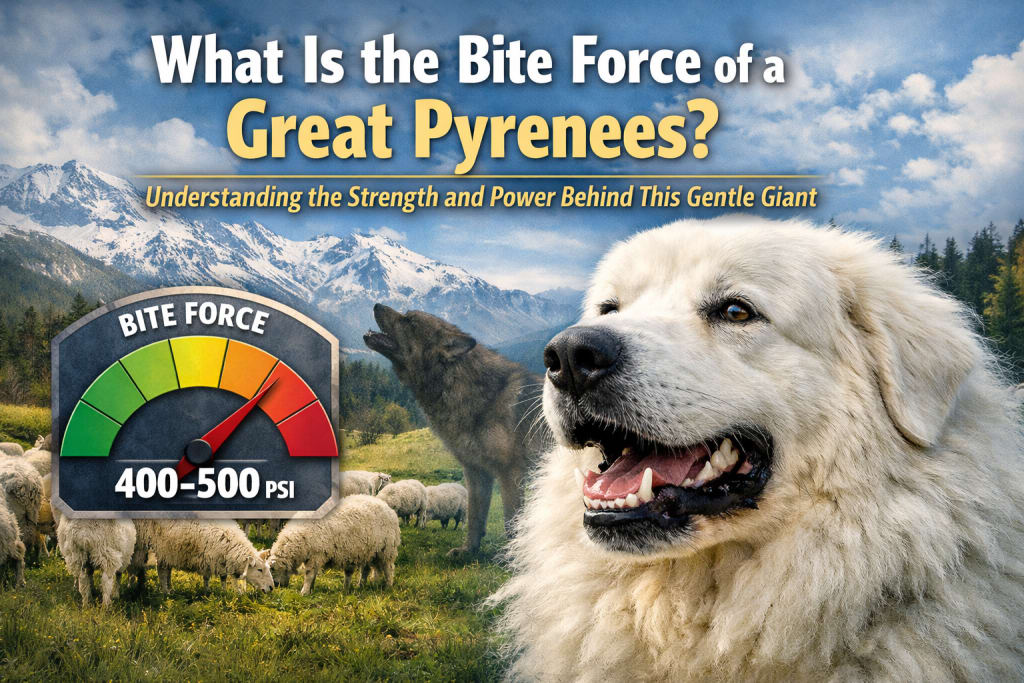
The bite force of a Great Pyrenees is estimated to be between 400 and 500 PSI.
- This is considered a strong bite. For comparison:
- A human bite is around 120–160 PSI
- Many family dogs have bite forces under 300 PSI
The Great Pyrenees does not have the strongest bite in the dog world, but it is stronger than most common pet breeds.
Why the Great Pyrenees Has a Strong Bite
The Great Pyrenees was bred to guard livestock such as sheep and goats. This job required strength, courage, and the ability to face wild predators.
Large Body Size
This breed is very large:
- Males can weigh 100 to 160 pounds
- Females usually weigh 85 to 120 pounds
A bigger body often supports stronger jaw muscles.
Strong Jaw Muscles
The Great Pyrenees has thick and powerful jaw muscles. These muscles help the dog hold and grip if danger appears.
Wide Head and Strong Teeth
A wide head gives room for strong muscles and large teeth. This design supports a powerful bite.
Guardian History
This breed was developed to protect animals, not to attack people. The strong bite was meant for defense against wolves and other predators.
Comparison With Other Dog Breeds
Below is a simple comparison of bite force among different dog breeds:
- Chihuahua: 100–180 PSI
- Beagle: 210 PSI
- German Shepherd: 230–238 PSI
- Pit Bull: 235 PSI
- Rottweiler: 328 PSI
- Great Pyrenees: 400–500 PSI
- Kangal: 700+ PSI
The Great Pyrenees has a stronger bite than many popular breeds but is not the strongest dog overall.
Does a Strong Bite Mean the Dog Is Dangerous?
A strong bite does not mean a dog is aggressive or dangerous.
The Great Pyrenees is known for:
- Calm behavior
- Gentle personality
- Patience
- Loyalty
This breed rarely bites unless it feels there is a serious threat. Its size and deep bark are usually enough to scare danger away.
Temperament of a Great Pyrenees
The Great Pyrenees is often called a gentle giant.
With Family Members
- Loving and loyal
- Protective but not violent
- Enjoys staying close to loved ones
With Children
- Very patient
- Often lies nearby and watches quietly
- Rarely reacts aggressively
With Strangers
- Alert and watchful
- May bark to warn
- Usually calm once danger is gone
The bite force exists for protection, not for everyday behavior.
Bite Force vs Bite Behavior
Bite force shows how strong a dog can bite. Bite behavior shows how often a dog chooses to bite.
The Great Pyrenees has:
- High bite force
- Low bite tendency
This means the dog is physically capable but mentally controlled.
Training and Socialization Matter
Even calm dogs need proper training.
Early Training
- Teaches good behavior
- Builds trust with humans
- Reduces fear-based reactions
Socialization
- Helps the dog feel comfortable around people and animals
- Reduces stress and guarding behavior
A well-trained Great Pyrenees is usually calm and predictable.
Is Bite Force Important for Owners to Know?
Knowing bite force helps people understand the strength of a dog. This knowledge encourages:
- Respect for the breed
- Responsible ownership
- Proper training
Strong dogs should always be supervised around small children and animals, even if they are gentle.
Can a Great Pyrenees Hurt Someone?
Any large dog can cause harm if:
- It feels threatened
- It is poorly trained
- It is abused or neglected
However, the Great Pyrenees is not known for aggressive attacks. Most incidents involving dogs happen due to lack of training or mistreatment.
Why the Breed Rarely Uses Its Bite
The Great Pyrenees prefers to:
- Bark as a warning
- Stand between danger and family
- Watch quietly
Biting is usually the last option.
Common Myths About Bite Force
Myth 1: Strong bite means aggressive dog
Truth: Many gentle dogs have strong bites.
Myth 2: Guard dogs are dangerous
Truth: Guard dogs are trained to protect, not attack.
Myth 3: Big dogs bite more
Truth: Small dogs often bite more frequently, but cause less damage.
Is the Great Pyrenees a Good Family Dog?
Yes, this breed is often a great family dog for the right home.
Best suited for:
- Homes with space
- Owners who understand large dogs
- Calm environments
Not ideal for:
- Small apartments
- Owners with no time for training
Can a Great Pyrenees Be a Service Dog?
A Great Pyrenees can be a service dog, but this breed is not a common choice for service work. Service dogs need to be highly focused, easy to train, and comfortable working closely with people in many public places.
The Great Pyrenees is very intelligent, but it is also independent and strong-willed. This breed was developed to make decisions on its own while guarding livestock. Because of this, training for service tasks can take more time and patience.
Some Great Pyrenees may do well as mobility support dogs or psychiatric support dogs for calm environments. However, this breed is usually better suited as a home guardian or emotional support animal rather than a full-time service dog.
Proper training, early socialization, and professional guidance are important if this breed is considered for service work.
What to Remember About Great Pyrenees Bite Strength
The bite force of a Great Pyrenees ranges from 400 to 500 PSI, making it a strong and powerful dog. This strength comes from its size, jaw structure, and history as a livestock guardian.
Despite this strong bite, the Great Pyrenees is widely known for its gentle nature, calm behavior, and loyalty. Bite force alone does not define a dog’s personality or safety.
With proper care, training, and respect, the Great Pyrenees remains one of the most dependable and loving guardian breeds in the world.
About the Creator
Keep reading
More stories from Robert Barrett and writers in Petlife and other communities.
Off the Leash: The Essential Gear Guide for Adventurous Dogs
There’s something wildly freeing about unclipping the leash and letting your dog move the way they were built to. If you’re hiking in areas that truly allow off-lead exploration, your gear list shifts. No harness. No leash dragging through dust. Instead, it’s about smart, lightweight essentials that keep your dog safe, hydrated, and easy to manage when adventure gets messy. Long walks off lead are less about control and more about preparation.
By Shabbir Ahmad3 days ago in Petlife




Comments
There are no comments for this story
Be the first to respond and start the conversation.