
Can Dogs Eat Tuna in Sunflower Oil?
What Every Dog Owner Should Know About Safety, Risks, and Portion Sizes

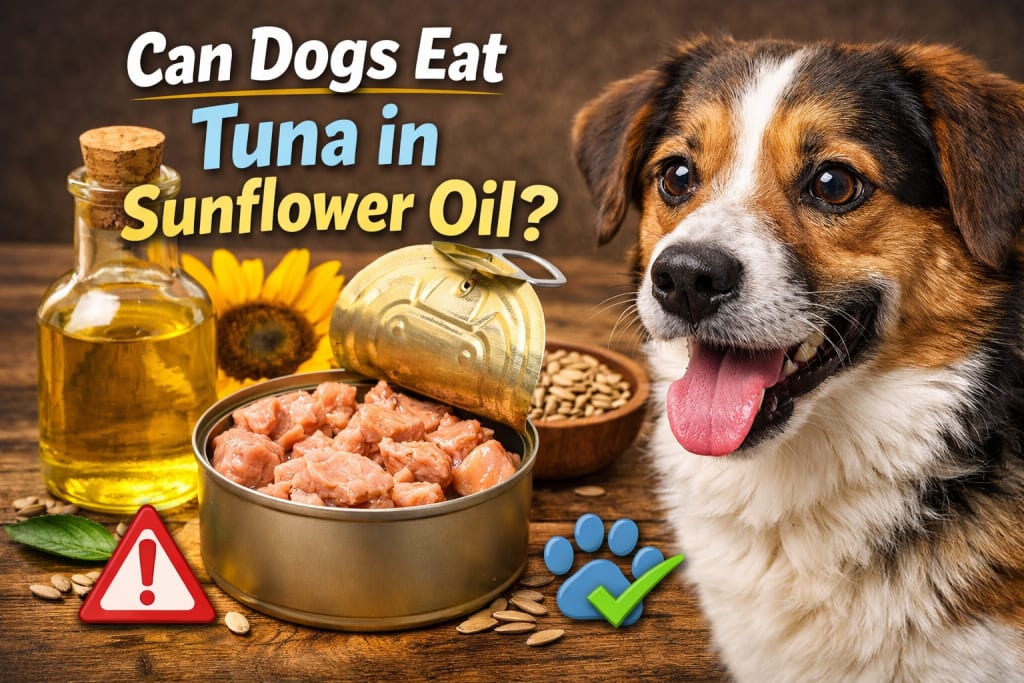
Many dog owners like to share food with their pets. When opening a can of tuna, it is common to wonder whether it is safe to give some to a dog.
A very common question is: can dogs eat tuna in sunflower oil? The simple answer is yes, dogs can eat it, but only in very small amounts and only on rare occasions. Tuna in sunflower oil is not the best food choice for dogs, and it should never become a regular part of their diet.
Dogs have different digestive systems than humans. Foods that seem harmless to people can sometimes cause health problems in dogs. Tuna in sunflower oil is one of those foods that sits in the “sometimes okay, but not ideal” category. Understanding the risks and limits is important before feeding it to a dog.
Tuna is a type of fish that is high in protein and contains healthy fats. Sunflower oil is a vegetable oil often used to preserve canned tuna. While neither tuna nor sunflower oil is toxic to dogs, the combination can cause problems if given too often or in large amounts.
Is Tuna Safe for Dogs?
Dogs can eat tuna, but it should only be offered as a treat, not as a main food. Tuna is not made for daily feeding because it contains mercury. Mercury is a heavy metal that builds up in the body over time. When dogs eat tuna often, mercury can slowly collect in their system and lead to health problems.
Even though tuna contains useful nutrients, dogs already get everything they need from quality dog food. Tuna does not add anything essential that dogs cannot get elsewhere in a safer way.
When tuna is combined with sunflower oil, the risks increase because of the added fat. Dogs do not handle oily foods very well, especially if they are not used to them.
What Is Sunflower Oil and Why Is It a Problem?
Sunflower oil comes from sunflower seeds and is commonly used in human cooking. It is not poisonous to dogs, but it is very high in fat. Dogs need some fat in their diet, but too much fat can upset their stomach and lead to serious health issues.
Eating oily foods can cause dogs to experience vomiting, diarrhea, gas, and stomach pain. For dogs that are small, older, or sensitive, even a small amount of sunflower oil can cause digestive trouble.
Another concern is weight gain. Feeding oily foods regularly can make dogs gain weight quickly. Overweight dogs are more likely to develop joint problems, heart issues, and diabetes.
Mercury in Tuna: A Hidden Risk
One of the biggest concerns with feeding tuna to dogs is mercury. Tuna are large fish, and large fish tend to contain higher levels of mercury because they live longer and eat smaller fish that already have mercury in them.
Mercury is dangerous because it affects the nervous system. In dogs, long-term exposure to mercury can cause weakness, coordination problems, and changes in behavior. These effects do not happen right away, which makes mercury especially risky. A dog may seem fine for a long time, but problems can appear later.
This is why tuna should never be fed regularly, even if it is drained and served plain.
How Much Tuna in Sunflower Oil Can Dogs Eat?
If a dog eats tuna in sunflower oil once in a while, it is unlikely to cause harm. The key is moderation. The oil should always be drained completely before serving, and the portion should be very small.
For small dogs, a teaspoon is more than enough. Medium dogs can have about a tablespoon, while large dogs should not have more than one or two tablespoons. This should not happen more than once every few weeks, and once a month is even safer.
Feeding tuna more often than this increases the risk of stomach issues and mercury buildup.
Can Puppies Eat Tuna in Sunflower Oil?
Puppies should not eat tuna in sunflower oil. Puppies have very sensitive digestive systems, and they need carefully balanced nutrition to grow properly. Oily foods can easily upset a puppy’s stomach and lead to diarrhea or vomiting.
Mercury exposure is also more dangerous for puppies because their bodies are still developing. It is best to avoid tuna entirely for young dogs and stick to puppy food and treats recommended by a veterinarian.
What Happens If a Dog Eats Too Much Tuna in Oil?
If a dog eats too much tuna in sunflower oil, the most common problems are digestive. Dogs may vomit, have diarrhea, or lose interest in food for a short time. Some dogs may seem tired or uncomfortable.
In more serious cases, dogs can develop pancreatitis. Pancreatitis is a painful condition where the pancreas becomes inflamed due to high fat intake. This condition can be very serious and may require emergency veterinary care.
Dogs with a history of pancreatitis should never be given tuna in oil.
Pancreatitis and Fatty Foods
Pancreatitis is one of the main reasons vets warn against feeding oily human foods to dogs. The pancreas helps digest fat, but too much fat can overwhelm it.
Signs of pancreatitis include severe stomach pain, repeated vomiting, fever, weakness, and a hunched posture. Dogs with pancreatitis often refuse food and seem very uncomfortable.
Because sunflower oil is high in fat, tuna preserved in oil increases the risk of this condition.
What Do Veterinarians Recommend?
Most veterinarians agree that tuna is not dangerous in very small amounts but should not be fed regularly. They usually recommend avoiding tuna in oil and choosing fish that are lower in mercury and fat.
Moderation is always the most important rule when it comes to feeding dogs human food.
Final Answer: Can Dogs Eat Tuna in Sunflower Oil?
Dogs can eat tuna in sunflower oil, but it is not recommended as a regular treat. It should only be given in very small amounts, very rarely, and with the oil fully drained.
The risks of high fat content and mercury make it a poor choice compared to other fish options. For most dogs, safer alternatives are available and should be chosen instead.
About the Creator
Keep reading
More stories from Robert Barrett and writers in Petlife and other communities.
Best Emotional Support Letter Services for Cats 2025
Cats have a special way of making life better. They bring comfort, reduce stress, and give unconditional love. For many people, a cat is not just a pet but an important source of emotional support. Because of this, many owners look for an Emotional Support Animal (ESA) letter to make sure their cats are recognized officially.
By Robert Barrett4 months ago in Petlife
A Dart at Dusk
Seconds ago, the sullen sun set on the two of us… my exuberant furry companion and me. A fresh breeze embraces us, delivering welcome relief from the day’s oppressive heat. His typical stumbling and staggering along — apace with a sloth — has turned into trip-trapping, high-stepping, almost skipping along.
By Angie the Archivist 📚🪶7 days ago in Petlife
Smart phones, Humans and Aliens.
WARNING. I will be tapping into one of your favorite creative tensions: The absurdity of humans worshipping their glowing rectangles as if they were tiny oracles. There’s something deliciously poetic about that contradiction, and it lends itself beautifully to an instructive proviso.
By Novel Allen5 days ago in Poets


Comments
There are no comments for this story
Be the first to respond and start the conversation.