

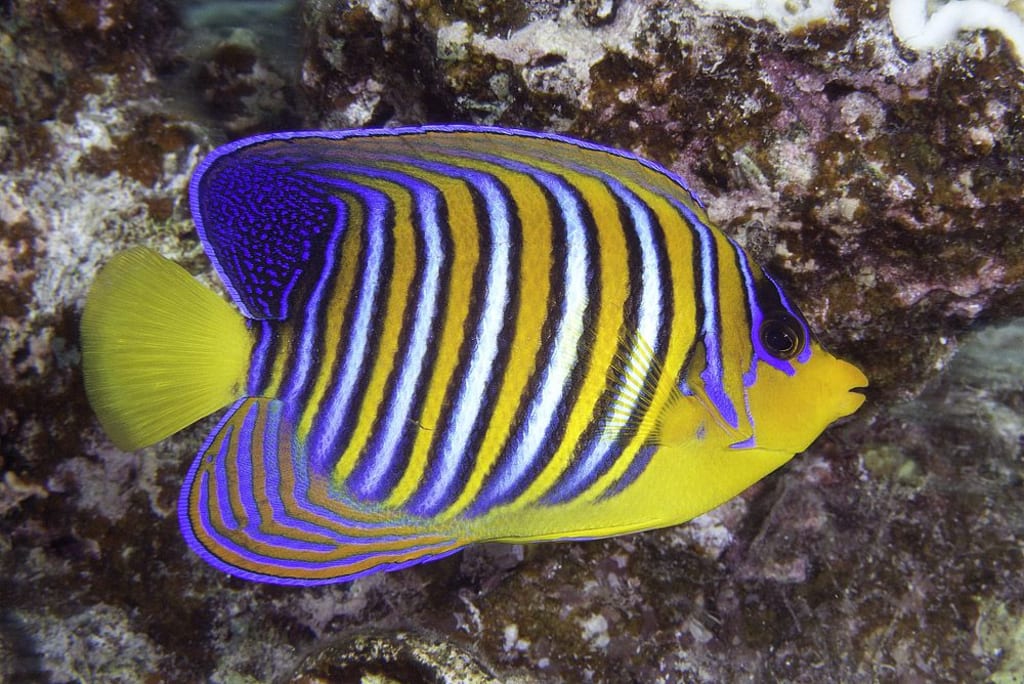
Angelfish
All angel fish are lovely but the regal angelfish is among the most beautiful. When in the wild these fish prefer naturally rich coral reef areas. They will stay close to places with cracks, caves, and crevices. Angelfish live alone or in mated pairs.
If considering regal angelfish these come from the Red Sea or the Indian Ocean and when bought should be quarantined for a few weeks before adding them to the tank. They require a huge tank (a minimum of 100 gallons with plenty of hiding spots).
Banggai Cardinalfish

Banggai Cardinalfish are native to the Banggai Islands in Indonesia. These elegant, graceful fish are usually found resting between seagrass beds, coral ledges, and sea anemones during the day as they are nocturnal. At night,Banggai cardinalfish feed in groups of up to 200, on plankton and other small crustaceans. Being very sociable fish to be happy they need to be kept in groups of at least eight.
These fish need large tanks so they have enough space along with barriers and hiding spots.
Betta fish
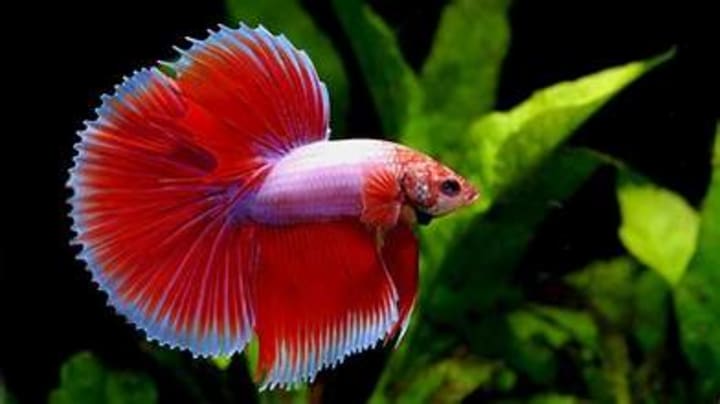
Betta fish are also referred to as Siamese fighting fish. They are amon the most popular aquarium fish. These fish have been bred to have bright colors and unique tails. Not all of the fish display the same brilliant colors and those that are dull can blend in with their natural surroundings such as floodplains and rice paddies. Betta fish can breathe oxygen straight from the air or take in oxygen through their gills,
Since these fish are aggressive one male should be kept per tank and usually they're kept in species only tanks.
Butterflyfish

Butterflyfish are among the most photographed underwater fish. Their bodies are pearly white and a bright yellow toward the tail end and up the dorsal fins. These fish also have diagonal black perpendicular lines giving them an interesting pattern.
Butterfly fish need large tanks with a minimum of 100 gallons.
Clownfish

Clownfish became popular when they had their appeaqrance in the film "Finding Nemo" and many refer to them as Nemo. This popular aquarium fish, the Ocellaris Clownfish, is also known as a False Clownfish or a Clown Anemonefish because they make their homes in sea anemones. In the wild clownfish live in the coral reefs on the coasts of Australia and Southeast Asia.
All Clownfish are hermaphrodites, and are born males with the ability to turn themselves females. Once the change has been made however, they can’t turn back to a male.
For clownfish an appropriate tank is required with saltwater, live rock for biological filtrations, a wavemaker for circulations, and a heater.
Flame Angelfish

Flame angelfish are popular with aquarists. They are amazing fish with deep red/orange bodies, black vertical stripes, and blue-tipped dorsal and anal fins. Their coloring depends on where the fish are found. In Hawaii they are larger and have a deeper red coloring. Those found in the Indo-Pacific are more orangey.
These fish prefer to live in small groups of three to seven. They do not require huge tanks and 30 gallons are fine.
French Angelfish
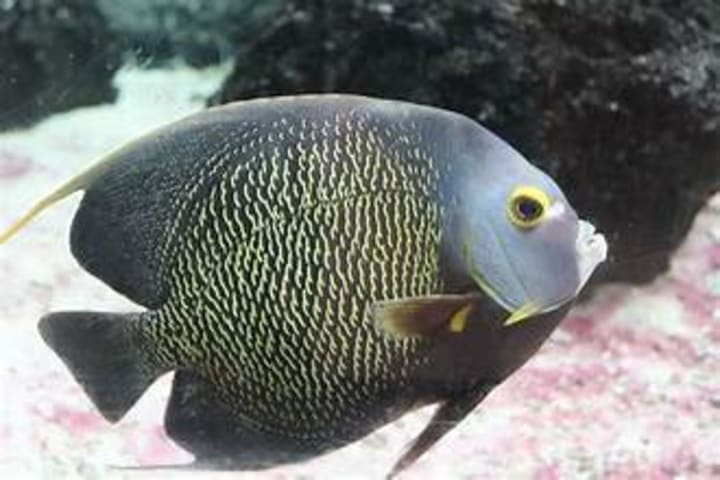
French angelfish come from the shallow reefs of the Bahamas, Florida, and the Caribbean. They have deep grey/black bodies with flakes of yellow. In the wild they are seen in pairs.
Only one angelfish should be kept per tank. The fish need a large tank to allow them plenty of swimming space. They can also become territorial so will need plenty of hiding places using rockwork. The French Angelfish should always be the last addition to a tank so it hasn’t already claimed a territory.
Lionfish

Lionfish are native to the Pacific Ocean and are also known as Dragon Fish, Tiger Fish and Scorpion Fish. These fish reproduce quickly releasing up to 30,000 eggs every seven days. They easily adapt to new environments. Lionfish are brightly colored with lovely striped bodies. The fish have attracive feathery fins. Their spikes are venomous and used for self-defence.
They are not too aggressive to be maintained in the species-specific tank. Instead, they are good to go with fishes of the same or larger size and the same temperament.
Moorish Idol

Moorifh idol fish are photographed a lot. They are lovely fish native to the coral reef of the Indo-Pacific. They have thick large vertical stripes in constrasing black and white. Towards the back of their bodies is a sunlight yellow patch. They have long snouts with a vibrant yellowy/orange mask running across. Moorish Idols have a long extravagant filament which trails out from the tip of the dorsal fin.
Moorish Idols prefer at least 5 feet of swimming room with 6+ being ideal. They can cover vast distances in the wild and larger more established tanks are best.
Picasso Triggerfish

Picasso tiggerfish are also referred to as the Humuhumu triggerfish. They have tan colored bodies and blue/black stripes. These fish are native to the Indo-Pacific.
Picasso triggerfish are aggresive and should be kept in a tank with other larger fish and should not be kept with other Triggerfish. They require large tanks with plenty of room for swimming and should have caves and rock structures for shelter.
Symphysodon Discus

Symphysodon Discus are lovely fish that are often though of as the king of the aquarium. They are a round disc shape and are graceful and elegant. These fish are also referred to as the Heckel Discus and the Pineapple Fish. They come in different colors but among these the red is thought to be the most beautiful. In the wild the fish are found in the Amazon River and being freshwater fish need pristine water conditions.
About the Creator
Rasma Raisters
My passions are writing and creating poetry. I write for several sites online and have four themed blogs on Wordpress. Please follow me on Twitter.
Keep reading
More stories from Rasma Raisters and writers in Petlife and other communities.
Hopping Bunnies
American Fuzzy Lop These rabbits have distinctive wooly coats and compact, muscular bodies, Their fur is in various colors and patterns. The breed developed in the US in the late 20th century. These are small rabbits weighing 3-4 pounds. They need regular grooming and are known for their playful and affectionate nature.
By Rasma Raisters11 months ago in Petlife
Dogs in the life of composers
If you have a pet, you will surely agree: as soon as we take responsibility for someone – be it a cat, a dog, a ferret, a parrot, a horse, anyone! – these creatures become an important part of our lives, whether we want it or not.
By Ilya Baranovabout 8 hours ago in Petlife
📢 Raise Your Voice Thread: 03/05/2026
Our “Raise Your Voice Threads” are hosted most alternating Thursdays at 12PM ET to offer creators more avenues to uncover exceptional stories on Vocal. As we are continuously searching for fresh creators and inspiring stories, this thread provides an opportunity to exchange and discuss the stories that have moved and motivated us on Vocal.
By Raise Your Voice by Vocal3 days ago in Resources



Comments (1)
You've got some great info on these aquarium fish. I've had my fair share of fish-keeping experiences. I'm curious, how do you think the aggression level of betta fish affects the overall setup of their tank? And for the regal angelfish, do you think a 100-gallon tank is really enough considering their specific needs? Also, I wonder how the social nature of Banggai cardinalfish impacts the choice of tankmates for them.