
What Does it Mean to be a "Preservation Breeder?"
Surprisingly, it doesn't mean what I thought it did.


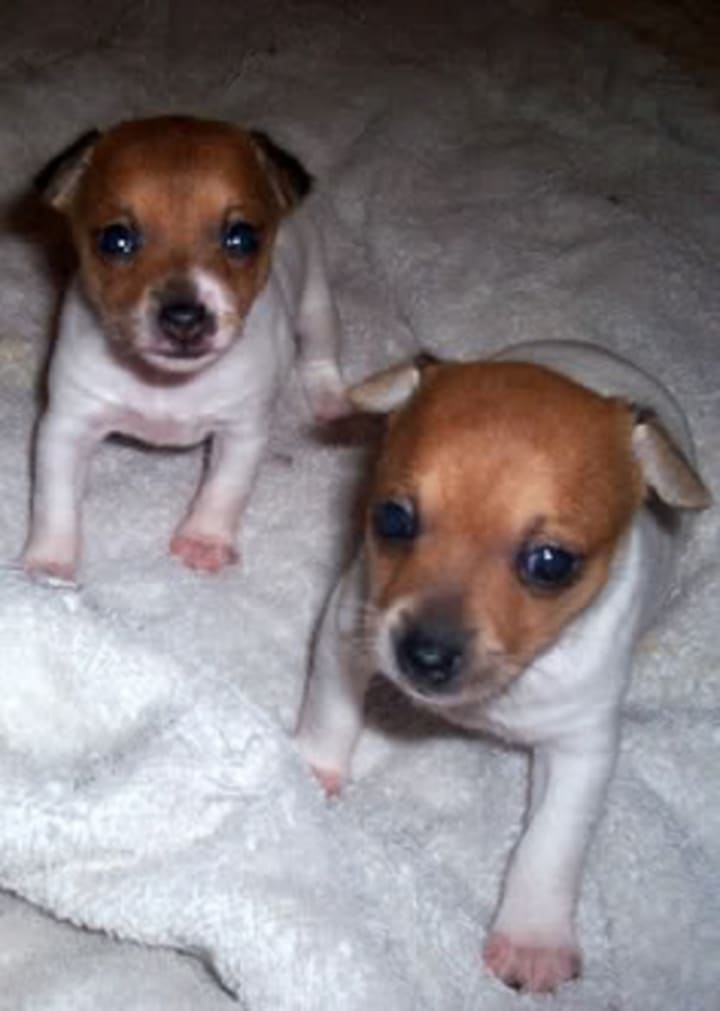
When I first started "in dogs" back in late 1999, I had a goal. I was looking into "good" Toy Fox Terrier breeders, who at least talked a good game about health testing (which involved hearing, eye, and patella exams!) and who had show dogs in the first three generations of their puppies' pedigrees. I had a specific dog in my mind's eye: a white and tan male with a solid-colored head. That was it. I had no other criteria. I just wanted a dog that bore no resemblance to my little Oma, who had been poisoned--while in my own yard--by a neighbor earlier in the year. I knew that Oma had seeded the love for the breed so deeply that I wanted to help the breed continue into a prosperous future. I wanted to breed and to show and to compete with Toy Fox Terriers.

I eventually found my ideal puppy, about 500 miles from where I was living, with a breeder who had outstanding puppies. She had dogs in the Top Ten every year and her mentors had been in the breed for decades. She had absolutely no problem selling me this little male, as long as I promised to show him at least three times, so that she could get judges' evaluations on his quality. I sensed that she was trying to get me involved with the insanity of dog shows, too, but that was of no concern to me at the time. I knew that we had a few UKC shows within driving distance, so it was all good. Once we'd come to terms on the sale, she gave me names of breeders who might be happy to sell me a female puppy later on, who could also advise me on the breed moving forward. I was ready. I had my puppy from a "show breeder." I had Plans. I was stoked!

The early 2000s were a tumultuous time to start breeding dogs, especially Toy Fox Terriers. Not only were we faced with the adversity created by PeTA and the HSUS, but California legislators were fighting to pass CA AB 1634. The "California Healthy Pet Act" required all dogs and cats to be spayed or neutered at six months of age--which is not at all healthy for medium to giant breeds of dogs, who should not be desexed until they are around two years of age. The USDA instituted new rules for hobby/show breeders, after attempting to treat them like commercial breeders. Health testing started to become more common, to "prove" that not all hobby/show breeders were simply "backyard" breeders or were in pursuit of the elusive blue ribbon. Breeder websites, usually full of fun pictures of adorable puppies, became solemn places where "working" and "service" were emphasized. (Working animals had different rules and were less likely to be penalized by the USDA.) Breeders became protective of their animals, distrustful of puppy inquiries from people who were not legacies or recommended by other breeders. The distrust was well earned, as animal rights activists started calling breeders, inquiring about puppies, and then turning them in to the local authorities or USDA if the caller felt they did not meet the new criteria. For many, particularly UKC breeders, everything seemed to come to a head after the 2004 murder of Bobby Jo Stinnett, a Rat Terrier breeder from Missouri.
In addition to all of that, the Toy Fox Terrier ceased being a United Kennel Club-only breed in 2005, after languishing in the absolutely horrible (at that time) AKC "Miscellaneous" group. The changes to the breed were alarming, due to the new AKC standard, which resulted in taller, leaner dogs that could get up to 11 or 12 pounds in weight. Toy Fox Terrier breeders were also up in arms about the research being done into congenital hypothyroidism with goiter (CHG). Genetic testing was viewed with distrust. Having your dogs tested was considered tantamount to betraying the breeders that had bred them. Many wonderful dogs were spayed and neutered to "prove a point," simply due to our lack of understanding. Breeding dogs always comes with a modicum of drama, but those early years were almost enough to make me turn tail and run!
A dramatic shift in worldview resulted from this tumultuous period. Breeders who once welcomed puppy buyers to their homes stopped doing so, preferring to meet them in public places. We were no longer "hobby" breeders, which animal rights activists implied meant "backyard" breeders. We were "conformation/sport breeders," "working/hunting/herding" dog breeders, "purpose-bred" breeders, or "ethical" breeders. All of these things implied that the dogs were being bred to fill a niche, rather than to merely exist. Even companion dogs--who are typically bred merely to exist--got their niche, as gentler, easier and (dare I say it) more fun titles became available. Trick Dog, FIT Dog, the Agility Coursing Test, all opened up niches to everyone, creating true "companion dogs." However, all of these categories fell into disfavor, as categories do. The term "preservation breeder" was born.

At first, the term "preservation breeder" seemed to be a positive swing toward the middle. A preservation breeder was someone who was interested in preserving their chosen breed. He or she used the registry's standard as a bible, making breeding choices that would preserve the ideals of that breed. He or she would breed not only "typey" individuals, but also individuals that would have the temperament or instinct that made that breed unique, preserving its history and purpose. Preservation also extended to selecting buyers and ensuring that the right puppies would end up with the right people. The term "preservation breeder" was perceived to encompass all of the goals, ethics, and outcomes that would benefit both breeders and their dogs for generations.
While this perspective was noble in its goal, it was also fraught with hidden issues that were eventually revealed. A minor stumbling block was revealed solely by the fact that many purebred dog registries exist worldwide. The Toy Fox Terrier now has breed standards in several countries, all of which tweak different traits based on the goals of the breeders of those countries. Ethics differ, as well. Tail docking and ear cropping are legal in the United States; however, some countries only permit those things in the case of working or hunting dogs or not at all. For some breeds, these prohibitions prevent breeders from preserving the historical appearance of their breed. People who might preserve the physical appearance of their chosen breed might then neglect the instinct for which that breed was created. While it might be appropriate to limit the "gameness" of former fighting breeds, such breeds can still be bred with their terrier or working breed temperaments intact. I will not breed a terrier that lacks a forward nature or that shows no interest in pursuing rodents. To me, this nature, this instinct, are imperative in the preservation of such breeds.

These small differences were not really sufficient to summon the fall of the "preservation" breeder. Rather, it seems that the mistrust that began in the early 2000s continued to metastasize into something bigger. Buyers were no longer in control of their purchases, as breeders sought to "protect" their puppies by putting them into the hands of the "perfect match." Limited registration and mandatory spay and neuter agreements were used for virtually every sale that did not involve a dog with show potential, some of whom could have contributed to their breeds in the whelping box. Invasive questionnaires and highly restrictive--very often extremely long--contracts were distributed and signed, regardless of their legality or lack of binding nature.
Mistrust wasn't just between breeders and their buyers. Breeders often showed mistrust for each other as they sought to "protect their lines" from people who thought differently than they did, even if it was merely by feeding a different type of food. Breed clubs, too, sought to "protect" their breeds by mandating their own codes of ethics. Rather than breed clubs remaining groups in which breeds, their histories, and their achievements were celebrated, where new members were sought after and welcomed, these clubs sought complete control over breed standards and over the people who could participate in breeding to those standards. Participation in breed clubs dwindled. Many folded, while others were maintained by a bare minimum of rapidly aging members.
In short, "preservation breeders" devolved from being the proud guardians of the history, health, and welfare of their breeds to the gatekeepers for their breeds. There is a huge difference between being a guardian and a gatekeeper. Guardians serve and protect. They nurture. They are generous with their time, their knowledge, and their resources. They keep the bad out and allow the good to enter. With the fellowship that comes with good guardianship, breeds thrive and prosper. However, when breeders form cliques and "camps" that prevent them from sharing with other breeders and with new people interested in working with the breed, fellowship lost. People who could possibly contribute to the breed are prevented from entering the gate. Eventually, gatekeepers who believe in the same breeding imperatives become so enveloped by their impervious bubbles that different types develop--some of which bear little resemblance to each other, despite being under the same breed banner. When cohesion is lost, type goes with it. The breed suffers. Eventually, registration numbers slip and the breed is lost to all but its "protectors."
For the moment, I still think of myself as a preservation breeder, until such time that a better category comes along. I do seek to preserve my breeds, in size, in type, in temperament, in purpose. I'm not a "professional" breeder, not by a longshot. My dogs are still in my home, sleeping in my bed, conning me out of breakfast bites. I'm still involved in all of their lives, touching them and speaking to them and even hugging them daily. Not one of my dogs dies untouched, in pain, alone. But please, if you hear someone from whom you want to buy a puppy identify themselves as a "preservation breeder," do not hesitate to ask them what they mean by labeling themselves as such. If you hear the word "protect" more than you hear the word "preserve," find someone else. You and your future dog will be better for it in the long run.
~*~ ~*~ ~*~ ~*~ ~*~ ~*~ ~*~ ~*~ ~*~ ~*~ ~*~ ~*~ ~*~ ~*~ ~*~ ~*~
Just a quick note about Bobbi Jo Stinnett: her death struck a little close to home. Although I showed Toy Fox Terriers and she had Rat Terriers, we crossed paths at least once at a United Kennel Club show. I met Bobbi Jo and Lisa Montgomery only briefly, before they wandered off to talk to another exhibitor. It was an unremarkable meeting that meant nothing to me until years later, when I was talking to an acquaintance about the murder. It turned out that I was even acquainted with another someone who had testified against Montgomery. That same person was able to give me a bit more information about what occurred at the dog show that I remembered them from, back when we thought that they were just fellow dog fanciers. None of us were ever in danger, but Bobbi Jo's death was enough to drive home the fragility of our safety when we show our dogs or sell our puppies. A very frank article about the event can be found here. Please be aware that this article does not sugar-coat anything that took place, so read it with caution.
About the Creator
Kimberly J Egan
Welcome to LoupGarou/Conri Terriers and Not 1040 Farm! I try to write about what I know best: my dogs and my homestead. I'm currently working on a series of articles introducing my readers to some of my animals, as well as to my daily life!
Keep reading
More stories from Kimberly J Egan and writers in Petlife and other communities.
The Blessings of the Season
I was sick when I started this story last year and never had the strength to finish it when it was relevant. Pip had also died during that time, so writing was very difficult for me. I'm finishing it now--because it's time. Merry Christmas and Happy Hannukah to everyone who celebrates them--and may the blessings of the Season be upon you all, no matter who or where you are.
By Kimberly J Egan2 months ago in Petlife
Capuchin Monkey Assaulted at City Zoo: Viral Video Triggers Animal Welfare Investigation
Outrage and Reflection After Monkey Assault Incident at City Zoo In a disturbing incident that has sparked widespread anger and renewed calls for stricter enforcement of animal protection rules, a visitor at a local zoo was caught on camera striking a monkey inside its enclosure. The event, which unfolded on a busy weekend afternoon, has triggered an internal investigation, possible criminal charges, and a broader community conversation about how humans interact with animals in captivity. According to zoo officials, the incident occurred near the primate habitat during peak visiting hours. Witnesses reported seeing an adult visitor lean over a protective barrier and reach into a section of the enclosure where a young capuchin monkey was perched near the glass viewing area. Within moments, the individual allegedly struck the monkey before staff intervened.
By Pets and animals 3 days ago in Petlife



Comments (2)
This explains a lot of the trouble I had getting into the Toy Fox Terriers. So many of the "experienced" breeders were actually "gatekeepers" and they actively excluded "newbies" from getting into the breed. I was blessed to get my first show dog from Kim Egan. His name was Loupgarou's Winddancer, a very handsome White and Tan that became my first UKC Grand Champion, AKC Champion and International Champion. He was and still is my Heart Dog. Thank you Kim.
Wow, I knew things had gotten wonky in the 90s and 2000's but no idea just how much. Explains a lot about the breed imbalances I've noticed that seen to serve nothing but the breeder's fancy. Same thing as had happened with horse