
Capuchin Monkey Assaulted at City Zoo: Viral Video Triggers Animal Welfare Investigation
After a visitor struck a young capuchin, public outrage spread online, prompting a police review and renewed scrutiny of zoo safety protocols.

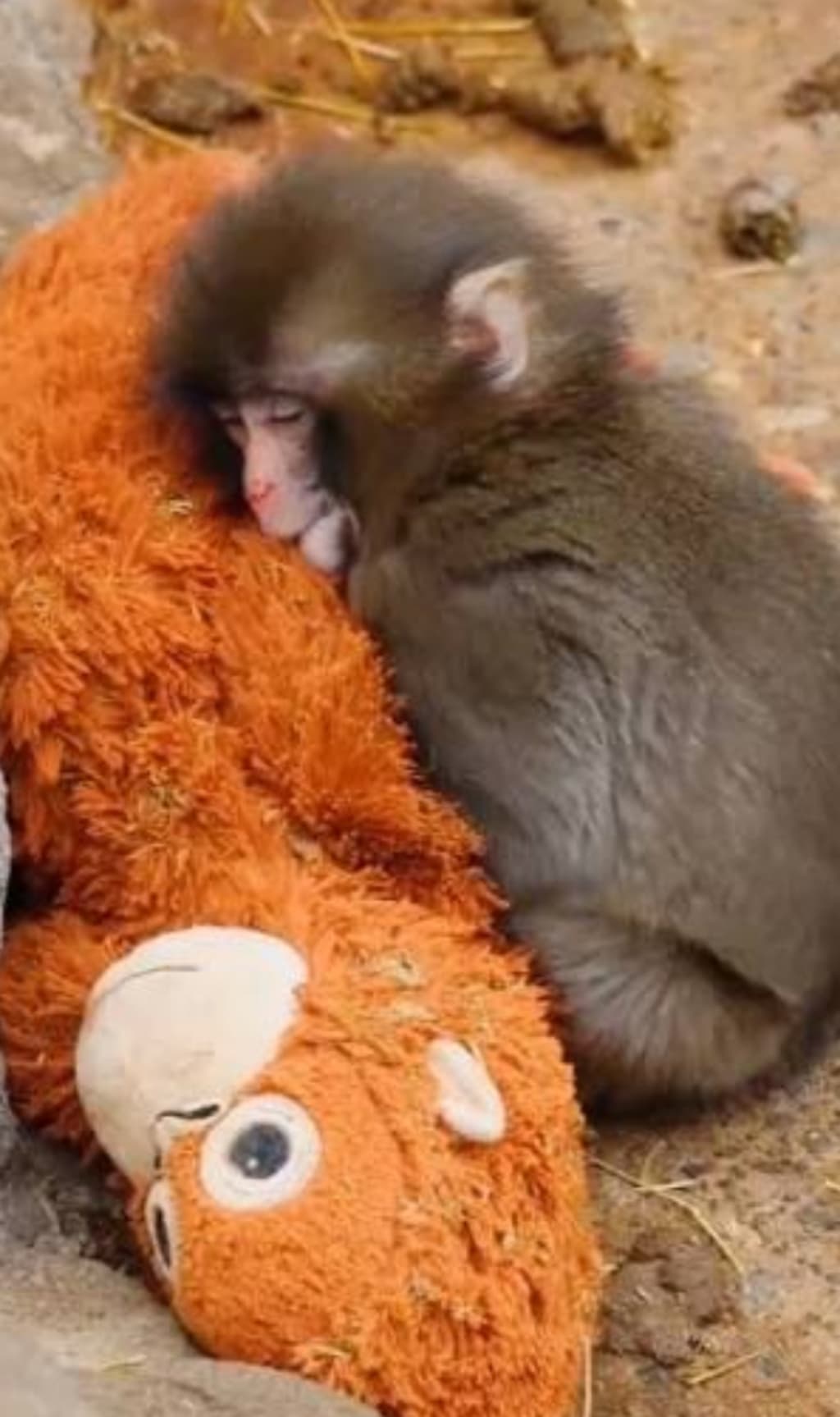
Outrage and Reflection After Monkey Assault Incident at City Zoo
In a disturbing incident that has sparked widespread anger and renewed calls for stricter enforcement of animal protection rules, a visitor at a local zoo was caught on camera striking a monkey inside its enclosure. The event, which unfolded on a busy weekend afternoon, has triggered an internal investigation, possible criminal charges, and a broader community conversation about how humans interact with animals in captivity.
According to zoo officials, the incident occurred near the primate habitat during peak visiting hours. Witnesses reported seeing an adult visitor lean over a protective barrier and reach into a section of the enclosure where a young capuchin monkey was perched near the glass viewing area. Within moments, the individual allegedly struck the monkey before staff intervened.
A bystander’s cellphone video, which quickly circulated on social media, shows the monkey recoiling and retreating to the back of the enclosure. The footage also captures the swift response of zoo personnel, who arrived within seconds and escorted the visitor away from the exhibit.
Zoo representatives later confirmed that the monkey was examined immediately by on-site veterinary staff. Fortunately, no serious physical injuries were detected. However, animal care specialists noted that even brief aggressive encounters can cause stress and behavioral disruption for primates.
Immediate Response
Zoo management issued a statement within hours of the incident, condemning the behavior and reiterating its commitment to animal welfare.
“We are deeply disturbed by what occurred,” the statement read. “Our animals depend on us—and on the respect of our visitors—for their safety and well-being. This type of conduct is unacceptable.”
Security officers removed the individual from the property, and local authorities were contacted. Police confirmed they are reviewing surveillance footage and witness statements to determine whether charges related to animal cruelty, trespassing, or disorderly conduct will be filed.
The zoo also announced that it is conducting an internal review to assess whether additional safeguards are necessary. While barriers and signage were already in place, officials are considering enhancements such as increased staffing during peak hours, clearer warning signs, and potential structural modifications to prevent physical reach into enclosures.
Why Such Incidents Matter
Though isolated, incidents like this highlight an important issue: animals in zoos are particularly vulnerable to human misconduct. Unlike wild animals that can escape or defend themselves, zoo animals live in controlled environments designed to balance visibility for educational purposes with safety.
Primates, especially capuchins, are intelligent and highly social creatures. They are also sensitive to stress. Sudden aggression from a human—even if brief—can affect their behavior, appetite, and social dynamics within their group.
Animal welfare experts emphasize that zoo animals rely on predictable routines. “Any unexpected or threatening interaction can have psychological consequences,” explained one wildlife behavior specialist. “Even if there are no visible injuries, stress responses can linger.”
The incident also raises concerns about public understanding of zoo boundaries. While many visitors respect posted rules, a small number may underestimate the seriousness of reaching into enclosures or attempting physical interaction.
The Role of Social Media
The viral spread of the video intensified public reaction. Within hours, thousands of users had shared the clip, expressing outrage and calling for accountability. Many commenters questioned how the visitor was able to reach the animal at all, while others demanded stricter penalties.
While social media can amplify awareness, it also highlights the delicate balance zoos must maintain between accessibility and security. Modern zoo design often incorporates open viewing spaces and glass panels to foster educational engagement. However, such openness can sometimes create opportunities for misconduct if individuals choose to ignore clear boundaries.
Zoo officials acknowledged the role of public vigilance in responding quickly. “We are grateful to the guests who immediately alerted our staff,” a spokesperson said. “Community awareness helps us protect the animals.”
Legal and Ethical Implications
Animal cruelty laws vary by jurisdiction, but intentionally striking an animal in a controlled setting can carry significant penalties. Legal experts note that even if the animal was not seriously injured, the act itself may constitute cruelty under state statutes.
Beyond legal consequences, the ethical implications are equally important. Zoos operate under strict animal care standards, often accredited by professional organizations that mandate comprehensive welfare protocols. Visitors, by purchasing tickets, implicitly agree to follow posted rules designed to uphold those standards.
Incidents like this challenge the trust between institutions and the public. Zoos depend on community support to fulfill their educational and conservation missions. When a visitor violates that trust, it not only endangers animals but also undermines broader conservation messaging.
The Bigger Picture: Human–Animal Boundaries
This event underscores a broader societal issue: the misconception that animals in managed environments are somehow less deserving of personal space or respect. In reality, zoo animals are not domesticated pets. They remain wild species with complex behaviors and instincts.
Capuchin monkeys, in particular, are known for their intelligence and curiosity. They often approach viewing areas out of interest in visitors. However, this natural curiosity does not equate to consent for physical interaction.
Educational programs at zoos frequently emphasize the importance of observing animals without interfering. Many facilities include signage explaining why feeding, touching, or tapping on glass can be harmful. Nevertheless, incidents continue to occur, often due to impulsive behavior or a desire for attention.
Experts argue that education must go beyond signs. Interactive talks, staff presence, and clear communication about consequences may help deter misconduct.
Community Reaction
Local residents have expressed both anger and concern. Some are calling for lifetime bans for individuals who harm animals, while others are urging the zoo to review its infrastructure.
Parents who frequent the zoo with children say the incident provides a teaching moment. “It’s important for kids to see that actions have consequences,” one parent said. “Animals deserve respect, whether they’re in the wild or in a zoo.”
Animal advocacy groups have also weighed in, urging the public to remember that zoo animals are ambassadors for their species. “These animals play a role in conservation and education,” one advocate stated. “Protecting them is a shared responsibility.”
Moving Forward
In response to the incident, zoo officials have outlined several proactive measures:
Increasing staff presence near high-traffic exhibits.
Reviewing enclosure designs to minimize reach-through access.
Enhancing signage with clearer warnings and visible penalties.
Expanding public education campaigns about animal welfare.
While no security system can entirely eliminate risk, experts agree that layered prevention—combining design, staffing, education, and enforcement—offers the best protection.
Importantly, the monkey involved is reportedly behaving normally following veterinary evaluation. Care staff continue to monitor the animal for any signs of stress or behavioral changes.
A Reminder of Shared Responsibility
Zoos occupy a unique space in society. They serve as centers for conservation, research, and education, connecting people to wildlife in meaningful ways. That connection, however, comes with responsibility.
Visitors are not passive observers; they are participants in a shared environment. Respecting boundaries, following rules, and modeling appropriate behavior—especially for children—are essential components of ethical wildlife engagement.
The recent assault incident is a sobering reminder that even a single moment of poor judgment can have consequences for vulnerable animals. As the investigation proceeds, the hope among community members and zoo officials alike is that the episode will reinforce a simple but powerful principle: animals deserve safety, dignity, and respect.
In the end, the story is not just about one individual’s misconduct. It is about reaffirming the collective duty to protect the creatures entrusted to our care and ensuring that spaces dedicated to learning and conservation remain safe for all.
About the Creator
Keep reading
More stories from Pets and animals and writers in Petlife and other communities.
Mount Chiltan and the Markhor: A Wildlife Conservation Miracle in Balochistan
If someone has never seen Balochistan or does not know much about it, they might assume that this mountain is located in some remote area of the province. After all, when wildlife is disappearing across Balochistan, how could such a large number of markhors possibly exist near the province’s largest city? But Mount Chiltan is not only located next to Quetta, the capital of Balochistan the city’s population has expanded right up to its foothills. How Did the Mountain Get the Name Chiltan? It is commonly believed that a dervish once lived in this mountain with his 40 children. Because of these forty children or brothers, the mountain came to be known as “Chiltan”. This is not just hearsay; the same story is even included in school textbooks in Balochistan. However, Nazir Ahmed Kurd, who serves as Deputy Conservator of Forests at Hazarganji Chiltan National Park, disagrees with this explanation. According to him, the story about the 40 brothers is incorrect. “In fact, there are 40 different locations in this mountainous region, each with its own specific name. That is why it is called Chiltan,” he said. He added that they invite officials responsible for the education curriculum to visit and conduct proper research with them so that accurate information about the mountain’s name can be included in textbooks.
By Pets and animals 4 days ago in Petlife
Buddy Visits Lowe's!
I've said it before: Buddy was not a dog that I needed to have. As a breeder, I have had as many as a couple of dozen dogs at a time, including the eight who currently live in the house with me. As I stated in the previous article about Buddy, I'm the "keeper of the males" when it comes to the Toy Fox Terriers. Adding another intact male dog upsets the balance for quite some time, which is not a task that I always want to undertake. It was predictable, then, that when I brought Buddy home with me internal turmoil existed for quite some time.
By Kimberly J Egan3 days ago in Petlife
Where there's Art there's Heart
Here's a stupid thing: I adore art, but I start to panic whenever I step into a gallery. In the one place I should be at my contented best - surrounded by walls teeming with creative expression - I fall apart. What ought to be an enriching experience, tacitly designed to facilitate the exploration of human empathy and perspective, is for me an overwhelming purgatory of anxiety that compresses me to the point I cannot breathe. At the same time, I experience a sense of extraction, as though my head is being prized open to create a hole so big my sanity could evaporate. Somewhere between these two opposing forces of vice and vortex, I feel myself dissolving in a stream of panic that makes me want to cry; and I feel so daft feeling this way, that all I want to do is run for the hills.
By Caroline Jane4 days ago in Humans



Comments
There are no comments for this story
Be the first to respond and start the conversation.