
Unspoken Bonds
The Silent Friendship Between a Boy and His Dog

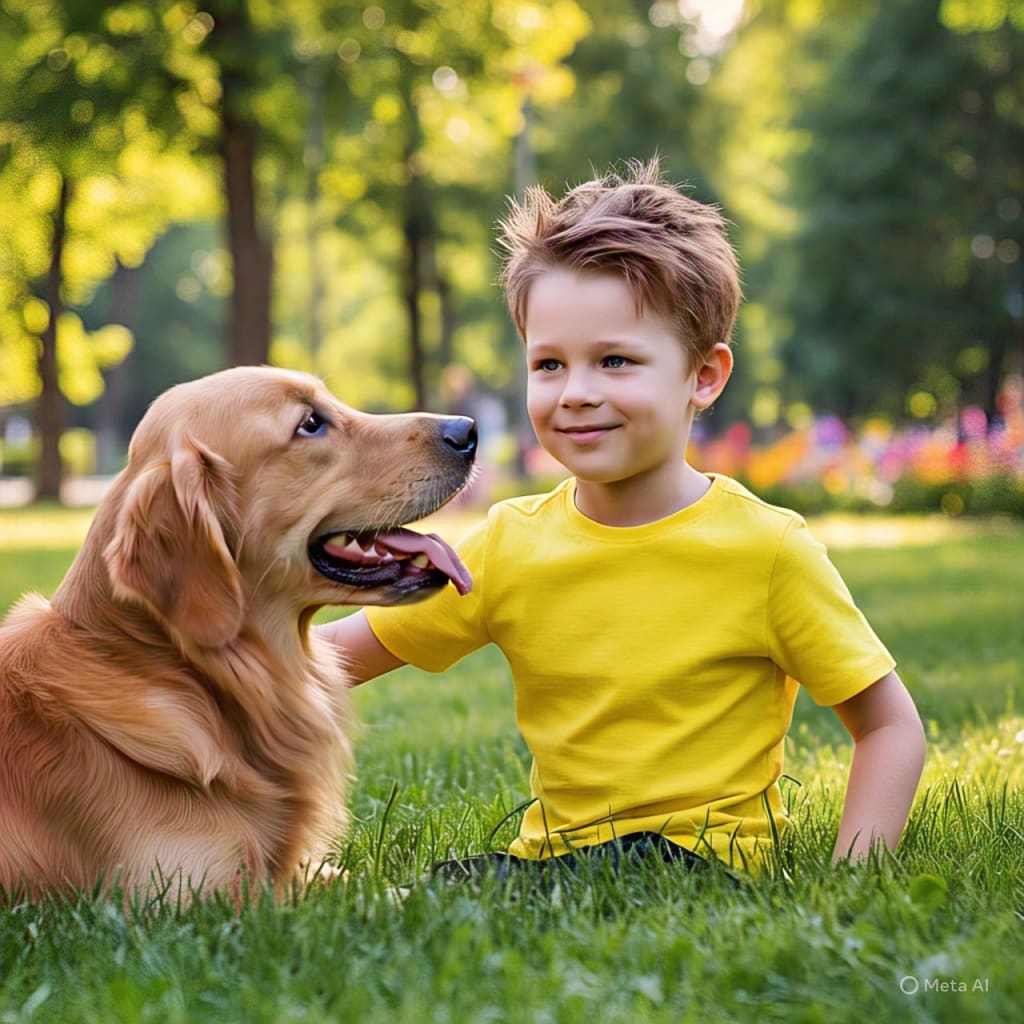
The village of Amrahi woke up each morning with the crow of roosters and the rustle of mango leaves. In one corner of this quiet place, lived a boy named Kabir and his dog, Rusty.
Kabir was ten years old, quiet and observant. He didn’t have many friends. Other children played cricket in the dusty field or splashed around in the pond, but Kabir preferred the company of birds, clouds, and, most of all, Rusty.
Rusty wasn’t a purebred or anything fancy. He had a rough coat the color of old copper, ears that flopped unevenly, and eyes that spoke more than any human ever could. No one knew exactly where he came from. One rainy afternoon two years ago, Kabir had found him—shivering under a bush, ribs poking through his fur, too weak to bark.
Kabir had brought him home without a word. His mother had frowned but said nothing. His father sighed, shook his head, and fetched an old rug. From that moment, Rusty became part of the family, though his bond with Kabir was something different—something sacred.
They were rarely apart. In the mornings, Rusty would wait outside the bathroom, tail thumping. When Kabir went to school, Rusty followed him halfway, then waited at the banyan tree till he returned. In the evenings, they sat on the terrace watching the sun dip below the hills. No words were exchanged, but none were needed.
Kabir wasn’t good with words. He often stammered when speaking to others and avoided eye contact. Teachers called him shy. Children called him strange. But with Rusty, Kabir never needed to explain himself. A look, a whistle, or a pat was enough.
Their routine was simple. Mornings meant long walks past golden fields. Rusty chased butterflies while Kabir collected odd-shaped leaves. Afternoons were for chores and study. Evenings meant play. Kabir would throw an old tennis ball, and Rusty would fetch it like his life depended on it. Sometimes, they just lay on the grass, looking at the sky, their breathing in sync.
But as the seasons changed, something in Rusty changed too.
It started with small things—he stopped running to the door when Kabir returned. His tail wagged slower, his ears drooped more often. Then came the limp, and the wheezing after short walks. Kabir noticed every detail, worry blooming quietly in his chest.
One morning, Rusty didn’t get up. He lay curled under the bed, eyes dull, his body trembling. Kabir knelt beside him, whispering his name, stroking his fur. Rusty licked his hand once, then closed his eyes again.
Kabir’s parents rushed him to the vet in the nearby town. The journey was long, bumpy, and silent. The vet—a kind, old man—examined Rusty and sighed.
“He’s old, son,” he said gently. “His heart is tired.”
Kabir said nothing. He only nodded, clutching Rusty a little tighter.
The days that followed were slow. Kabir stayed home more, skipping games and even his drawing class. He spoon-fed Rusty, cleaned his fur, and talked to him in whispers. Sometimes, he cried softly into his dog’s neck, the fur soaking up every tear.
One evening, as the monsoon clouds rolled in, Kabir took Rusty to the terrace one last time. He wrapped him in a warm cloth and held him as the breeze danced through their hair.
“Do you remember the first day we met?” he asked quietly. Rusty didn’t move, but Kabir kept talking. “You were all bones and mud. Everyone said you'd run away, but you stayed.”
Thunder rumbled far away. Kabir closed his eyes. “You never left me. Even when no one else stayed. You always listened, even when I had no words.”
That night, Rusty passed away in his sleep.
Kabir didn’t cry in front of anyone. He helped his father dig a small grave near the mango tree. They buried Rusty with his ball and the piece of cloth he always slept on. The boy placed a flower over the soil and stood there long after everyone left.
For days, Kabir walked alone. The fields looked emptier. The banyan tree lonelier. Even the skies seemed quieter.
But slowly, something changed.
One morning, he noticed a small puppy trailing him on his walk. It had big ears and clumsy legs. Kabir stopped. The puppy looked up at him, wagging its tail.
He didn’t take it home. Not yet. But he left some water and a biscuit near the path. The next day, the puppy returned.
Kabir still missed Rusty. He always would. But in the stillness of that grief, he understood something—friendship doesn’t vanish. It leaves echoes. Rusty had taught him love without words, comfort without condition, and the strength of silence.
And maybe, just maybe, it was time to pass that on.
About the Creator
Keep reading
More stories from samon khan and writers in Petlife and other communities.
The Unseen Journey of a Job Seeker
The alarm rang at 6:00 AM, sharp and unforgiving. Riya blinked against the pale morning light that crept through her window, her fingers instinctively silencing the shrill noise. Another day had begun—another day of resumes, rejection emails, and awkward interviews. She sat up slowly, the familiar weight of anxiety settling over her like an old shawl.
By samon khan10 months ago in Interview
HTMA Hair Test: Understanding Hair Tissue Mineral Analysis and the Role of Interpretation
Hair Tissue Mineral Analysis (HTMA) refers to a laboratory method used to evaluate mineral content and patterns through a small hair sample. The analysis is often associated with identifying longer-term trends in mineral balance rather than short-term fluctuations.
By CEO A&S Developers7 days ago in Petlife


Comments
There are no comments for this story
Be the first to respond and start the conversation.