
Top 8 Critically Endangered Animals.
Due to excessive Poaching these animals are in the list of Endangered species.


8] Amur Leopard.
Amur Leopard is the subspecies of the leopard from a region of southeastern Russia and northern China. They can run at speed of 37 miles per hour like other species of leopard. The height of the Amur leopard is 19 feet horizontally and 10 feet vertically. Amur Leopards are only found in Northeast China and Far East Russia. They are adapted to a cold climate as their fur grows 7.5 cm long in winter. The coat of the Amur leopard is paler and rosettes are widely spaced and large than other subspecies of leopard.
In 1970 the population of Amur Leopard is 30 making them the most endangered species and listed as Critically Endangered by IUCAN (International Union for Conservation of Nature) and CITES (The Convention on International Trade in Endangered Species of Wild Fauna and Flora). There are only 100 Amur Leopard is left around the world. They are poached for their beautiful skins and due to habitat loss and fragmentation, deforestation Amur leopard can extinct. In future, it is hard for Amur Leopard to survive.
7] Vaquita
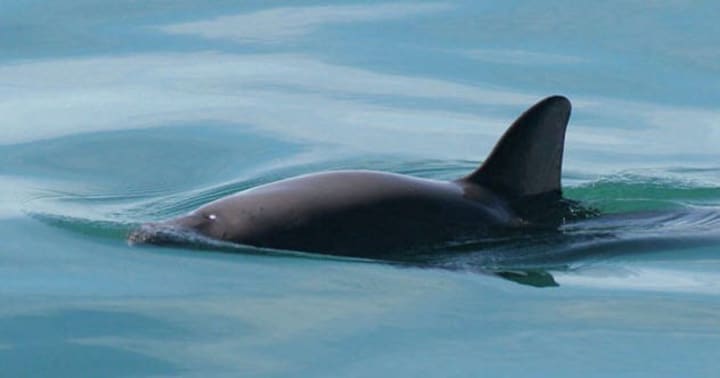
Vaquita is the rarest marine animal on the earth. It is a small and cutest porpoise and critically endangered marine animal. Vaquita is found in the Northern part of the Gulf of California and has a limited area of 4000 square kilometers out of which 2235 square kilometer area they use. Vaquita is mostly seen to be in groups and prefers shallow water.
According to the International Committee for the Recovery of the Vaquita (CIRVA), there is fewer than 19 vaquita left alive in 2018. But in 2020, there are only 10 vaquitas are left. It was risky to keep vaquita in captivity to save them from extinction as they show signs of stress. Vaquita is the first captured animal that was released in a short period from captivity in the year 2018.
The main reason vaquitas are endangered is the poaching of totoaba. Vaquitas are got trapped in invisible and illegal gill nets used to catch totoaba. Vaquita is suffered from a high injury due to nets cutting them results in their death. In 1985–1982 65% vaquita from 128 were caught in totoaba net.
Commercial fishing for totoaba began in 1920 but in 1975 it was illegal to catch totoaba because they become endangered species. Totoaba poached for their swim bladder to cure liver disease and it is also referred “the cocaine of the sea”. The prize of the totoaba swim bladder has high demand in the Chinese market; the demand is so high that criminal organization control the supply of the totoaba bladder. With this condition, it is hard for vaquita to survive in future.
6] Tapanuli Orangutan
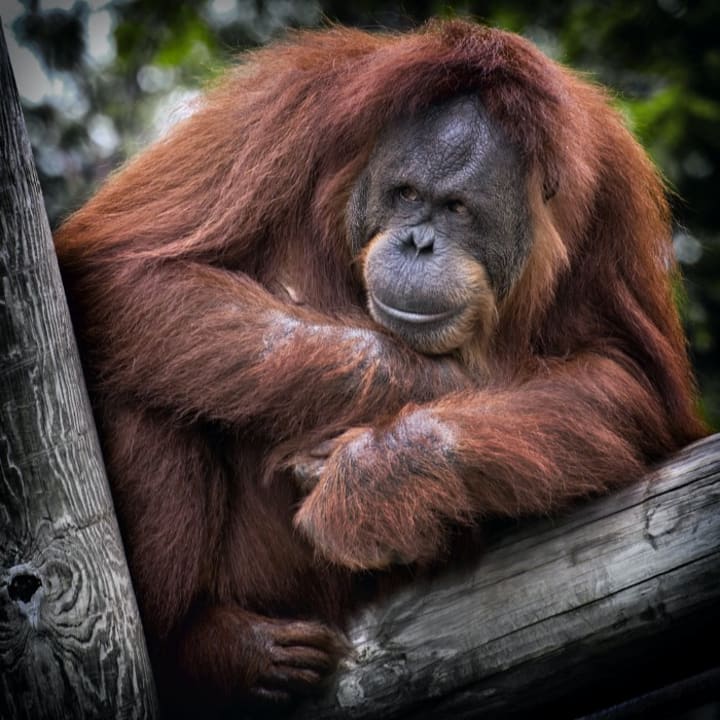
Tapanuli Orangutan is new and critically endangered species of orangutan. These species were first identified in the year 2017 in the rainforest of Sumatran, Indonesia. They covered an area of 1000 square kilometer in a tropical and subtropical moist broadleaf forest located south of Lake Toba in Sumatra. According to the survey, there is only 800 individual are left or less maybe. According to the scientist, these species of orangutan was hidden for 700,000 years.
Orangutans are also called humankind’s closest relative, as they share nearly 97% of the same DNA. The reason they are critically endangered is the construction of a hydroelectric dam in Sumatra and illegal killing. As humans are making away in the forest for hydroelectric dam these animals are shrinks to the very small space. May be last known habitat of the Tapanuli Orangutan could be fragmented by a hydroelectric dam in a few years.
Tapanuli Orangutan is killed for any reason the most common reason is that farmers think they are a threat to their crops. Killing one tapanuli orangutan is a big risk because their reproduction cycle is very slow. Female orangutans give birth about once every eight years and that cub stays with her mother for 7–8 years which makes an amazing bond between mother and baby. Maybe in future, this species of orangutan is not able to survive.
5] Cross River Gorilla.
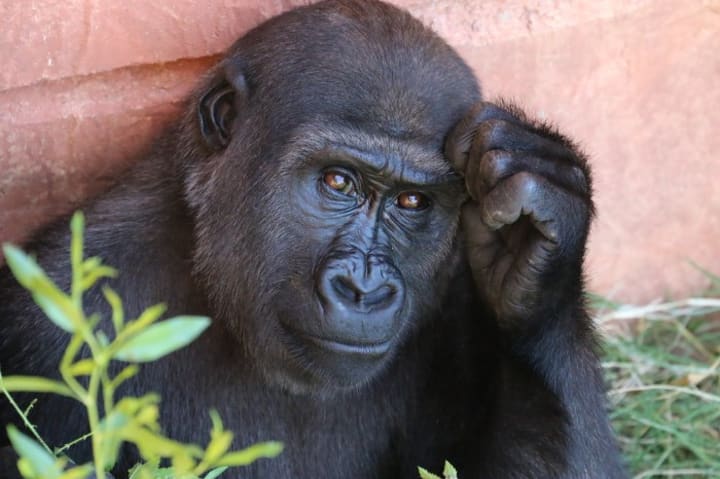
Cross River Gorilla is the subspecies of Western Gorilla. The cross river gorilla found across the lowland montane forests and rainforests of Cameroon and Nigeria. They are scattered in at least 11 groups in an area of 3000 square miles. Like other gorillas, Cross River Gorilla need a dense habitat forest (due to their large size) which is uninhabited by humans for the production of timber and create fields for agriculture and livestock. These gorillas are herbivores in nature that feed on the branch of the tree and due to timber production; they are not able to get food.
Cross River Gorilla is poached for bush meat or accidental killing makes a huge impact on other gorilla or the group of the small population of the gorilla. According to research, there are only 200–300 cross river gorillas are left in the wild. Cross River gorilla is a critically endangered animal maybe they are extinct in future.
4] Hainan Gibbon.
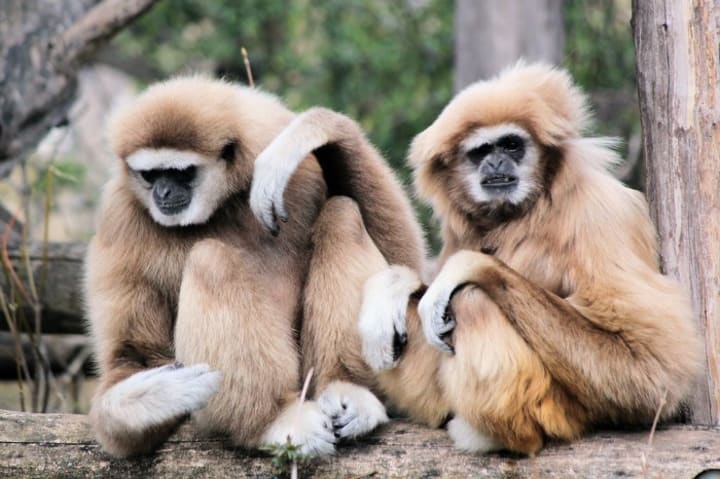
Hainan Gibbon is the rarest ape and rarest primate on earth. They are subspecies of eastern black crested gibbon which are only found in Hainan Island, China. In the 1950s there are more than 2000 Hainan gibbons are found in Hainan Island, China. Now there are less than 30 individual Hainan remain in Hainan Bawangling National Nature Reserve covered only 2 square kilometer area. According to the International Union for Conservation of Nature, Hainan Gibbons are a critically endangered species.
The reason behind their extinction is habitat loss due to deforestation and poaching. Hainan needs broad leaves forest and semi-deciduous monsoon forest has been reduced due to illegal paper plantation growers. As their area get shrinks it is easy for the hunter to poach them. Gibbons are poaching because it is used as a general tonic in Chinese medicine. Due to poaching and deforestation, these rare gibbons are facing extinction.
3] Pangolin.
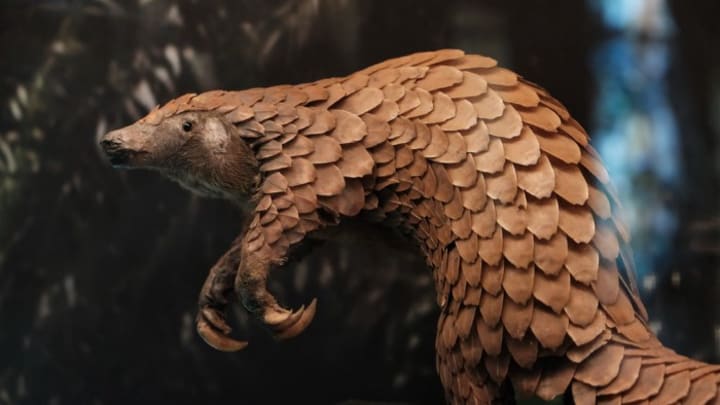
Pangolin is the most trafficked mammal in the world for its body parts. There are eight species of pangolin found in tropical Asia and sub-Saharan Africa and all the species are critically endangered. Pangolin is covered from more than 1000 scales to protect them from predators and insects. These scales are made from Keratin the same material that makes up fingernails and horn.
The Pangolins are poached for their skins, medicine and to make luxury goods which have high demand in China and Vietnam. According to estimate, poachers hunted more than one million pangolins in a decade. From the scales of the pangolin, a powder or a paste is made prescribed as a medicine. Also, hunters poached them for their meat which has high demand in Asia.
2] Javan Rhino And Northern White Rhino.
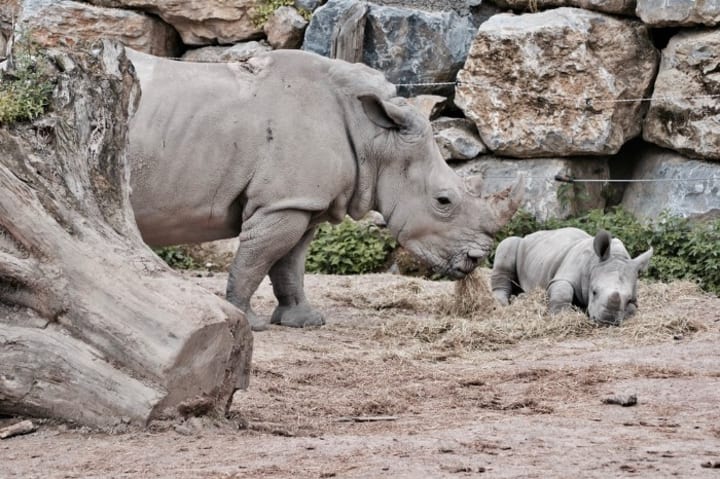
There are five species of rhinos in the world Black rhino, white rhino, Sumatran rhino, Javan rhino and greater one-horned Rhino from which Black, Javan and Sumatran rhinos are highly endangered. At the beginning of the 20th century, there were 500,000 rhinos roamed around Europe, Africa and Asia. But at present, there are only 27000 rhinos present in the wild. Rhinos are poached from a decade’s for their valuable Horns. The value of their horns in the market is very high.
There are only 2 female Northern White Rhinoceros are alive all around the world. Both female rhinos (Najin and Fatu) are protected by armed guards 24/7 in OI Pejeta Conservancy in Kenya. The last male (Sudan) of their kind dies at age 45 on 19th March 2018 due to an infection in his right hind leg and an age-related problem in OI Pejeta Conservancy in Kenya. Najin and Fatu are the only two female rhinos of their kind are left in the wild that makes them highly endangered animals on earth.
Not only White rhino, according to the World Wildlife Fund (WWF), there are only 67 Javan Rhino is left in the wild which is a critically endangered species of rhinos. In the southwestern tip of the Indonesian island of Java (Ujung Kulon National Park) all the Javan Rhino are safe. WWF is supporting that national park to safeguard all Javan Rhino.
1] Saola.
Saola is also known as “Asian Unicorn” because it is rarely seen in nature. It was established in May 1992 when the joint survey carried out by WWF (World Wide Fund for Nature) in north-central Vietnam and the Ministry of Forestry of Vietnam. During their survey, they found a skull of a different animal with two parallel horns they came to know that it was something extraordinary. It was the first large mammal discover in more than 50 years. It was only found in the borders of the Anna mite Mountains of Vietnam and Laos.
The first photo of living saola was captured in 1999 by a camera set by WWF. Both male and females have two parallel horns with a sharp end (up to 20 inches long). The skin of saola is thick which prevents them from injuries and insects. Their body is covered with red, brown and black fur. These animals are herbivore in nature. The population of saola is unknown maybe a hundred at maximum or few dozen at minimum.
These animals are endangered due to habitat destruction. As forests are cutting down to make the way for infrastructure, Plantation and agriculture these animals are left with very small space to live and it is easy for the hunters to hunt them in that small space. Saola is hunted for their horns. Hunters hunt them using snares set or jaw traps. In situations like these continuous, saolas are going to extinct in a few years.
About the Creator
Keep reading
More stories from Pratik Deotale and writers in Petlife and other communities.
A Dart at Dusk
Seconds ago, the sullen sun set on the two of us… my exuberant furry companion and me. A fresh breeze embraces us, delivering welcome relief from the day’s oppressive heat. His typical stumbling and staggering along — apace with a sloth — has turned into trip-trapping, high-stepping, almost skipping along.
By Angie the Archivist 📚🪶2 days ago in Petlife



Comments
There are no comments for this story
Be the first to respond and start the conversation.