
The Extraordinary Smelling Power of Dogs: How Their Noses Outperform Science
Uncovering the secrets behind your dog’s super sense of smell


Dogs see the world through their noses. What humans can only guess, dogs can smell with remarkable precision. From tracking lost people to detecting diseases, their sense of smell is one of nature’s greatest wonders. But what gives dogs such an exceptional ability to detect and distinguish scents? Let’s explore the fascinating science behind their powerful noses.
A Nose Built for Scent Detection
When a dog sniffs, it’s not just breathing, it’s analyzing. The canine nose is uniquely designed to capture and interpret even the faintest traces of smell.
Millions of scent receptors: While humans have around 5 million olfactory receptors, dogs have between 125 million and 300 million depending on the breed. Bloodhounds, for instance, are champions in this category.
Larger olfactory bulb: The part of a dog’s brain that processes smell is about 40 times larger than that of humans relative to brain size. This means dogs dedicate much more brainpower to understanding scents.
Two airways, not one: Dogs can separate air for breathing and smelling. One part of the air goes directly to the lungs, while the other flows into a special chamber where scent particles are analyzed.
Wet, textured nose: A dog’s moist nose helps trap scent particles, increasing sensitivity and allowing them to determine where a smell is coming from.
The Power of a Single Sniff
Each sniff tells a dog a story, who was here, when they were here, and even what they were feeling. Dogs can detect smells at concentrations as low as one part per trillion, which means they can sense a single drop of liquid in 20 Olympic-sized swimming pools.
Dogs also see scents in layers. When they walk into a room, they can separate each odor such as food, people, furniture, and even another animal that passed by hours earlier. It’s like humans seeing colors separately in a painting.
Smelling for Survival and Service
Dogs use their sense of smell for far more than curiosity. Over time, humans have learned to harness this natural ability for critical purposes.
Search and Rescue: Dogs can follow human scent trails that are days old, even in harsh conditions like snow or rain.
Medical Detection: Some dogs are trained to detect diseases such as cancer, diabetes, or even COVID-19 through changes in human body odor.
Explosives and Drug Detection: Police and military dogs can identify minute traces of explosives, narcotics, or firearms.
Wildlife Conservation: Trained dogs help scientists locate endangered species, animal scat, or invasive plants in the wild.
Breeds with the Best Noses
While all dogs have impressive smelling power, certain breeds stand out.
Bloodhound: Famous for tracking ability and unmatched scent memory.
Beagle: Commonly used in airports for detecting contraband food and drugs.
German Shepherd: A top choice for police and military work.
Labrador Retriever: Popular in medical and detection roles due to intelligence and calm temperament.
Each of these breeds has evolved or been bred to enhance olfactory performance, making them true scent specialists.
A Different Way of Understanding the World
To a dog, smell is more than a sense, it’s a language. They can identify friends, recognize territory, detect emotions like fear or stress, and even sense when their owner is ill. What we see with our eyes, dogs see with their noses.
So, the next time your dog stops to sniff a tree for several minutes, remember, it’s not just random curiosity. It’s their way of reading a complex story written in invisible scent molecules.
Conclusion
The smelling power of dogs is a masterpiece of evolution. Their noses are finely tuned instruments capable of detecting what humans cannot imagine. Whether it’s finding lost people, diagnosing diseases, or simply greeting another dog, their sense of smell connects them deeply to the world around them.
Dogs don’t just live in our world, they smell it in ways that remind us how extraordinary nature truly is.
About the Creator
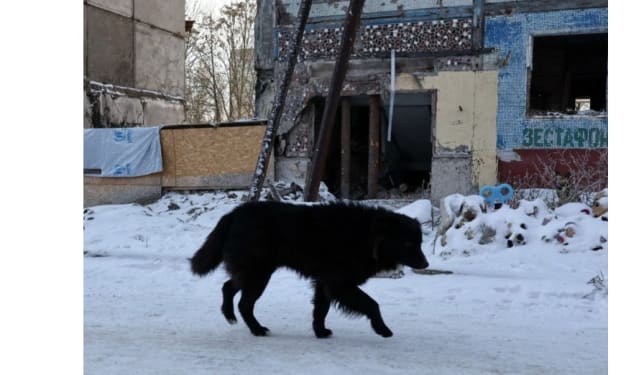
Dogs are reverse domesticated due to the conflict in Ukraine.
After months of continuous fighting, the surviving canines near Ukraine's front lines have clearly changed to resemble wolves in both appearance and behaviour. Their changed bodies demonstrate how characteristics formed by centuries of human friendship can be quickly erased by battle.
By Francis Dami4 days ago in Petlife
The hive has a designated "dance floor" that honey bees use.
Within a certain, quantifiable patch of comb inside the hive, honey bees focus their recruitment dances. Now that its exact outline has been established, scientists can monitor how and when colonies rearrange that common communication area in response to shifting circumstances.
By Francis Dami6 days ago in Petlife



Comments
There are no comments for this story
Be the first to respond and start the conversation.