
The Armored Giants: An Introduction to the Fascinating World of Beetles
Beetles
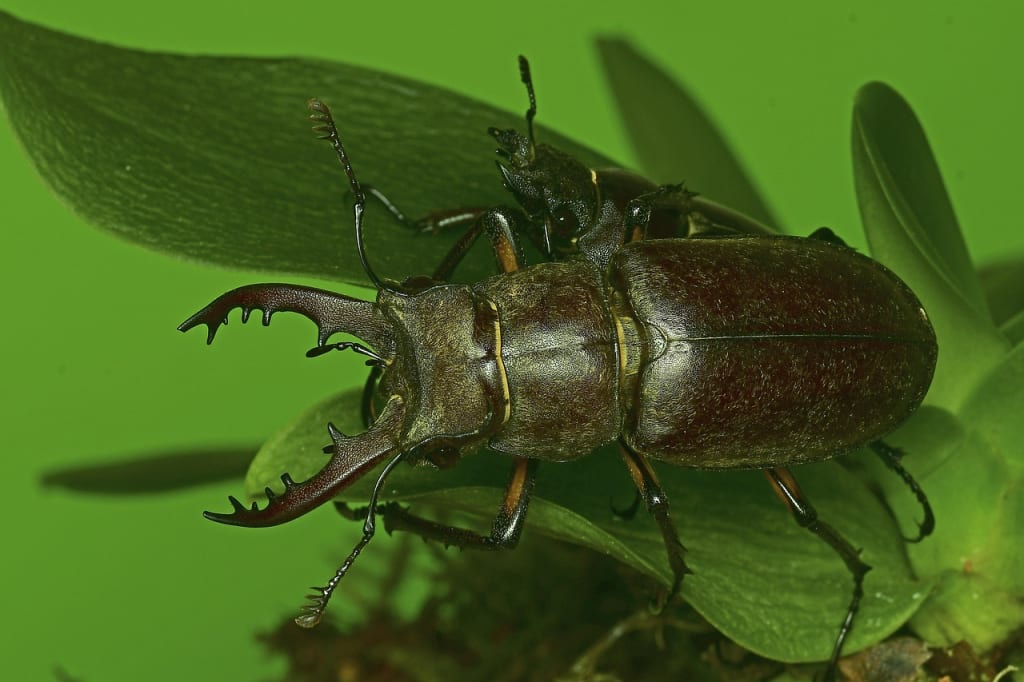
Beetles, members of the insect order Coleoptera, are the armored giants of the animal kingdom. They represent the largest order of insects—and arguably of any life form on Earth—with an astonishing diversity that has led them to colonize almost every terrestrial and freshwater habitat. These hard-shelled invertebrates make up approximately a quarter of all known animal species, a biological abundance that has long captivated and perplexed scientists.
The Anatomy of an Armored Insect
What defines a beetle is its namesake: the unique structure of its forewings. The word Coleoptera itself is derived from the Greek words meaning "sheathed wing."
- Elytra: This is the beetle's defining feature. The front pair of wings has been modified into hard, protective wing-cases called elytra. These hardened shells are not used for flying; instead, they serve as an impenetrable shield, protecting the delicate hindwings—which are used for flight—and the soft abdomen underneath. This armor allows beetles to explore habitats inaccessible to other winged insects, such as burrowing through soil, wood, or dung.
- Body structure: Like all insects, a beetle's body is divided into three sections: the head, thorax, and abdomen. The head contains compound eyes, chewing mouthparts called mandibles, and a pair of antennae used to sense food, mates, and danger. The thorax is the "powerhouse" that anchors the six jointed legs and the two pairs of wings.
- Mouthparts: Most adult beetles possess strong, horizontal-moving mandibles, a testament to their incredibly varied diet. Their mouthparts are designed for chewing, allowing them to devour everything from wood and plants to other insects, carrion, and dung.
Life in Four Stages: Complete Metamorphosis
Beetles undergo complete metamorphosis, a life cycle consisting of four distinct stages:
- Egg: Eggs are laid in a variety of places—soil, wood, on leaves, or in dung—depending on the species.
- Larva:The larval stage, often referred to as a grub, is primarily a feeding and growing stage. Larvae molt (shed their exoskeleton) multiple times and are often long-lived. Larvae are voracious eaters, often doing the most ecological—or agricultural—work.
- Pupa: After the final larval stage, the insect enters an immobile, non-feeding pupal stage. It is inside the pupa that the spectacular transformation from grub to adult beetle occurs.
Adult (Imago): The adult beetle emerges to feed, mate, and lay eggs, starting the cycle anew.
Beetles in the Ecosystem
The vast number of beetle species translates to a wide variety of ecological roles, many of which are vital to the health of the planet:
- Recyclers: Scavenging beetles, such as carrion beetles and dung beetles, are essential decomposers. They break down waste, dead organic matter, and rotten wood, effectively cleaning up the environment and enriching the soil.
- Pest Control: Predatory beetles, like the well-known ladybugs (ladybird beetles), are a natural form of pest control, consuming enormous numbers of soft-bodied garden pests like aphids and scale insects.
- Pollinators: Though bees and butterflies get most of the credit, many beetles also play an important role in the pollination of flowers.
The World of Pet Beetles
For those seeking a low-maintenance, fascinating, and educational beetle pet, several species have become popular choices. Species like the Blue Death Feigning Beetle, with its distinctive dusty blue shell and quirky defense mechanism of playing dead, and various Rhinoceros Beetles and Stag Beetles are admired for their impressive size and unique features.
Caring for them is often quite simple: a secure terrarium with an appropriate substrate (like specialized "flake soil" for larvae), a moderate temperature, and a diet of fresh fruits, vegetables, or commercial beetle jelly will keep these extraordinary creatures happy and healthy. Owning a beetle offers a unique opportunity to witness the wonder of complete metamorphosis and appreciate the largest, and perhaps most successful, order of life on Earth.
About the Creator
Mouni Sana
I just love animals
Keep reading
More stories from Mouni Sana and writers in Petlife and other communities.
11 Amazing Facts About the Platypus — Nature’s Most Unusual Mammal
The platypus is one of the most extraordinary animals on Earth. With the bill of a duck, the tail of a beaver, and the feet of an otter, this semi-aquatic mammal has puzzled scientists since its discovery. Native to eastern Australia and Tasmania, the platypus is a marvel of evolution and a true icon of Australian wildlife. Here are 11 amazing facts that reveal just how special this creature really is—including whether a platypus pet could ever be possible.
By Mouni Sana3 months ago in Petlife
Keeping your pets safe (and calm) this holiday season
The holiday season may be magical for some humans, but for pets it only means confusion, changed routines, overstimulation, extra noise, guests or pet sitters come and go, and sometimes the festive season means danger for pets.
By Susan Fourtané 16 days ago in Petlife
This One Cat Behavior Reveals Everything About Your Relationship
Imagine this: You’ve just returned home after a long day. Your shoulders are tense, your mind racing, and the last thing you feel like doing is interacting with anyone. Yet, as you sink into your favorite chair, a small, silent shadow glides across the room and leaps onto your lap. Your cat stares into your eyes for a moment, kneads the softest spot on your blanket, and then curls up, purring like an engine.
By Ahmed aldeabella5 days ago in Petlife


Comments
There are no comments for this story
Be the first to respond and start the conversation.