wild animals
Animals the way nature intended it; explore the world of wild animals and the controversies surrounding domestication and hunting of feral beasts.
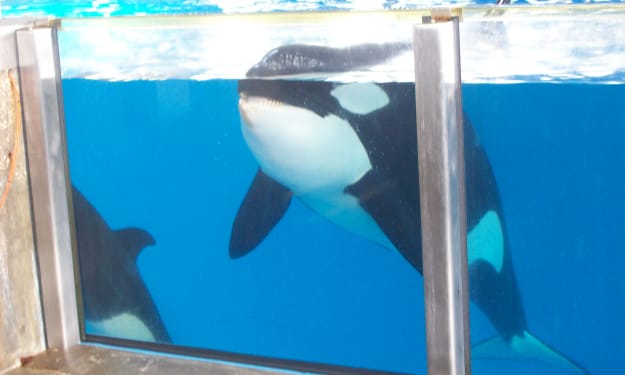
When Whales Get Sick, Activists Show Their True Colors
Earlier last month, I wrote about how the Southern Resident orca population off the coast of Washington state had been placed on the international spotlight when an adult female known as Tahlequah, also known as J35, spent seventeen days carrying around her calf, who died shortly after birth. Around the same time, her cousin, J50, also known as Scarlet, began to battle malnutrition as a result of not being able to feed on Chinook salmon, the primary food source of this endangered orca population. After several attempts to feed her live fish and darting her with medications as a way to treat a possible infection, the US National Marine Fisheries Service has now suggested a plan that might be the only thing that could save her life-capturing Scarlet by locating her to a sea pen where she would be rehabilitated until she is healthy enough to rejoin her pod. Sounds like a simple idea to a complicated issue right? While it seems so ideal, there is one group of people who are in the way of this: the animal rights movement.
By Jenna Deedy7 years ago in Petlife
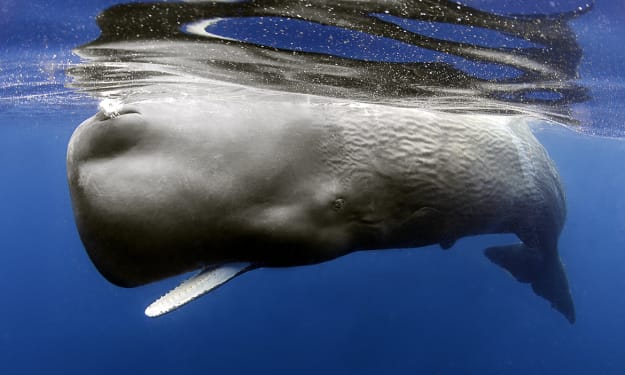
Six Facts About the Sperm Whale
The sperm whale (Physeter macrocephalus), made famous by Herman Melville’s Moby Dick, is the largest species of toothed whale in the world. At around 60 feet in length and weighing in at around 120,000 pounds, these predatory mammals are found throughout all of the world’s deep oceans and are regarded as one of the most extreme animals on the planets, due to being able to dive down to such great depths. So, here are some six facts about the sperm whale.
By Jenna Deedy7 years ago in Petlife
Six Facts About the North Atlantic Right Whale
The North Atlantic Right Whale (Eubalaena glacialis) is regarded as one of the most endangered species of baleen whales in the world. The species has a very long history of being subjected to human exploitation until the 1930s when laws were finally passed to protect the slow-moving marine mammals from the whaling industry. Yet, despite these efforts, the population in the North Atlantic shows very little to no signs of recovery. So, here are six things to know about these endangered mammals.
By Jenna Deedy7 years ago in Petlife
10 Animals We Wish We Could Keep as Pets (But Really Can't)
Many, but not all, states in the US have laws prohibiting adoption of many wild or exotic animals. The popularity of adopting wild animals among people living in these states, or other parts of the world where wild animals can be legally kept, has increased dramatically in recent years. Unfortunately, the decision to adopt these animals is often short-sighted. Adopting a wild animal is not the same as having a pet, and as a result, these animals are often mishandled or abandoned once the adopter realizes how substantial the responsibility is. There are also many instances of adopted wild animals harming humans, either directly or unknowingly through the diseases they carry. With that in mind, here is a list of some of the many animals we wish we could keep as pets.
By Robby Bernstein7 years ago in Petlife
Don’t Feed Wild Marine Mammals
In a previous article, I discussed how one California woman attempted to stop a group of beach-goers from harassing a colony of wild sea lions. Although I did talk about how it's illegal to play with, touch, or even feed a wild marine mammal, I did not mention how it can inflict potential harm. Word of caution, what I am about to describe may be a little upsetting to some readers, but at the same time, it’s critical to be very cautious when watching marine mammals out in the wild.
By Jenna Deedy7 years ago in Petlife
Hippos: Giant Chubby Death Machines
It should come as no surprise to any fan of African wildlife: the hippopotamus remains one of the deadliest land-based animals. This giant semi-aquatic creature defends its territory ruthlessly, and many safari experts warn to keep distance and never get into the water near a hippo. Often described as ‘the most dangerous animal in all of Africa,’ the massive beast reported as being surprisingly agile with various speeds of 14-20+ mph, meaning it will chase you down, and it will nom on you.
By Justin A. Legare7 years ago in Petlife
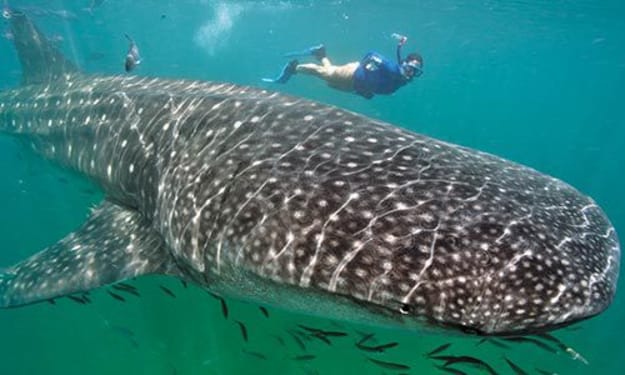
Six Facts About the Whale Shark
The largest shark to ever be alive today, the whale shark (Rhincodon typus) feeds on plankton and travels very long distances in order to find enough food to sustain their large size and breed. These sharks can grow up to 40 feet long and weight up to about 11 tons. They are found in all of the world’s tropical oceans and are regarded as gentle giants. Here are some Six facts about these magnificent sharks (Disclaimer: Despite the name, whale sharks are not related to whales in any shape or form).
By Jenna Deedy7 years ago in Petlife
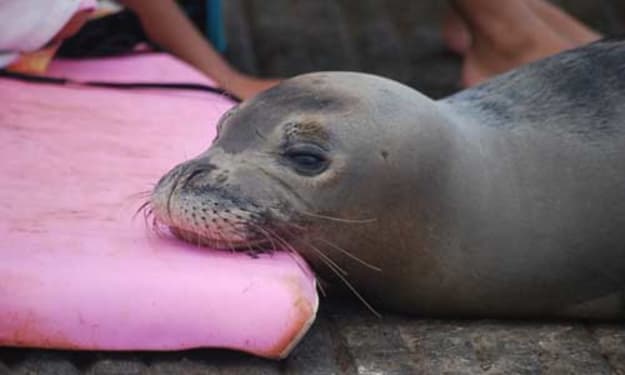
A Monk Seal Called KP2 (Or Hō’ailona by Some)
They say that not all human-seal conflicts end in death in Hawaii, which is the case for KP2 who, at only a few days old, was rescued by a NOAA veterinarian after seeing he was alone, attempting to nurse from some rocks and calling out for his mother, RK22, who was nowhere in sight. Because RK22 had a history of rejecting her pups shortly after birth, a decision was made to rescue and rehabilitate him in the hopes of, not only preventing a potential death of a rejected pup, but also ensuring the survival of a critically endangered mammal, whose numbers were only around 1,100. From there, he was taken to the Kewalo Research Facility in Oahu.
By Jenna Deedy7 years ago in Petlife
Six Facts About Dugongs. Top Story - August 2018.
Dugongs, while similar to manatees, are shorter and slender comparing to their western hemisphere well-known marine mammals to have ever been studied in the Southern Hemisphere, research that has been done on the animals would eventually give way to the rise of manatee research in the United States and Brazil. These animals are known to grow up to 11 feet long and weight up to 2,200 pounds.
By Jenna Deedy7 years ago in Petlife
The Hypocrisy of Thomas Cook Travel Agency When It Comes to Zoos and Aquariums
Recently, Thomas Cook, a travel agency that is based in the United Kingdom, recently announced that it would no longer include marine mammal facilities that house orcas. The decision was likely influenced by animal rights extremists who target any zoo or aquarium that houses cetaceans. However, aside from the fact that it was an animal rights influence that made the company say “adios” to anything SeaWorld or Loro Parque, it’s the fact that Thomas Cook does have some ties to a facility based in China that houses cetaceans that were collected from waters off of Taiji, Japan.
By Jenna Deedy7 years ago in Petlife
Dear Parents, Don’t Let Your Kids Play With the Sea Lions on the Beach!
A California woman was recently visiting Point La Jolla Beach just right outside of San Diego, California when she saw a disturbing site: A group of families visiting the state harassing a colony of California sea lions. Andrea Else Hahn was visiting La Jolla’s famous sea lion rookery on Sunday when she witnessed a group of visiting tourists harassing a colony of sea lions by attempting to take selfies with them, feeding them, petting them, playing with them, and there was even a number of kids kicking sand at some juvenile sea lions. For three days, Hahn, continued to film the growing public ignorance and ongoing violation of the Marine Mammal Protection Act. This was despite a number of signs that were written in three different languages that advised the public to not attempt to feed, pet, nor harass the sea lions.
By Jenna Deedy7 years ago in Petlife