wild animals
Animals the way nature intended it; explore the world of wild animals and the controversies surrounding domestication and hunting of feral beasts.
Encounters with Wild Animals
Many of us are lucky not to have encountered a wild animal. It is not a pleasing sight encountering a wild animal that wants to have you as its meal. In such an occasion, you would do all you can not to fall under its jaws. You would fight to live another day. It would be a matter of death and life. The struggle to live.
By Benny Njuguna6 years ago in Petlife
Ingrid Visser: Wait, There’s More and A Letter to Ingrid’s Fans
On October 3, 2019, I posted an article that criticized the ethical practices of Dr. Ingrid Visser, a New Zealand-born whale researcher who is known for her work on wild orca populations in the Southern Hemisphere. The article primarily focused on certain PR moves, and ethical practices that have raised eyebrows within the marine mammal community, and why she at least, needed to be held accountable. Once it got published online, I received a lot of feedback on it, which most of it was pretty good. However, some people, many of whom, were all supporters of Visser and her work, were not so happy about the article’s criticism of Visser, and decided to go onto my Instagram to defend her. So, in response to remarks like “she’s talented,” “at least she works with wild orcas,” along with some brand new information I have since uncovered about her questionable ethics, I took it upon myself to write this follow up along with a little letter to Visser’s supporters.
By Jenna Deedy6 years ago in Petlife
The Questionable Ethics of Ingrid Visser
Ingrid Visser is a New Zealand born whale researcher who is known for her work on wild killer whale populations, in both her native New Zealand, and in other parts of the southern hemisphere. She has an anti-zoo agenda as well—It is of one that involves her traveling to zoological facilities that house orcas, by taking photos of them in order to pass them off as “evidence” of “abuse.”
By Jenna Deedy6 years ago in Petlife
Animal Behaviorist Slams Paid “Celebrity” PETA Spokesperson For False Anti-Zoo Claims
When it comes to how celebrities influence how the general public thinks, feels, and live out their lives, there is no arguing that they do manage to show it all off through social media platforms that focus on anything that has nothing to do with the glitz and glamor like it once was in the 50s and 60s. No, instead, it is a lot more focus on political, social, and even environmental-related causes or whatever may make them look more like international humanitarian workers and less like glamorous stars of film and television.
By Jenna Deedy6 years ago in Petlife
Sorry Activists, but Seaworld’s Killer Whale Habitats Are Not as “Small” as They Look
They say that the internet is full of crazy conspiracies that are just beyond indescribable, and sometimes, full of whimsical nonsense that does nothing more than to draw the emotional side of its audience that would be enough to be passed as “fact” without doing any research to validate the “claim”. Well, it does appear that animal rights extremists who target zoos and aquariums are now attempting to do the same thing on social media.
By Jenna Deedy6 years ago in Petlife
Sharks; Are They Evil?
The picture above makes me wonder are sharks evil. The photo was taken from below looking up. I don't know about anybody else, but this image to me is terrifying. The photo says it all, it is what it is. I watched shark week and all you hear is how beautiful this big fish is. Beautiful, even a normal photo of a shark is not beautiful, it's scary. Shark week also tried to promote how shark attacks on humans is just part of the game. Come on, I see nothing more than a frightening, massive monster coming at you with extreme force.
By Karen Grattan6 years ago in Petlife
A Pale Snail Tale
The debate was on between the dolphin 🐬 and the whale 🐋. Should pale snails tails be allowed in the sales? The dolphin wanted to exchange two fish 🐠 🐠 for the delicious sort after dish of pale snails tails 🐌 , flailed and sundried on nails all the way from Exotic Wales. 🏴Unfortunately the whale 🐋had never seen a snail 🐌 but the dolphin 🐬assured him that he had one day done a triple reverse flip and seen one on a sailing ship ⛵️and so he really knew what he was talking about‼️The whale 🐋had recently been released from jail and was on his way to the English Dales 🏴.
By Andrew Stephen Luck 6 years ago in Petlife
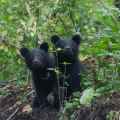
Bear Conservation and Eco-Tourism in Japan
I started my new job at a Wildlife Research Centre in Nagano Prefecture, Japan. This organisation is unique in that it works in both conservation and eco-tourism, the tours providing funding for the conservation side (along with few local grants). Nowhere else in the world is this being done, at least not to the same extent as here.
By Eli Sooker6 years ago in Petlife
Toddler Company Targets Parents with Anti-Zoo Propaganda
Munchkin is a company that is known for making products made for everyday use for toddlers that was first established in 1991 after it’s founder Steven B. Dunn was surprised by the lack of “creative” designs in products that were made for infants and toddlers. While the company started out with making eco-friendly sippy cups, the company has since gone on to make organic snacks and formulas along with travel accessories. However, in recent years, as of 2015, the company has been under fire by both zoo and aquarium professionals alike over its ties with a radical anti-zoo group.
By Jenna Deedy6 years ago in Petlife
Review of 5 Common Types of Traps: Predator-Free New Zealand
Introduction Predator-Free 2050 is an initiative to help restore New Zealand's native biodiversity by eliminating three types of introduced predators: rats, stoats, and possums. These pests are considered the most damaging of all introduced predators. As much of New Zealand's wildlife has evolved to avoid native predators such as eagles, our species tend to be ground-dwelling, but this makes them vulnerable to introduced predators. See the video above to learn more.
By Eli Sooker6 years ago in Petlife
Flipping the Script on Sharks
Shark Week is upon us, which inevitably brings out the shark fan in even your least-expecting friends. Even those that could not care less about marine life indulge in some aspect of Shark Week, be it the numerous drinking games surrounding it, attack-umentaries (you know what I’m talking about, the documentaries solely revolving around shark attacks), made-for-Shark Week movies, or whatever tickles your fancy. On the other hand, maybe you’re one of my people—the year-round shark fan, who have been scoffed at since you were little when you answered “sharks” after people asked your favorite animal—who can’t help but get a tiny bit annoyed while watching all of these Shark Week fans crawl out of the woodwork. While we appreciate shark fans of all variety (because let’s be honest, these guys need more love) we also want to set the record straight and help you to help our marine friends, and quit perpetuating shark myths and stereotypes. Let’s work together towards flipping that script from fearing to revering these beautiful ocean dwellers, living everyday like Shark Week, and potentially saving our oceans along the way by debunking some of the five most common shark myths.
By Emily Christyson6 years ago in Petlife
Civil War in the Rainforest - Two Primate Groups in the Great Conflict
Every single piece of the ecosystem is important and precious. Every plant, insect, germ, animal and man. Do we really separate ourselves from animals as in "man and beast?" "Humans and animals?" That's a bit arrogant. Especially considering as children, we all knew the question, "Is it animal or mineral? Animate, or inanimate?" Hopefully, by the time we all got to biology, we learned that humans are "primates." And so are the great apes, and that includes our Orangutan cousins. We share 97% of our DNA.
By Lisa LaRue-Baker7 years ago in Petlife