exotic pets
Exotic pets are wild animals gone domestic; explore the absurd, fascinating and sometimes illegal exotic pet industry.
Angelfish: Characteristics, how to raise and care for them. AI-Generated.
To help readers learn and quickly reference "Learn about angelfish - a unique fish in aquariums", in the article "Angelfish: Characteristics, how to raise and care for them" the author has included Provide detailed information as follows:
By Ken Daklak2 years ago in Petlife
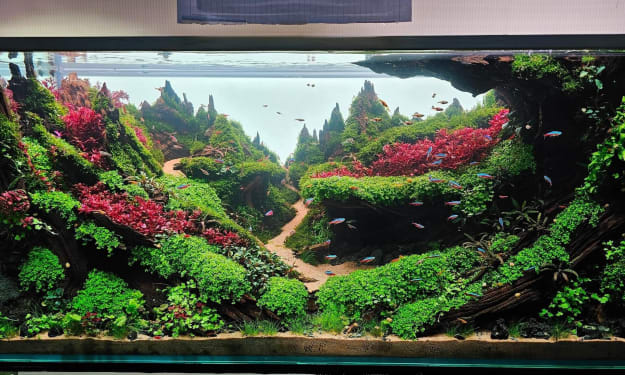
EXPERIENCE IN CULTIVATION OF AQUATIC MOSS. AI-Generated.
1. What is the most technically correct way to grow moss in an aquarium? Moss is a very beautiful plant and can be present in all aquarium designs from Asian aquariums, Dutch aquariums to the simplest home aquariums. Moss can be trimmed to shape and used in fish breeding as well as providing foraging, sheltering and growing areas for small ornamental fish and shrimp. Usually tied or glued to driftwood or rocks.
By Ken Daklak2 years ago in Petlife
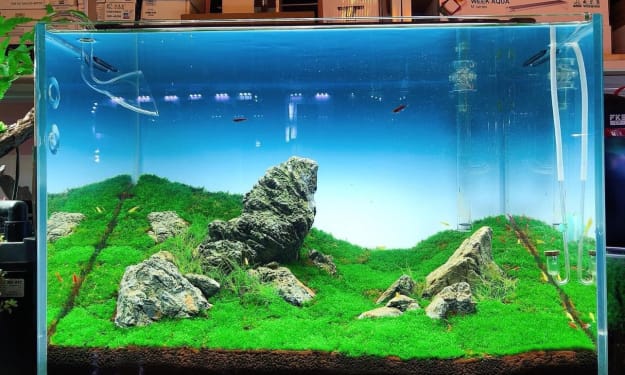
WHAT IS IWAGUMI AQUATIC STYLE?. AI-Generated.
1. History of Iwagumi style Takashi Amano is considered the founder and pioneer of this style in the field of aquatics. He became extremely famous and known worldwide. It is worth noting that he first used Iwagumi stone in a natural aquarium in 1985. To create his composition, he used several types of river stones and incorporated red grass plantings. The layout he set up was extremely creative and achieved amazing success.
By Ken Daklak2 years ago in Petlife
"Max"
Amid a boisterous burgh, with a strip of town and the rat-a-tat of urban life glancing down the street and around the corners, there was a cowboy dog called Max. Max was a roving boy filled with more exuberant vim and pep than his skinny body. Even though he was a down-and-out little, he slinked through the city with his molasses-colored teeth plastered on his mouth, his abnormally attractive eyelashes winking over his cheery sparkly eye.
By Calorie Monroy2 years ago in Petlife
Turtle Crossing
Bob and Marg were two medium-sized Red-eared turtles. The terrarium they used to live in, was pushed off the table by the two boys, during an impromptu hockey game at the Mackenzie house, one night when the parents were out partying and the baby-sitter was making out with her boyfriend in the Rec-Room in the basement. They somehow made it out of the house and were now living in the wooden foundation of the mailbox located on the front lawn near the curb of 85 Minto Place in suburban Providence, Rhode Island. One day they decided, as only turtles can, that they should make a FAST (and I use that term somewhat loosely) break for the yard across the street. This is the story of their adventure.
By John Oliver Smith2 years ago in Petlife
After nearly 1 year in the jungle |Tiger snake 5-6kg
Welcome back, viewers. Many of you have inquired about a video on identifying the king cobra and monocled cobra in Vietnamese. While we commonly refer to both as "cobra," it's important to note that only the king cobra belongs to the Naja genus, unlike the monocled cobra. In today's video, we will demonstrate how to differentiate between these two snakes using live specimens. One monocled cobra from my farm, accompanied by all necessary legal documentation, and one king cobra, which will be released into a nature reserve. Despite being contained in bags, these snakes exhibit an ability to sense their surroundings. I may consider an interview with a snakebite victim who was envenomated through a similar bag in a future video. The primary focus today is to clarify the distinctions between the two species, as there seems to be confusion among many. The king cobra featured in today's video will be reintroduced to its natural habitat tomorrow. This particular individual weighs approximately 5kg and is notably large. Let's proceed to examine the snakes. The key identifying features of the monocled cobra include its rounded hood, which can expand, and a length of around 1.4 - 1.5m. In contrast, the king cobra can reach lengths of up to 4m and displays a more substantial build indicative of peak physical condition. While the monocled cobra may spit venom, the king cobra tends to be less dramatic when domesticated. Identifying markings, such as the hood pattern, vary among individuals and species. Generally, king cobras exhibit distinct banding and arrow markings on their hoods. Size and weight also serve as distinguishing factors, with the king cobra being larger, heavier, and longer than the monocled cobra. Special attention must be paid to handling these snakes, as their venom can be lethal. Avoiding contact with the eyes is crucial due to the sensitivity of ocular tissues. The king cobra, known for its agility and predatory nature, represents a pinnacle predator in its habitat. Handling such a snake requires utmost caution and expertise, as demonstrated in this video. The importance of respecting these creatures and their habitats cannot be understated.
By Cavani Vnjp2 years ago in Petlife
Embracing Exotic Pets:
In recent years, there has been a noticeable shift in the world of pet ownership. Beyond the traditional cats and dogs, more and more people are opening their hearts and homes to exotic pets. From colorful reptiles to playful sugar gliders, the appeal of these unique companions extends far beyond their novelty. It's a journey of discovery, connection, and a deeper understanding of the diverse world we live in.
By Paul Johnson2 years ago in Petlife