bird
A bird's eye view of a life in flight.
Feathers, Flair, and Fascination
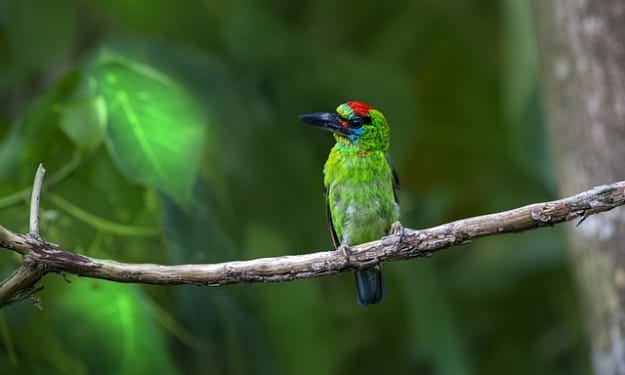
In the vibrant tapestry of the animal kingdom, few creatures can match the colorful charm and captivating personalities of parrots. These feathered wonders are a true marvel of nature, boasting a striking appearance, exceptional intelligence, and an array of behaviors that make them a constant source of fascination for humans around the world. Join us as we embark on a journey into the enchanting world of parrots and uncover the secrets behind their unique allure.
By Никол Николова2 years ago in Petlife
How to Shoulder Train Your Bird
Whether you're a fan or a novice to the avian world, you probably know the tomfoolery in allowing your bird to stay nearby beyond its enclosure. In any case, letting your flying companion out requires some preparation and limits — for both bird and proprietor!
By Sobo Bright2 years ago in Petlife
Did A Yellow-Crowned Amazon Save a Lost Language?
A while back, I was listening to an audiobook biography of the life of explorer and prolific writer/naturalist Alexander von Humboldt, and I came across a mention of his talking pet parrot of 30 years. As a parrot owner myself, I was left wanting to know more.
By Amethyst Qu2 years ago in Petlife
Parrot Playbook: Colorful Avian Wonders and Fascinating Companions
The Parrot playbook + Ebook In the intricate mosaic of the animal kingdom, few creatures capture our imagination as vibrantly as parrots. With their kaleidoscope of colors, unparalleled intelligence, and remarkable mimicry skills, parrots emerge as captivating members of the avian realm. From the lush rainforests of South America to homes across the globe, these birds have carved a distinct niche both in the natural world and human hearts.
By Kevin O Hara2 years ago in Petlife
Animals & Pets
The Profound Connection: Animals and Pets Enriching Our Lives The companionship between humans and animals dates back to the dawn of civilization, and the bond continues to thrive in today's modern world. The role of animals as pets has evolved from mere utilitarian purposes to deep emotional connections. From loyal dogs to enchanting cats, from playful rabbits to talkative parrots, the presence of pets enriches our lives in ways both tangible and intangible.
By Tayyab Bhatti2 years ago in Petlife
Comparative Analysis of Animal and Human Eyes: A Glimpse into Nature's Optical Diversity
The animal kingdom boasts an incredible array of species, each adapted to their specific environment and lifestyle. One of the most remarkable adaptations is the diversity of visual systems, which have evolved to cater to the unique needs of different species. While the basic structure of the eye is consistent across many organisms, there are significant differences between animal and human eyes in terms of their anatomy, function, and capabilities.
By StorySpinner2 years ago in Petlife
Why Over 600,000 Bird Specimens Are Preserved At The Smithsonian
The smithsonian herbal records museum homes over six hundred 000 bird specimens from the closing 2 hundred years and new specimens are added each month way to the precise work of specialists who preserve pores and skin and hold every chicken in the collection but most of these birds never see the museum ground so why do they need to be flawlessly preserved the solution research whether it's figuring out birds killed by airplanes or coming across evolutionary modifications in duck payments we are not just preparing this bird to be used day after today we're getting ready this hen for use for loads of years now we went to the smithsonian to look how one specimen inside the skins series is added prepared and used for generations to come it starts offevolved with acquisition it says right here at the label that this ostrich was sent by king mendelek as a gift to president roosevelt specimens are commonly donated by way of people or organizations this california condor became donated with the aid of the usafish and natural world carrier this chook came from president theodore roosevelt's non-public series and this cooper's hawk died while crashing into a constructing window it was donated lower back in 2017 and is set to get its highlight in an upcoming show off however it changed into to begin with stored on this freezer so it's on a left shelf from there our hawk is taken up to the prep lab into the skilled arms of museum specialists like christina and her husband brian brian did you do that yes i did put the cotton inside the mouth married couples fat this specimen is 9926 so i prepared at the least that many birds and mammals whilst you're at approximately 10 000 it shows that you've been doing it for at least probably twenty years or so and you could do it it was a amusing fun exercising and it virtually worked blindfolded or not the experts first thaw weigh and measure the hawk after which they choose up a scalpel to start isolating the skin from the muscle mass and fat because these are going to be stored as dried specimens we need to remove as a great deal of the muscle from the specimen that we can brian removes the pores and skin from the body of the chicken discarding the tender tissues and oil glands which would purpose the specimen to rot and it is essential to get every piece of fats out without unfavourable the skin seeing that those specimens are intended to ultimate for future years that is where gentler tools like his arms end up beneficial you have to move very sluggish methodical to get the skin off without ripping it i am pushing the skin in preference to pulling it so i'm no longer stretching it brian additionally makes use of corn cob dust all through the technique to soak up any body fluids so the specimen is stored clean new humans use lots much less dirt and greater skilled human beings simply cover it with dirt whilst disposing of the smaller components of the hen like the head or the eyes the attitude of the scalpel additionally makes a huge distinction you observe i'm cutting far from the pores and skin there's been instances where whilst you seize the eye it squirts at you now and again birds which have more fat on their pores and skin want to go through additional cleaning all this white goopy stuff that is all fats that wishes to come back off otherwise it'll get rancid after which it's going to acidify and it'll actually simply ooze out of the skin they use this fats wheel device to get rid of all of the fat until you may see the feather music this is uh takes a touch bit of practice because in case you press too tough you may rip the skin once the fat is cleared greater corncob dirt is used to take in the moisture and then the specimen is washed and dried you want to peer me blow the sawdust off okay all proper so with this we do it in the fume hood due to the fact as you believe i'm gonna blow a lot of dirt anywhere christina makes use of a compelled air dryer to blow off the sawdust and a hair dryer to fluff up the feathers including a pleasant sheen to them to get the fowl presentation geared up brian will first tie the wings together to create a confined variety of movement he approximates how far a cooper's hawk could have clearly unfold their wings so inside the future if somebody grabs the bird and opens up the wing to see the beneath aspect of the wing by using tying it it'll make it the specimen stronger now the specimen is ready to be filled with cotton recreating its unique form we are trying to make a specimen that lasts forever and robust so i am no longer a tailor or seamstress however you may sew up a bird pretty suitable we get the feathers ensure that they may be organized nicely inside the proper order in order that'll help researchers later the ultimate step is pinning the hen onto a board to dry into its permanent position however i become pinning it that is the way it'll appearance the rest of its career at the smithsonian it takes in all likelihood close to one hundred birds earlier than someone can pass at it by myself once they reach one thousand birds then we say that that character is usually an experienced preparator and they are able to educate different human beings thoroughly after 10 or so days this cooper's hawk may be absolutely dried and equipped to debut on the exhibit ground the hawk can be simply one in every of 20 specimens on display for the lighting out exhibit all birds who've died from flying into skyscraper home windows and they'll eventually be part of the bigger skins series with over 470 000 specimens supporting researchers from all around the world like lauren and joshua learning how mating among home and wild ducks has changed the dimensions and structure of their bills or jim with the feather identification lab crew he works with government agencies to identify birds killed during air strikes we get about 10 000 moves a yr the busiest times are within the fall and the spring and this vicinity the division of birds is the proper vicinity for us to be due to the fact we've got 80 percent of the arena's chicken species represented on this series so if there's a chicken strike that occurs inside the world we possibly have a specimen to healthy it up to this is a fowl strike sample the remnants of a chicken aircraft collision that has been sent to us for us to pick out so i'm able to see that we've got got a pair wing feathers here we have were given a tail feather we have were given some body feathers so we will really take this feather out and healthy up those tail feathers quite properly to the barn swallow and we have were given even these great little peachy feathers that we are doing this his findings are sent to airfield biologists and engine manufacturers to modify aircrafts and decrease accidents this chook was accumulated returned in 1878 and so this chicken changed into collected before airplanes had been even imagined and put into this collection and now we are the use of it to pick out a fowl aircraft collision so we by no means know what these specimens are going to get used for however that is honestly why it's essential to hold them all the time a separate wings series additionally allows for deeper evaluation of feathers again in the vintage days they did not make too many spread wings or flat skins and us within the feather lab truly like that as it allows us get entry to to feathers that arise underneath the wing and access in one-of-a-kind regions of the chicken where we'd get a feather to but it is very tough to get into a conventional museum skin other researchers might be exploring the microbiomes discovered in the wings like gary he discovered that vulture wings have a bacterial institution called dinococcus one of the toughest organisms which could face up to high radiation so while i've exposed this wing into full solar the temperature on a day like nowadays will be ninety stages outdoor and about three mins the temperature on the floor of this wing heats as much as over one hundred sixty and that probable explains why dinococcus is so dominant as it's one of the few bacterial organizations which can surely reproduce at the smithsonian these are just of the collections within the chicken division there's additionally the organ series soaked in ethanol for upkeep the skeletons with every bone meticulously numbered and set up birds that retired from being at the show off floor all of these are time stamps of the existing chook population growing a file for destiny generations of researchers while the primary hen preparators organized birds they'd no idea what dna changed into even though they didn't understand that by means of doing a regular chook prep it has enabled future researchers to conduct studies on birds and you realize i want i had a time tablet to enter the future to peer what our birds are going for use for a hundred years from now
By Pancy Stiles2 years ago in Petlife