
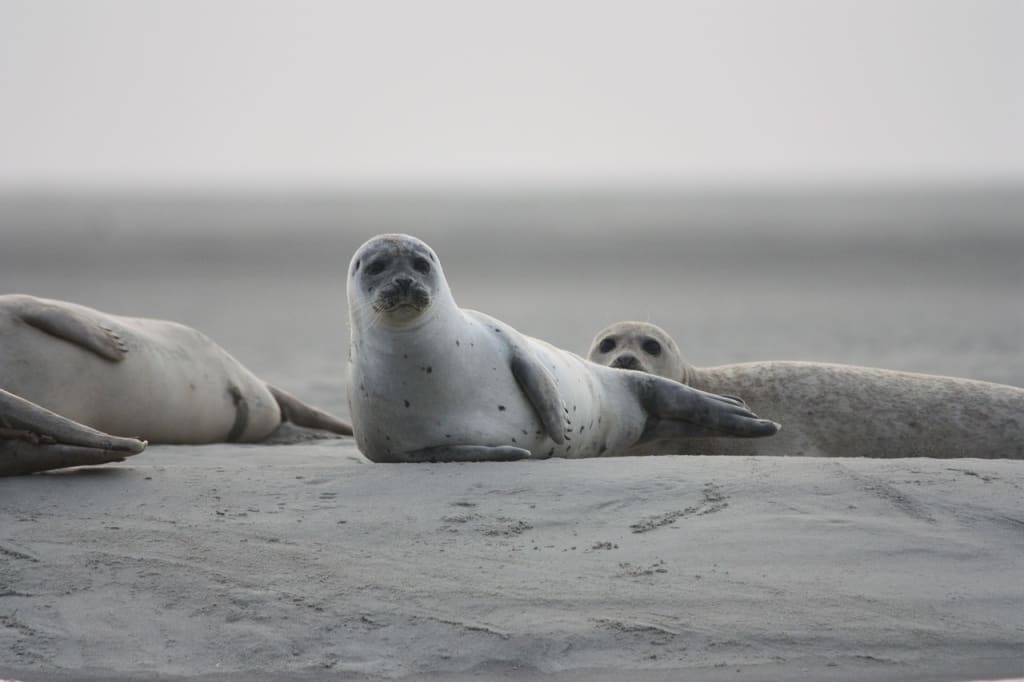
Seals are semi-aquatic marine mammals that belong to the pinniped family, which also includes sea lions and walruses. These fascinating creatures are found in oceans all around the world, from the icy waters of the Arctic and Antarctic to the more temperate coastlines. Seals are known for their streamlined bodies, flippers, and remarkable ability to thrive both in water and on land.
Physical Characteristics and Adaptations
Seals have a thick layer of blubber that helps them stay warm in cold waters. Their bodies are designed for swimming, with powerful hind flippers that propel them through the water with grace and efficiency. Unlike sea lions, seals lack external ear flaps, giving them a sleeker appearance. They can hold their breath for extended periods, allowing them to dive deep in search of fish, squid, and other marine prey. Some species, like the Weddell seal, can hold their breath for over an hour!
Behavior and Habitat
Seals are social animals that often gather in large colonies, especially during breeding season. They use a variety of vocalizations, body movements, and even facial expressions to communicate. Most seals give birth on land or ice, where the mothers nurse their pups for a few weeks before they become independent.
Their habitats vary depending on the species. Some, like the harp seal, prefer the icy Arctic, while others, such as the harbor seal, are found along rocky and sandy coastlines. They are excellent hunters, using their sensitive whiskers (vibrissae) to detect the movement of prey in the water.
Seals and Human Interaction
Seals have long been a part of human culture, often depicted in folklore and mythology. While they are protected in many regions due to conservation efforts, they still face threats from habitat destruction, climate change, and hunting in some areas. Conservation efforts focus on protecting seal populations and ensuring their ecosystems remain intact.
Can You Have a Seal as a Pet?
While seals may look cute and playful, they are not suitable pets. In many countries, it is illegal to own a seal due to wildlife protection laws. Seals require a vast aquatic environment, a specialized diet of fresh fish, and expert veterinary care, which makes them extremely difficult to keep in captivity. They are wild animals with natural behaviors that cannot be easily accommodated in a domestic setting.
Instead of keeping a Seal as a pet, you can visit marine sanctuaries, aquariums, or conservation centers where seals are cared for in environments that closely mimic their natural habitat. If you love seals, supporting conservation efforts and educating others about their importance is a great way to help protect these amazing creatures.
How to Recognize a Seal
“True” seals, also known as “earless” seals or simply “seals,” belong to a group of pinnipeds that have ear holes but lack an external ear flap. This includes species such as the harbor seal, endangered Hawaiian monk seal, and harp seal.
Seals typically have a smaller body size compared to sea lions. But some, such as the Northern elephant seal and hooded seal, can be larger.
On land, seals use their bellies to move around in a caterpillar-like motion. They have small front flippers that are thinly webbed with a claw on each small toe. In the water, seals swim easily, moving their rear flippers back and forth, similar to how a fish uses its caudal fin (tail) to propel itself through the water.
How to Recongize a Sea Lion
Sea lions, such as the California sea lion and Steller sea lion, belong to a group of pinnipeds that have external ear flaps—giving them the nickname “eared seals.” This group also includes fur seals like the threatened Guadalupe fur seal.
On land, sea lions use their large, elongated front flippers and rear flippers rotated underneath their bodies to “walk.” In the water, they propel themselves by paddling their front flippers and use their rear flippers to help steer, like a boat’s rudder.
Conclusion
Seals are extraordinary marine mammals with unique adaptations that allow them to thrive in diverse environments. While they may be adorable, they are best appreciated in the wild or in conservation settings rather than as pets. By respecting and protecting their natural habitats, we can ensure future generations continue to enjoy and learn about these wonderful creatures.
About the Creator
Mouni Sana
I just love animals
Keep reading
More stories from Mouni Sana and writers in Petlife and other communities.
Exploring the Fascinating World of Our Feathered Friends
Birds have long captured human imagination with their vibrant colors, mesmerizing songs, and incredible flight abilities. From the tiny hummingbird to the mighty eagle, these feathered creatures are among the most diverse and remarkable animals on Earth. Whether you’re a seasoned birdwatcher or just beginning to appreciate their beauty, exploring the world of birds is a journey filled with wonder.
By Mouni Sanaabout a year ago in Petlife
30 Days in a Shelter
By day 3, the barking changes. The first 48 hours are chaos. Intake processing. New smells. Metallic doors slamming. By day 3, some dogs bark constantly. Others stop almost entirely. One paces the kennel line until the pads on his feet redden. Another stands motionless, eyes half-lidded, ignoring visitors.
By Dr. Mozelle Martin4 days ago in Petlife
Bomb Scare
It was 2027, and the world never thought it would happen. A missle hit the United States, but it wasn't where they had anticipated. A little town in the northeast was hit by a missile strike, they didn't know why, and they didn't know exactly where it hit, but they did know it was a coastal community, somewhere between Maine and Delaware.
By Gregory Paytonabout 18 hours ago in Fiction




Comments
There are no comments for this story
Be the first to respond and start the conversation.