
Saiga Antelope - The Last of its Kind
The last of its kind

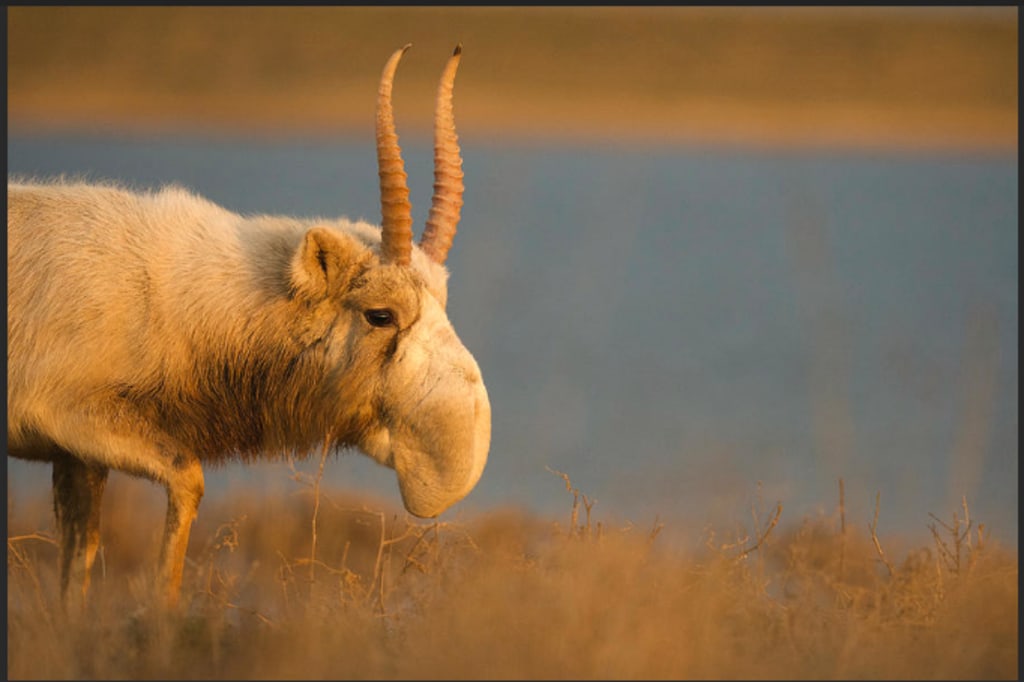
The Remarkable Saiga Antelope (Saiga tatarica): A Survivor of the Steppes
The Saiga Antelope (Saiga tatarica) is one of the most distinctive and ancient creatures roaming the steppes of Central Asia. Known for its peculiar, oversized nose and resilient nature, the Saiga Antelope has fascinated biologists and conservationists alike. Here are some interesting facts that highlight the uniqueness and importance of this extraordinary species.
Unique Appearance
The Saiga Antelope is immediately recognizable due to its large, bulbous nose, which resembles a miniature trunk. This unique nasal structure is not merely an oddity but a vital adaptation. During the hot, dusty summers of the steppes, the Saiga's nose filters out dust and cools the air they breathe. In the harsh winters, it warms the frigid air before it reaches the lungs, helping the antelope survive extreme temperatures. This adaptive feature is a brilliant example of evolution's ability to equip animals with the tools necessary for survival in their specific environments.
Ancient Lineage
Saigas have a long history, dating back to the Ice Age. They once roamed vast areas from the British Isles through Central Asia and into North America. Fossils suggest that Saigas coexisted with mammoths and saber-toothed cats. Today, they are primarily found in Kazakhstan, with smaller populations in Mongolia, Russia, and Uzbekistan. Their ancient lineage makes them a living relic of a bygone era, offering scientists a glimpse into the past ecosystems of the Pleistocene epoch.
Social Structure and Migration
Saigas are highly social animals, typically found in herds that can number in the thousands. These herds undertake extensive migrations across the steppes in search of food and suitable breeding grounds. This migratory behavior is crucial for their survival, as it allows them to exploit the seasonal availability of resources. During these migrations, Saigas can cover vast distances, showcasing their incredible endurance and adaptability.
Breeding and Reproduction
The breeding season for Saiga Antelopes, known as the rut, occurs in late November and December. Males become highly territorial and engage in fierce battles for access to females. These clashes can be intense and sometimes result in serious injuries or death. After a gestation period of about five months, females give birth to one or two calves, usually in May or June. Remarkably, Saiga calves are highly precocial, able to stand and walk shortly after birth, which is essential for keeping up with the migrating herd.
Conservation Challenges
Despite their resilience, Saiga Antelopes face numerous threats that have led to dramatic population declines. Habitat loss due to agricultural expansion and infrastructure development
poses a significant challenge. Poaching is another major issue, driven by the demand for Saiga horns in traditional medicine. Additionally, climate change and disease outbreaks have further imperiled their populations. For example, in 2015, a catastrophic outbreak of pasteurellosis, a bacterial infection, wiped out over 200,000 Saigas in Kazakhstan in just a few weeks, highlighting their vulnerability to disease.
Conservation Efforts
In response to these threats, various conservation initiatives have been launched to protect the Saiga Antelope. These efforts include the establishment of protected areas, anti-poaching measures, and community engagement programs to promote coexistence between humans and Saigas. International collaborations, such as those led by the Saiga Conservation Alliance and the Convention on Migratory Species, aim to address the multifaceted challenges facing the Saiga and ensure their long-term survival.
Ecological Importance
Saiga Antelopes play a vital role in their ecosystem. As herbivores, they help maintain the health of the steppe grasslands by grazing, which promotes plant diversity and prevents overgrowth. Their migratory patterns also contribute to the dispersal of plant seeds, aiding in the regeneration of vegetation across vast areas. By sustaining the grasslands, Saigas indirectly support a range of other species that depend on this habitat, highlighting their ecological significance.
Conclusion
The Saiga Antelope (Saiga tatarica) is a remarkable species with a rich history and unique adaptations that have allowed it to thrive in the challenging environments of Central Asia. However, the numerous threats it faces require urgent and sustained conservation efforts. By protecting the Saiga and its habitat, we not only preserve a fascinating and ancient creature but also safeguard the health of the steppe ecosystems that so many other species depend on.
About the Creator
Francis C Okoro
"If you learn from defeat, you haven't really lost." - Zig Ziglar
Keep reading
More stories from Francis C Okoro and writers in Petlife and other communities.
The Unknown Facts About Aye-Aye - Cute and Harmless
The Fascinating World of the Aye-Aye (Daubentonia madagascariensis) The Aye-Aye (Daubentonia madagascariensis) is one of the most unique and intriguing creatures in the animal kingdom. Native to Madagascar, this nocturnal primate belongs to the lemur family and has fascinated scientists and nature enthusiasts alike with its peculiar appearance and unusual behaviors. Here are some interesting facts that make the Aye-Aye a standout among the world’s diverse fauna.
By Francis C Okoro2 years ago in Petlife
Velveteen Lop Rabbit Lifespan Size Color Diet and Interesting Facts
As we know when people assume Velveteen Lop Rabbit many time the sweet story of the Velveteen Rabbit comes to mind. The name of this breed is not taking from any rabbit, but the book The Velveteen Rabbit have a very cute, sociable, and friendly nature.
By Rabbits Advisor5 days ago in Petlife
Helping Your Elderly Cat Who's Going Blind
When Your Cat Loses Its Sight It can be heartbreaking to watch your beloved kitty go blind. When my cat started to go blind, it was really hard to watch her bump into walls, not to mention the constant loud meowing, which made her sound like she was in excruciating pain. She wasn't. However, she was very confused and scared.
By Janis Masyk-Jackson7 days ago in Petlife
A Transparent Look at Vocal Challenges and Top Stories
Almost three years ago, we shared a resource article that served as a place for people to suggest new challenge prompts. We thought it would be a good idea to refresh that thread, and take the opportunity to answer a few common questions about top stories, how challenges are judged and how submissions are reviewed.
By Vocal Curation Team4 days ago in Resources


Comments
There are no comments for this story
Be the first to respond and start the conversation.