
Reading Pet Body Language — Understand Your Dog and Cat Better
A guide to understanding what your pets truly want to tell you.

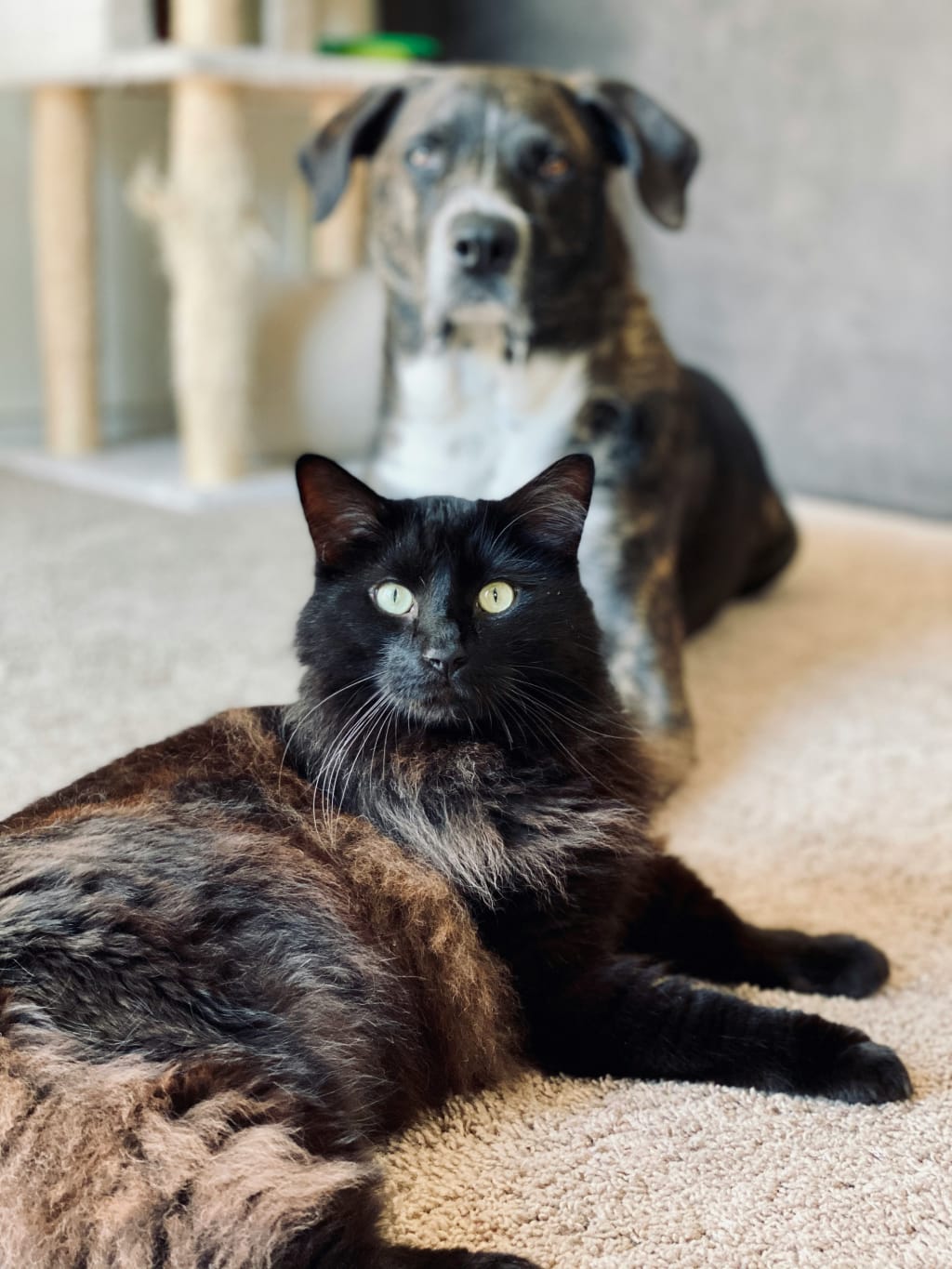
Every pet owner has wondered what their dog or cat is really thinking. You talk to them, they look back, maybe tilt their head or flick their tail, and you can’t help but ask yourself, “Do they actually understand me?” The truth is, they do in their own way. Our pets may not speak our language, but they communicate all the time through their bodies. Once you learn to read their signals, you start to see just how much they’ve been saying all along.
Understanding Your Dog’s Body Language
Dogs wear their hearts on their fur. They show happiness, worry, love, and fear with every movement.
A wagging tail isn’t always a sign of joy. When it moves gently from side to side with the body relaxed, that’s a happy dog. But if the tail is high and stiff, it can mean alertness or even tension. The position and movement matter more than the wag itself.
Watch their ears too. Ears standing forward often show curiosity or excitement, while ears pulled back can mean they’re scared, anxious, or unsure. Their eyes tell stories too. Soft, blinking eyes show calmness and trust. Wide eyes with the whites showing mean they’re uncomfortable or nervous.
Even growling, something most people see as aggression, is actually a way of saying, “I’m not okay with this.” It’s their voice, asking for space. Listening to that instead of scolding them builds trust and helps them feel safe.
A dog’s posture is another clear clue. A relaxed stance, a loose body, and gentle movements mean they’re comfortable. A stiff posture or a lowered head shows they’re on edge. When a dog rolls on its back, it might be showing trust, but sometimes it’s just submission — context is everything.
Understanding Your Cat’s Body Language
Cats are quieter in their communication. They don’t shout their emotions like dogs do — they whisper them through movements and expressions.
A cat’s tail tells you more than you think. A tall, upright tail means they’re happy and confident. A puffed-up tail is a clear sign of fear. A twitching or flicking tail usually means irritation, and that’s your signal to give them space.
Their ears and eyes are just as expressive. Forward-facing ears mean curiosity, while flattened ears say they’re frightened or angry. Slow blinking is a cat’s way of showing affection and trust. Try blinking back slowly — it’s like telling them, “I trust you too.”
Even purring, which we often associate with comfort, can have different meanings. Cats also purr when they’re anxious or unwell because it helps them soothe themselves. Look at the rest of their body to understand which kind of purr it is.
And when your cat shows you its belly? That’s one of the highest signs of trust. But don’t always assume it’s an invitation to pet — sometimes, it’s simply a sign that they feel safe around you.
Building a Deeper Connection
When you start to notice these small signs, your bond with your pet changes. You stop guessing what they feel and start truly understanding it. You begin to recognize when your dog needs reassurance instead of commands, or when your cat wants quiet rather than cuddles.
So many bites, scratches, or moments of fear could be avoided if we simply paid attention earlier. That stiff body, that yawn, that tail flick — they all mean something. When we respond with care instead of confusion, our pets learn that they’re being heard, even without words.
The Unspoken Bond
Animals speak to us every day — just not in the way we expect. The way your dog leans against your leg or your cat curls up near you when you’re sad is their way of saying, “I’m here for you.” They read us better than we read them sometimes.
Learning their language isn’t about training. It’s about respect, patience, and love. It’s realizing that behind every bark or purr is an emotion, and behind every movement is trust waiting to be earned.
Because when you finally learn to listen without words, you’ll see that your pet has been talking to you all along — you just needed to understand how to hear them.
About the Creator
Manal
Storyteller,dreamer and lifelong learner,I am Manal.I have 3 year experience of artical writing.I explore ideas that challenge,inspire and spark conversation.Jion me on this journey of discovery.
Follow me on Pinterest @meenaikram918
A Dart at Dusk
Seconds ago, the sullen sun set on the two of us… my exuberant furry companion and me. A fresh breeze embraces us, delivering welcome relief from the day’s oppressive heat. His typical stumbling and staggering along — apace with a sloth — has turned into trip-trapping, high-stepping, almost skipping along.
By Angie the Archivist 📚🪶4 days ago in Petlife
Center Stage with Paul Stewart
*** I'm keen to republish the interviews I did for my series with Vocal creators. It's been a few years and I thought it might be nice to revisit these wonderful conversations. I'll be releasing them one at a time for a few weeks/months.
By Heather Hubler3 days ago in Interview



Comments
There are no comments for this story
Be the first to respond and start the conversation.