

Why I Decided to Own a Pet Monkey
If you told me five years ago that I’d be writing this from the couch with a monkey curled up next to me, I would have laughed in disbelief. Not because I didn’t like monkeys — quite the opposite. But the idea of actually owning one? That always felt like something out of a movie or a jungle expedition. Not something that would become part of my ordinary, slightly chaotic, very human life.
It started with curiosity, like most things do.
I was fourteen and obsessed with animals. While other teens were busy playing games or scrolling endlessly, I was knee-deep in documentaries and YouTube videos about primates. There was something about monkeys that struck a nerve. Maybe it was their eyes — wide, expressive, and strangely familiar. Or the way they used their hands, like little humans with fur and curiosity. The more I watched, the more I felt this strange connection. Not like how you feel about a dog or a cat. This was deeper. More… intelligent.
At the time, we had a dog — old, gentle, the kind that seems like a grandparent in fur. We’d had a cat before too. Our home wasn’t new to pets. But a monkey? That was a different world.
Fast forward a few years.
I’d grown up. Sort of. I had more responsibilities now — school, work, plans. But that idea of having a monkey never really left. I kept researching. I learned that owning a monkey wasn’t easy, nor was it always legal. In many places, it’s either heavily regulated or flat-out banned — and for good reason. Monkeys are not toys. They’re intelligent, emotionally complex animals with long lifespans and real needs.
Still, I did everything right. I went through the process — legal documents, training, speaking with exotic animal veterinarians, even building a proper enclosure for the monkey to stay safe when no one was home. I didn’t want a monkey just to say I had one. I wanted to do this right. And eventually, after months of preparation, I met Rio.
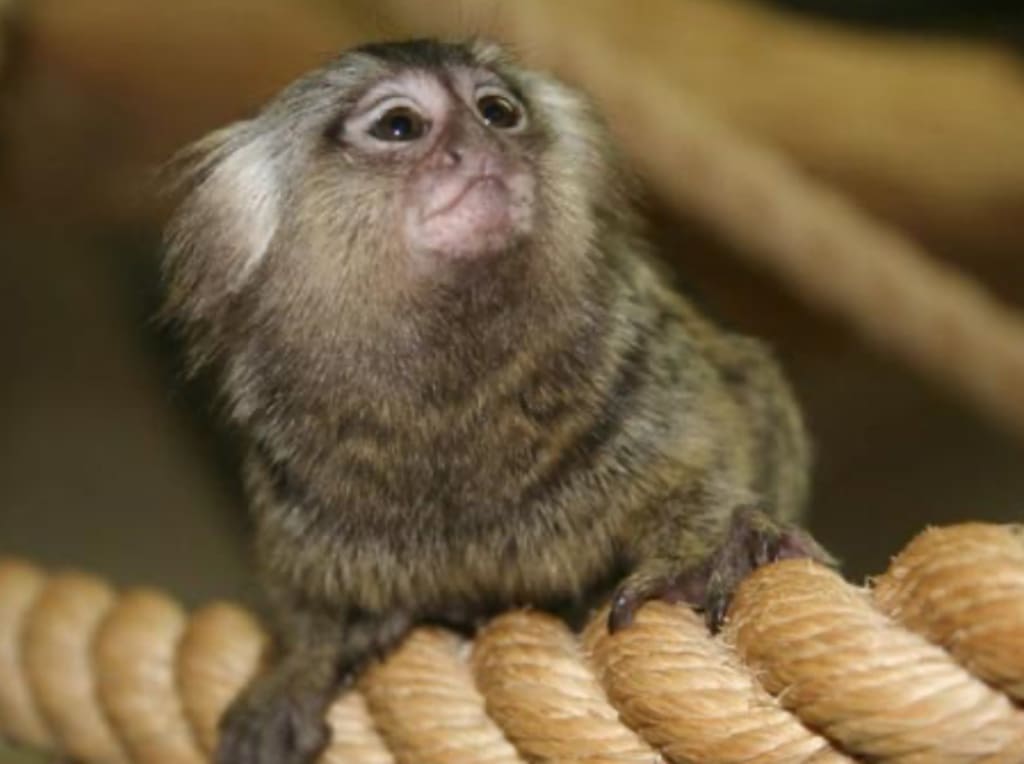
Rio is a common marmoset — what some people call a “finger monkey” because of their tiny size. When I first saw him, he was wrapped in a warm cloth, barely the size of my palm. He looked up at me with those huge, innocent eyes — and everything changed.
The first weeks were tough.
Monkeys aren’t like dogs. They don’t just learn your routine and go along with it. They test you. They push boundaries. Rio would leap from curtain rods, scatter fruit across the kitchen, and scream if I left the room for too long. It was like having a toddler… on caffeine.
But over time, something incredible happened.
He began to trust me. He’d curl up on my shoulder while I worked. He’d tap my arm with his tiny hand when he wanted attention. We developed a bond — not a master and pet kind of bond, but something more equal. Like roommates who learned how to live with each other.
And that’s the part people don’t understand about owning a monkey. It’s not about dominance. It’s about connection. Mutual understanding. You learn their language — not words, but cues, sounds, gestures. You learn their moods, their preferences, even their stubborn little personalities.
Now, people often ask me, “Isn’t it too much work? Wouldn’t it be easier to just get a parrot or a hamster?”
Yes, it would be easier. But easier isn’t always better.
Rio has taught me patience. Real patience. He’s taught me how to observe before reacting, how to give space, how to care without expecting anything in return. He’s been a daily reminder that life doesn’t have to be loud or perfect to be meaningful.
He’s not just a monkey. He’s my little shadow. My alarm clock. My fruit thief. My friend.
⸻
So why did I decide to own a pet monkey?
Because sometimes, you don’t choose the bond — it chooses you. And when it does, you have to rise to meet it. Even if it means bananas on the floor, chewed phone chargers, and tiny handprints on your window.
I wouldn’t trade it for the world.
About the Creator
Andrei S
I’m a writer passionate about topics like exotic animals, lifestyle, technology, and creative ways for teens to grow. I focus on clear, well-structured, and useful content that connects with readers.
Keep reading
More stories from writers in Petlife and other communities.
Writing To Succeed
If you want to find something that will help readers find your writing, possibly expand your audience, and maybe even get you noticed for other things, then you’re not alone. But how can you get it done in a world full of want-to-be writers? Look less at what you’re writing now, and more at what other writers have used to boost their views and reads.
By Jason Ray Morton 4 days ago in Writers




Comments
There are no comments for this story
Be the first to respond and start the conversation.