
Koalas are an Affront to God
An ode to the oddest creation ever

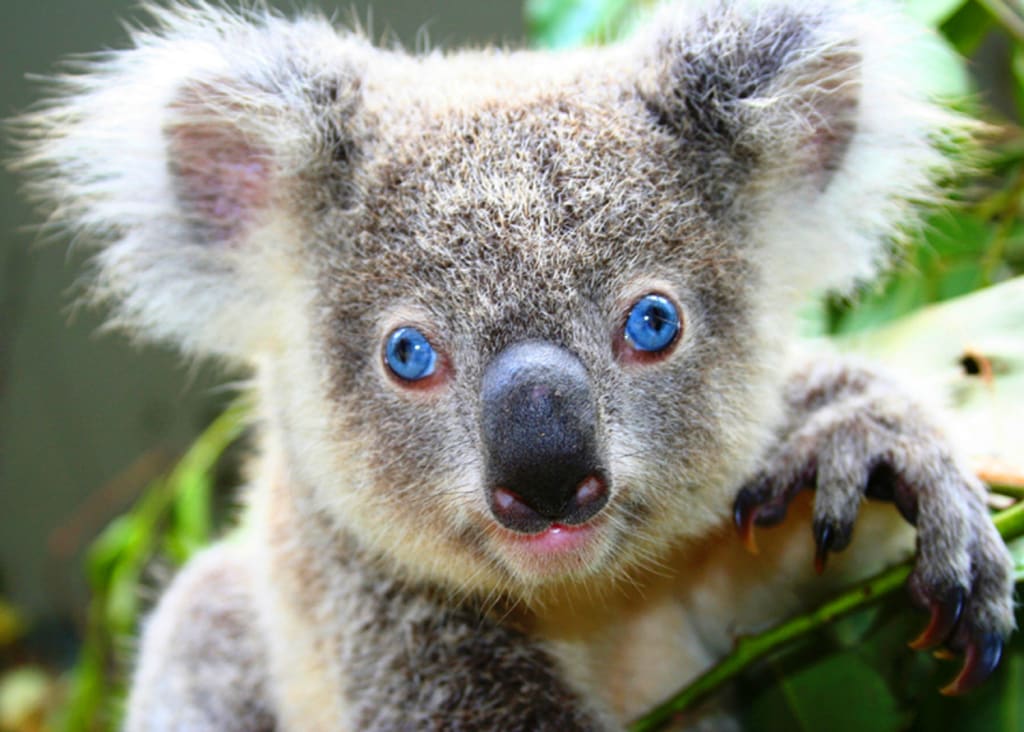
Have you ever heard a koala scream? Maybe then you'll understand why they shouldn't exist.
Let's start with the evolutionary mistakes that happened along the way of creating the koala. Koala's ancient ancestor, Nimbodon, was apparently 20 times larger than the modern koala we know. However, the koala we know is a much smaller version—including its brain, which weigh 19.2 grams on average. Not only are their brains tiny, but it's mostly smooth, minimising surface area. In addition, it only takes up 61% of its cranial cavity, with the remaining 40% filled with cerebrospinal fluid. So the age old insult of calling a horribly stupid person a smooth-brain? That basically applies to the entire koala species.
Why does the koala have such a small brain? Because the leaves it eats, from the eucalyptus tree, are extremely toxic and nutrient poor. Their diet is so nutritionally deficient that koalas save energy by sleeping for up to 20 hours a day. Their brains are so small that they can't recognise leaves if they're on a smooth, flat surface such as a plate. Leaves must remain on a branch for it to be recognised as koala food. Thankfully, they are smart enough to learn how to use wildlife passages, which will hopefully reduce the number of koalas which are hit by cars.
One may think that the koala would be better evolved towards their environments. And they are to some degree—having developed a mutation to process toxic foods better, koalas are better suited towards eating toxic leaves than other animals are. However, koalas aren't born with this ability naturally. Joeys have to eat their mother's faeces to ingest a bacteria necessary for digesting eucalyptus leaves. Koalas are also extraordinarily picky, refusing to eat leaves unless it is from their specific region, which can occasionally be a problem with koala rescue centres. Furthermore, koalas are herbivores and as a result their teeth get worn down by chewing. Some animals, like elephants, manage this by having new sets of teeth available once their old ones are worn out. Others have teeth that never stop growing. But whilst elephants get 4 sets before they slowly starve to death, koalas get 1. After about 6 years, their teeth start losing efficiency and they eventually disappear, causing the koala to starve to death.
Koalas are cute for sure. But in some places up to 90% of them have chlamydia. Koalas also have their own version of AIDS—koala retrovirus, or koala immune deficiency syndrome (KIDS). These can cause infertility, blindness, or death. How can an animal that was actually made to survive this world be so prone towards these diseases? It seems utterly nonsensical, and thus I must come to my conclusion: koalas exist as an affront to God and to spite evolution.
If you enjoyed this article, perhaps I'll write about sloths next—sloths are able to starve to death on a full stomach because it takes 30 days to digest one leaf.
This article was an experiment in framing. Whilst koalas do have many evolutionary curiosities, they are an important part of the Eastern and Southern Australian ecosystems. For example, they help regulate bushfires by eating excess leaves. They tend to stay in the higher tree grounds to avoid predators and as a result inevitably break off branches and leaves, allowing land bound animals access to more resources. Many of their current problems would not exist if it not for human intervention. There is no reason for koalas to need to recognise food outside of its natural habitat of being on a branch. Their high STD rate is a result of disappearing koala forests as that leads to koalas becoming stressed, which is when chlamydia can become particularly dangerous to koalas. Loss of habitat also puts them at more risk for predators, such as dogs, or to be hit by cars.
Similarly, the problem mentioned about sloths is one created by man-made climate change. The bacteria in a sloth's stomach is unable to digest food once its stomach temperature dips too low. Sloths are unable to regulate their own body temperature and historically have never needed to as their natural habitat never went below 23˚c. Man-made climate change has led to larger fluctuations in temperatures which leads to new problems faster than animals can adapt and evolve.
Even if one finds koalas to be an extraordinarily stupid animal, saving koalas would inadvertently help combat climate change. Restoring koala forests is necessary for saving koalas but koala forests are also some of the most efficient trees for sequestering carbon.
To get involved with saving the koalas, check out theKoala Clancy Foundation, Save the Koala, or the World Wildlife Fund. Or find a network of conservationists, native tree-planters, or re-wilding groups local to yourself to make an impact in your own area!
Video of a koala roaring
About the Creator
Melissa in the Blue
hold my hand and we can jump straight into the cold unloving sea
Keep reading
More stories from Melissa in the Blue and writers in Petlife and other communities.
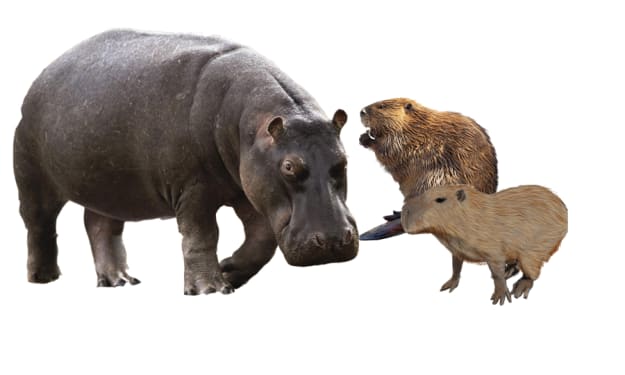
Beavers, Hippos, and Capybaras, oh my!
As we may know, Catholics are not supposed to eat meat on Fridays during Lent (or other holy days). There were a variety of reasons to abstain from meat—meat was inaccessible to many poor worshippers, the flesh of beasts and birds is reminiscent of Jesus' flesh, et cetera. Fish is exempt from this meat-free fast because it was affordable to poor worshippers and does not remind one of Jesus' flesh.
By Melissa in the Blue5 years ago in FYI
30 Days in a Shelter
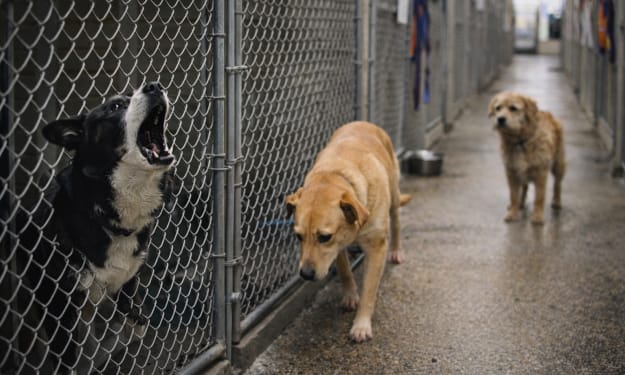
By day 3, the barking changes. The first 48 hours are chaos. Intake processing. New smells. Metallic doors slamming. By day 3, some dogs bark constantly. Others stop almost entirely. One paces the kennel line until the pads on his feet redden. Another stands motionless, eyes half-lidded, ignoring visitors.
By Dr. Mozelle Martin6 days ago in Petlife
Lion vs. Hyenas
The struggle between lions and hyenas is one of the most fascinating rivalries in the African wilderness. These two powerful predators share the same habitats, hunt similar prey, and constantly compete for food and territory. Their conflict is not just about strength but also about strategy, teamwork, and survival. Observing a confrontation between them reveals much about the balance of nature on the African savannah.
By Abubakar2207 days ago in Petlife


Comments
There are no comments for this story
Be the first to respond and start the conversation.