
"It's Cold! You Need to Bring Your Dog Inside!"
But . . . it's a Farm Dog!
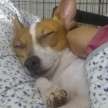

Groundhog Day has come and gone. Now, try not to be too jealous but we're starting to see warm temperatures here again in Southwest Mississippi. Our high tomorrow is expected to be 73° F (22.8° C), with our average temperatures for the next week being in the 60s. Yes, we've got a couple more weeks during which we historically feature one more winter blast, but Dan and I are already starting tomato seeds in flats and finalizing our plans for our spring gardens. It's easy to forget that some people are still fighting the cold and actually expect more snow to stick on the ground. For that reason, I found myself taken aback by a recent post I saw on social media: "If you're cold, they're cold! Bring them inside!"
Frankly, that's not bad advice. If you have the average canine couch potato, who snuggles on the couch, who never grows an extra winter hair, dashes back inside after doing her business to hide shivering under the covers when the temperature dips below 50° (I'm looking at you, Yaddle!), then yes, bring them inside. Your dog might love to spend hours outside when the temperature is optimal, but he or she has no business spending that much time outside if you feel uncomfortable at the same temperature without a coat. However, it's important to remember that not all dogs are the same as Yaddle and her cohorts. Some dogs are built to work outside and, some dogs actually DO work outside regardless of the cold. I'm not talking about sled dogs, either.

Dan and I have generic "farm dogs," as well as the purebred dogs that we've bred. These dogs have been raised since puppyhood to withstand most of the weather that SW Mississippi can throw at them. For the first six months of their lives, they are taught how to be good house dogs. They are given crate training, taught basic house and leash manners, and form bonds with both of us. Although they learn to trust the veterinarians and their staff through routine care, the farm puppy learns to be distrustful of strangers that come to the property and to protect the property from marauding dogs and other predators. As soon as the farm puppy is big enough and mature enough, he or she is given free range of Dan's farm in the company of the bigger dogs. Just by association, the farm puppy learns the rules: don't go past the gate, chase rabbits, don't go into the garden (unless it's after a rabbit), follow Dad or Auntie whenever they're out working, sound the alarm at people or "boogers." Over time, they develop an understanding of what is Good and what is Not Good, whether it's behavior or people or animals or situations.
In time, our farm dogs also develop weather tolerance and a season-appropriate coat. Although they are able to come inside and be quietly crated when the winter weather is cold and wet and blowing, even our short-coated dogs are able to withstand temperatures in the low teens for a short (potty time!) period and temperatures in the twenties for multiple hour stretches. They don't live outside when the winter weather is horrible, but they often beg to go out to run and patrol--and we trust their instincts. On the other hand, my house dogs, rarely go out if the temperature is under 40° unless they have constant supervision, especially not the TFTs. Up in the Frozen North, where temperatures are always lower, I know that it's different. Even dogs dress appropriately for the outside temperatures. Given that my dogs don't have sweaters and boots, they get to stay inside!

But there are also dogs that never come inside--not on my homestead, but all over the world. These are the "livestock guardian dogs." They are generally very big dogs, often weighing 100 pounds or more, built to stay outside in all weather. Their large body mass and their thick coats protect them, even from blizzards and thunderstorms. LGDs are often born in the enclosures where their future livestock is housed, raised there, and live there all their lives. Some LGDs might have their own barrels or other such dens for sleeping and they may choose to go into a barn on occasion, but many never see a living room in their lives. They may tolerate handling at feeding time or if they have to go to the vet for treatment or their shots, but they are rarely tolerant of bathing or grooming. Although this lack of grooming doesn't hurt their ability to do their job, the rugged appearance of these dogs can lead unfamiliar observers to think that they're neglected. Their appearance, combined with the cold, ice, and snow, is what often prompts the "dog abandoned out in the weather" calls from many passers-by with good intentions, who are unfamiliar with these dogs.
Those cute pictures and videos that you might see on social media, of goat kids trying to crowd into a litter of white puppies or of puppies who "think they are sheep," those are of livestock guardian dogs. There are more of these dogs than you think, even in our modern farming community. If you look hard enough on a drive through farming country, you'll be able to spot several of these dogs sprinkled in with the cows and the sheep. LGDs work best in teams, so most farmers employ a minimum of two per herd. The larger the herd, the larger the number of LGDs. Although they get along in their sometimes large family groups, dogs that live with one herd are not typically socialized with dogs protecting another herd. An LGD that lives with a farmer's steers might consider an LGD that lives with a farmer's cows to be an interloper, with predictable results.
Most LGDs build relationships with their handlers, but they consider themselves and their livestock to be family. These dogs choose to be with their family and protect their family at all times, even as your house dog chooses to be with you and bark at the door when strangers arrive. It's the same instinct, but often backed by more teeth. Due to their size and their connection with their charges, LGDs usually protect their herds and flocks from marauding dogs, coyotes, and other predators with determination and with relative ease. They work autonomously, all hours of the day and night, every day of the year. They are intelligent problem solvers, who work independently of the farmers who employ them. They typically patrol the perimeter of their fields, knowing every inch of them like the back of their paws. If they occasionally wander away from their flocks and herds through gaps in their perimeters, it is often because (in their minds) they are seeking to expand their families' territories. A well-raised LGD will resist being removed from its duties and, if forcibly removed, will often become combative in an effort to return to their animals. There was a relatively young LGD of my acquaintance who broke her leg (unrelated to her duties) and was removed from her sheep. She was extremely depressed until she was allowed outside again.

So, next time you see one of the "if you're cold" memes, stop and think for a minute. You might agree with its guiding principle and want all dogs to be safe, warm, and dry in inclement weather. That's a terrific guiding principle--and I agree that all house dogs, kennel dogs, hunting dogs on tie-outs, and pets of all varieties need to be kept inside during cold weather. However, a farm that employs LGDs might have from two to a dozen of these dogs on hand at any given time. In areas that have inclement weather throughout most of the fall and winter months, these dogs have shelters that keep them warm and safe--but those shelters are not the farmers' homes. So next time you think, "but they're cold!" look around for barrels, sheds, or even barns that might be open to them. Unless they're on patrol, I guarantee you that they'll be there, snug and warm, keeping watch over their family.

About the Creator
Kimberly J Egan
Welcome to LoupGarou/Conri Terriers and Not 1040 Farm! I try to write about what I know best: my dogs and my homestead. I'm currently working on a series of articles introducing my readers to some of my animals, as well as to my daily life!
Keep reading
More stories from Kimberly J Egan and writers in Petlife and other communities.
BuckyBoo? WetherBoo?
Almost a year ago now, Sunshine had her very first litter of kids. Sadly, I had gone out earlier in the day and had returned to find three kids that had expired, all crowded into the hay rack where she had given birth. Sunshine was inconsolable, bleating in distress. By some miracle, I heard the soft answering bleats of another, very chilled but live, buckling. Sunshine spent every ounce of maternal energy that she would have spent on four kids on that little singleton. I christened him "BuckyBoo," a placeholder name that I tend to give when the probability is that the kid will be sold or otherwise no longer in my herd after a time. I didn't want to give him a "good" name, lest I get attached.
By Kimberly J Egan12 months ago in Petlife
Keeping your pets safe (and calm) this holiday season
The holiday season may be magical for some humans, but for pets it only means confusion, changed routines, overstimulation, extra noise, guests or pet sitters come and go, and sometimes the festive season means danger for pets.
By Susan Fourtané 17 days ago in Petlife
Can My Puppy Have CBD Treats? A Guide to Safe Introduction and Benefits
Bringing a puppy home is an exciting milestone filled with playful moments, training challenges, and constant learning—for both you and your new companion. As a responsible pet parent, you want to give your puppy the best possible start in life, which often leads to questions about supplements, calming aids, and overall wellness support. One topic gaining attention is the use of CBD treats for puppies and whether they can be introduced safely during early development.
By CBD Dog Health5 days ago in Petlife


Comments (1)
Excellent point and an informative story about the role of LGDs on farms. My in laws have a Bernese Mountain Dog and a King Shepherd Dog, and both of them will stay out all day in bitter cold if allowed. They're built and have the coats for it. People have been divorced from the facts of life on the farms where our food is grown, and from the origins of many breeds of working farm animals. A gentle reminder from Ms. Egan 😊