
How often should I give my dog MILPRO?
Read this blog to know - How often should I give my dog MILPRO?

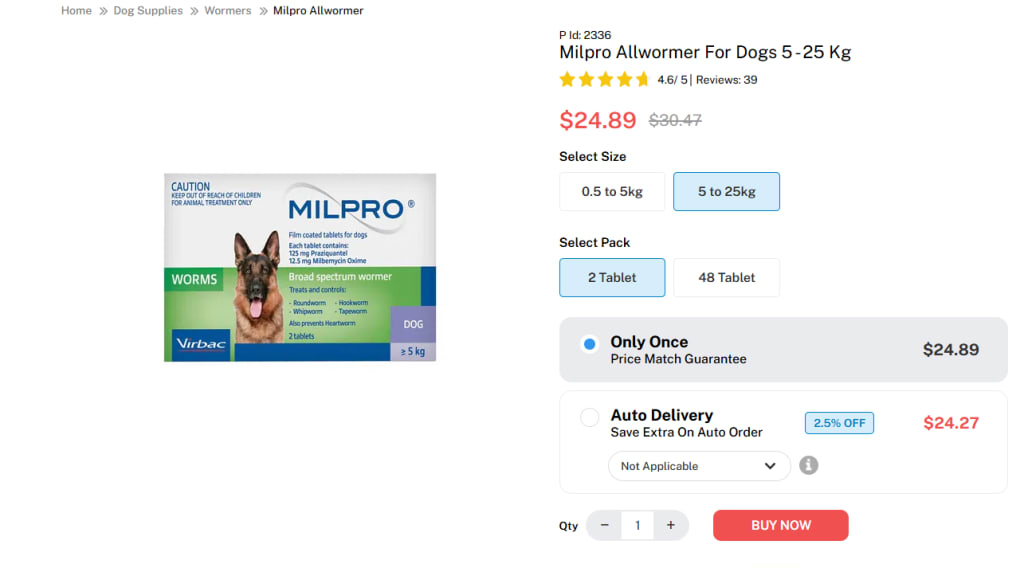
Ever wondered how often your dog needs to be dewormed? Or if MILPRO is the right choice for your furry companion? You’re not alone! Keeping your dog worm-free is a huge part of being a responsible pet parent, and MILPRO makes it pretty simple. Let’s dig into how often you should give MILPRO to your dog and everything else you need to know to keep your pup parasite-free.
🐾 Understanding MILPRO
What Parasites Does MILPRO Target?
MILPRO is a broad-spectrum dewormer designed to eliminate:
Roundworms
Hookworms
Whipworms
Tapeworms
Heartworms (in some formulations)
These are some of the most common internal parasites that can affect your dog’s health. Left untreated, they can cause serious problems—from weight loss to intestinal blockages.
Active Ingredients and How They Work
MILPRO contains:
Milbemycin oxime – effective against roundworms, hookworms, whipworms, and heartworms.
Praziquantel – a tried-and-true solution for getting rid of tapeworms.
Together, they pack a powerful punch against most intestinal parasites.
MILPRO for Different Dog Sizes and Ages
MILPRO is available in tablets tailored for:
Small dogs and puppies (0.5 – 10 kg)
Medium to large dogs (5 – 75 kg)
Always match the correct dosage to your dog’s weight. Puppies have different needs than adults—don’t guess, weigh!
📅 Recommended MILPRO Dosage Schedule
General Dosage Guidelines
For most dogs:
Once a month is recommended for effective parasite control, especially in areas where heartworms or tapeworms are prevalent.
But like anything in pet care, it depends.
How Often Should You Give MILPRO?
Puppies (from 2 weeks old): Every 2 weeks until 12 weeks of age.
From 12 weeks to 6 months: Once monthly.
Adult dogs: Usually once every 3 months, unless your vet advises monthly due to higher risk.
Your dog’s environment, diet (especially if they eat raw meat), and exposure to fleas or other animals can affect how often you should deworm.
Adjusting Frequency Based on Lifestyle and Location
Dogs in rural areas or farms: Monthly is often recommended.
Dogs that travel or go to dog parks frequently: Monthly.
Indoor dogs with low exposure: Every 3 months may be enough.
🐶 Puppies vs. Adult Dogs
Deworming Puppies: When to Start and How Often
Worm infestations start early! Puppies should be dewormed:
At 2, 4, 6, 8, 10, and 12 weeks of age.
Then, monthly until 6 months old.
Why so often? Puppies can get worms from their mothers—even before birth.
Adult Dogs: Maintaining Protection Throughout the Year
Once your dog is past 6 months, a quarterly deworming schedule (every 3 months) is usually sufficient. However, monthly is better for high-risk lifestyles.
👩⚕️ Special Scenarios
Pregnant or Nursing Dogs
Always consult your vet. MILPRO can be safe, but timing and dosage must be adjusted.
Dogs with Health Conditions
If your dog has liver or kidney issues, your vet may adjust the schedule—or choose another product entirely.
Multi-Pet Households
If one dog has worms, assume they all do. Deworm all pets at the same time to prevent reinfection.
🚨 Signs Your Dog Might Need Deworming More Often
Here’s what to watch for:
Visible worms in poop or vomit
Scooting on the floor
Weight loss despite a healthy appetite
Dull coat or diarrhea
Bloated belly (especially in puppies)
If you notice these, talk to your vet and possibly increase deworming frequency.
🍖 How to Give MILPRO to Your Dog
Tips for Easy Administration
Wrap it in cheese or a piece of sausage.
Use a pill pocket treat.
Crush and mix with food (ask vet first if it’s okay).
What If Your Dog Spits It Out or Vomits?
If your dog spits it out:
Try again with food.
If your dog vomits within 1 hour, re-dose after talking to your vet. Otherwise, it may still be effective.
⚠️ Safety and Side Effects
Is MILPRO Safe?
Yes, when given at the correct dose. It’s vet-recommended and widely used.
Possible Side Effects
Vomiting
Diarrhea
Drooling
Lethargy
These are usually mild and pass quickly.
What to Do in Case of Overdose
Call your vet or emergency clinic. Signs include:
Tremors
Weakness
Disorientation
🔄 Integrating Deworming into Routine Care
Working with Your Vet
Ask your vet to create a year-round parasite prevention plan. This can include:
Dewormers like MILPRO
Flea and tick prevention
Heartworm prevention
Combining MILPRO with Other Treatments
Never mix dewormers without asking a vet first. Some combinations may overlap or cause side effects.
How MILPRO Compares
MILPRO is favored for its dual action (milbemycin + praziquantel) and broad-spectrum coverage. It's especially useful if you want both worm and heartworm protection.
✅ Conclusion
So, how often should you give your dog MILPRO? The short answer: it depends. Puppies need more frequent doses, while healthy adults usually do well with quarterly or monthly treatments depending on their lifestyle. Don’t forget—worms don’t take vacations, so staying on top of your schedule means a happier, healthier pup.
Always consult your vet before making changes to your dog’s medication. MILPRO is safe, effective, and trusted—but the right dose and schedule make all the difference.
❓ FAQs
1. Can I give MILPRO with food?
Yes! In fact, it’s recommended to give MILPRO with a meal to reduce the chances of stomach upset.
2. What if I miss a dose?
Give it as soon as you remember. If it’s close to the next dose, skip it and resume your regular schedule. Don’t double up unless advised by your vet.
3. Is MILPRO safe for all breeds?
Generally yes, but always check the label or ask your vet—especially for small or toy breeds.
4. How do I store MILPRO?
Keep it in a cool, dry place away from direct sunlight and out of reach of pets and children.
5. Can I use MILPRO with other medications?
Most of the time yes, but always check with your vet to avoid negative interactions.
About the Creator
Thomas Muller
VetSupply is a leading online pet store in Australia with a comprehensive range of products that cater to all your pet care needs.
Keep reading
More stories from Thomas Muller and writers in Petlife and other communities.
How do you use NexGard Spectra large dog?
If you own a large dog, you know keeping them healthy and parasite-free isn’t just a nice-to-have — it’s essential. That’s where NexGard Spectra steps in. It’s one of the most convenient, all-in-one treatments trusted by dog parents and vets across Australia. But how do you use it properly, especially for big breeds? Let’s break it all down.
By Thomas Muller10 months ago in Petlife
Authenticity and Presence: What Animals Can Teach Actors About Emotional Truth
Actors spend years searching for authenticity. Acting schools teach technique, rehearsal methods focus on emotional preparation, and directors guide performers toward believable moments on screen. Yet sometimes the most meaningful lessons about authenticity come from unexpected places.
By Andreas Szakacs3 days ago in Petlife
My First Time Skiing and I Got Lost, Alone, in the French Alps
Looking back, I can trace some of my life’s biggest adventures to a simple action from my sister. She’d introduced me to Tommy (a very long time ago), a colleague of hers, who had overshared his penchant for Italian-looking women, and I ticked that box.
By Chantal Christie Weiss3 days ago in Humans


Comments
There are no comments for this story
Be the first to respond and start the conversation.