
Goldfish
How To Keep Your Goldfish Alive For years
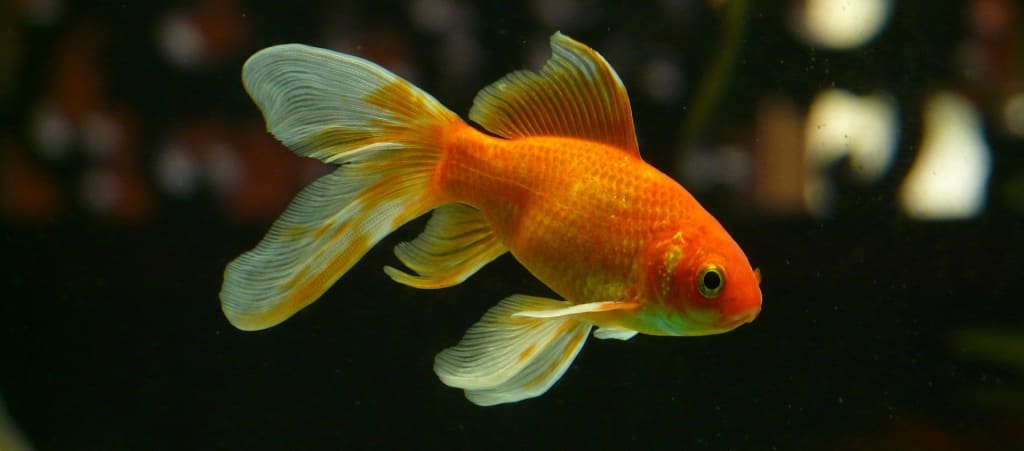
The longest-living goldfish
on record was 43 years old.
But chances are your goldfish
didn't even live a quarter that long.
In fact, most goldfish don't survive
past their fifth birthday, and that's a major problem
since they're supposed to live for
about as long as your cat.
So why are goldfish dying so young?
The usual culprit behind your goldfish's untimely demise
is, well, poop.
You see, goldfish waste contains toxins like ammonia
that can burn gills and even damage the brain.
In the wild, this isn't a problem.
Freshwater lakes and ponds are home to armies
of bacteria that break it down
into less harmful chemicals. But in your home tank,
there's no bacteria to be found.
You have to introduce it, and that's where a lot
of goldfish owners slip up because you can't
just buy a fish the same day you get your tank.
The process of growing bacteria takes patience.
First, you'll need to remove chlorine
from your tank water using a conditioner.
Chlorinated tap water is fine for you to drink
since it kills off germs, but it's not so great
for the bacteria you want to cultivate.
Once you've created a safe space for the bacteria to grow,
they'll come from all over: the air,
the outside of the tank, and any rocks
or plants you stick in the tank for decoration.
You can also buy commercially sold bacteria cultures
grown in labs. After that, all they need is dinner.
Fish food will do.
As the food breaks down, it releases ammonia
for the bacteria to eat, and finally, you wait for a while.
Depending on how much bacteria you start with,
the process can take about two months.
That's right, two months.
But then there should be enough bacteria.
You can double-check with a simple water test kit.
But here's the thing, all the bacteria in the world
won't keep your fish alive if the tank is too small.
You see, as these bacteria gobble up goldfish poop,
they produce some waste of their own,
and if it's not sufficiently diluted,
it can kill your goldfish.
A dinky, single-gallon bowl is much too small,
and even the 10-gallon tank you see
in every pet store won't cut it.
A single adult goldfish needs at least twice
that much water to thrive.
That's almost 40 kilograms of water,
2000 times heavier than your goldfish,
and even with a huge tank, you'll still need
to replace about 30% of the water every two weeks
because besides poop, goldfish release hormones
and pheromones into their environment,
which, if left unchecked, can stunt their growth.
That might help explain why goldfish
in healthy environments can reach the size
of an American football, while your last goldfish
wasn't much bigger than your index finger.
Once you have a big, detoxified tank,
Goldie just needs one more thing: your attention.
Because you're not swimming in the tank with her,
it's hard to notice if something's wrong with, say,
the water quality. So oftentimes new goldfish owners
don't realize anything's amiss until it's too late,
and common diseases like fin rot, white spot disease,
and fungal infections have already taken hold.
So it's a good idea to pay careful attention
to how the water looks and smells,
and anyway, spending time with your goldfish will
be worth it since you can teach Goldie
to swim through hoops and eat from your hand.
About the Creator
Keep reading
More stories from Leighton Green and writers in Petlife and other communities.
The Ones Left Behind:
Shelters overflow every week with wagging tails and hopeful eyes. The young ones—the puppies and kittens—disappear within hours, scooped up by families eager for a blank slate. The old ones stay behind. They wait days, then weeks, often in silent confusion, still listening for footsteps they recognize.
By Dr. Mozelle Martina day ago in Petlife



Comments