
Giant Pandas Have Returned to the United States
As the San Diego Zoo resumes its renowned giant panda program, the Smithsonian National Zoo is expected to welcome a new panda pair by the end of this year.

In the past few months, the San Diego Zoo and the Smithsonian National Zoo have both announced a new pair of giant pandas each, following the signing of fresh agreements with the Chinese government. These agreements mark a new phase of collaboration in the conservation efforts for giant pandas.
The San Diego Zoo received its pair of pandas on June 27th, 2024, marking their return after a four-year absence from the zoo. The National Zoo expects to welcome its pair by the end of the year.
San Diego Zoo’s Pandas
The San Diego Zoo's history with giant pandas began in 1996 when they welcomed Bai Yun and Shi Shi from China's Wolong Panda Preserve. Three years later, Bai Yun gave birth to Hau Mei, the first giant panda born in the United States to survive past a few weeks. Hau Mei, who moved to China in 2004, had several cubs of her own.
In 2003, Gao Gao arrived from China and became San Diego's breeding male after Shi Shi's departure. Gao Gao and Bai Yun had five cubs together: Mei Sheng, Su Lin, Zhen Zhen, Yun Zi, and Xiao Liwu. In 2018, Gao Gao returned to China, with Bai Yun and Xiao Liwu joining him a year later.
Five years after Bai Yun and Xiao Liwu left, the San Diego Zoo collaborated with China again on giant panda conservation efforts and brought back a new pair: Yun Chaun, the son of San Diego-born Zhen Zhen, and Xin Bao, a gentle and witty introvert. Their arrival marked the first time in two decades that giant pandas had been introduced to any of the US zoos.
The animal care team has been catering to the bears' dietary needs, monitoring their weight, and providing exercises to help them adapt to their new home. Veterinary teams from both the United States and China are closely monitoring their health to ensure their well-being.
The goal is for Yun Chaun and Xin Bao to breed, contributing to the health and resilience of the giant panda population. Any cubs born to the pair will return to China between the ages of two and four.
National Zoo’s Giant Pandas
Since 1972, when Ling-Ling and Hsing-Hsing were gifted to the United States by China, the National Zoo has been home to giant pandas for over five decades. The zoo has since made significant progress in giant panda conservation, research, and education.
Between 2005 and 2020, the zoo's giant panda breeding program achieved remarkable success. Mei Xiang and Tian Tian produced four healthy cubs, who eventually had cubs of their own. In collaboration with Chinese scientists and conservationists, the zoo has significantly contributed to the growth of the giant panda population, which has increased from less than 1,000 in the 1970s to nearly 2,000 today.
In 2023, after residing in the United States for 23 years, Mei Xiang and Tian Tian returned to China with their youngest son, Xiao Qi Ji. The family now lives at the China Conservation and Research Center for the Giant Panda. Like his siblings, Xiao Qi Ji will join the facility's breeding program when he reaches breeding age.
Less than a year later, the National Zoo will welcome a new pair of pandas as part of a renewed collaboration with the Chinese government to continue protecting giant pandas and their habitats. To accommodate the new pandas, Bao Li and Qing Bao, the zoo is renovating its giant panda habitat. Two-year-old Bao Li is the grandson of Mei Xiang and Tian Tian through their daughter Bao Bao, and Qing Bao is also two years old. The bears will arrive by the end of the year as part of a new ten-year research and breeding agreement.
To support this new program and the habitat renovations, the zoo is seeking $25 million in public and corporate donations.
Are Giant Pandas a Keystone Species?
Giant pandas are recognized as keystone species, a plant or animal that substantially affects its environment and plays a unique role in maintaining the structure and function of its ecosystem. Within their native bamboo forest habitats, giant pandas serve a critical role. They disperse bamboo seeds through their droppings, creating new pathways for other animals and maintaining forest structure by consuming specific bamboo species. By doing so, they support biodiversity.
Losing giant pandas in the wild would have far-reaching consequences for the bamboo forest ecosystem. It could lead to changes in forest composition, reduced biodiversity, and the potential extinction of other species dependent on the bamboo forests. Therefore, conservation efforts have a positive impact on the entire ecosystem, ensuring the survival of giant pandas and preserving the delicate balance of the bamboo forest.
How to Support Both Zoos (and Their Pandas)
- Plan a trip to one or both zoos to visit the pandas when they make their public debut and contribute to their conservation efforts.
- Support the animals and receive benefits by joining the membership program at one or both zoos.
- Donate to one or both zoos to contribute to their operations and conservation efforts.
- Raise awareness about the importance of zoos and their role in protecting endangered species by spreading the word through social media, word-of-mouth, and educational outreach programs.
Shared Ways to Support and Protect Giant Pandas
- Educate Yourself:
Learn about giant pandas, their habitats, and the threats they face in the wild.
- Support Conservation Organizations:
Join forces with organizations like Pandas International, WWF, and the Research Center for the Giant Panda to support their conservation efforts.
- Reduce, Reuse, Recycle:
Make eco-friendly choices to reduce your carbon footprint and promote sustainable practices, helping protect panda habitats.
- Share Your Passion:
Spread awareness about giant pandas and their plight. Educate others on how they can contribute to their conservation.
Every action counts in the long-term survival of giant pandas. Collective support can make a significant difference in preserving their habitats and populations. If you get the opportunity, visit them at one or both zoos.
About the Creator
Jenna Deedy
Just a New England Mando passionate about wildlife, nerd stuff & cosplay! 🐾✨🎭 Get 20% off @davidsonsteas (https://www.davidsonstea.com/) with code JENNA20-Based in Nashua, NH.
Instagram: @jennacostadeedy
Keep reading
More stories from Jenna Deedy and writers in Petlife and other communities.
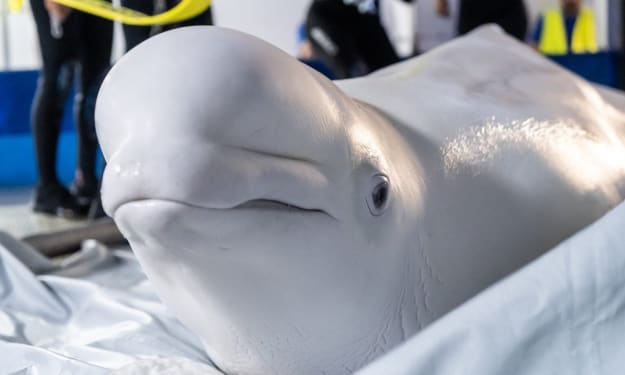
In a Joint Effort, American Marine Mammal Facilities Collaborate with Spanish Aquarium to Safeguard Belugas Amidst the Ukraine Conflict.
Since the Russian invasion of Ukraine in 2022, many animals, both domesticated and exotic, have suffered the devastating effects of war. Many pets were left behind as their owners fled the country in search of safety across the border. Animal rescue organizations stepped in to save these abandoned animals, hoping to reunite them with their families or find new homes for them. Zoos and aquariums worked tirelessly to ensure the safety and well-being of their animals, some even making the tough decision to move them to other facilities. Kharkiv's NEMO Dolphinarium stands out as one such facility that went to heroic lengths to protect its animals.
By Jenna Deedy2 years ago in Petlife
Off the Leash: The Essential Gear Guide for Adventurous Dogs
There’s something wildly freeing about unclipping the leash and letting your dog move the way they were built to. If you’re hiking in areas that truly allow off-lead exploration, your gear list shifts. No harness. No leash dragging through dust. Instead, it’s about smart, lightweight essentials that keep your dog safe, hydrated, and easy to manage when adventure gets messy. Long walks off lead are less about control and more about preparation.
By Shabbir Ahmad7 days ago in Petlife
The Ones Left Behind:
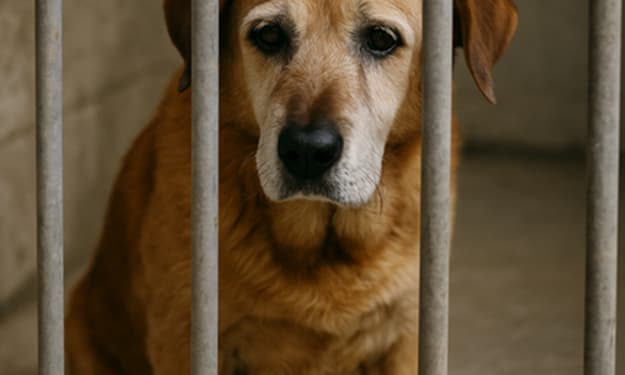
Shelters overflow every week with wagging tails and hopeful eyes. The young ones—the puppies and kittens—disappear within hours, scooped up by families eager for a blank slate. The old ones stay behind. They wait days, then weeks, often in silent confusion, still listening for footsteps they recognize.
By Dr. Mozelle Martin6 days ago in Petlife


Comments
There are no comments for this story
Be the first to respond and start the conversation.