
Feeding Radishes to Your Parrot? Healthy or Harmful
A Complete Guide to the Benefits, Risks, and Feeding Tips

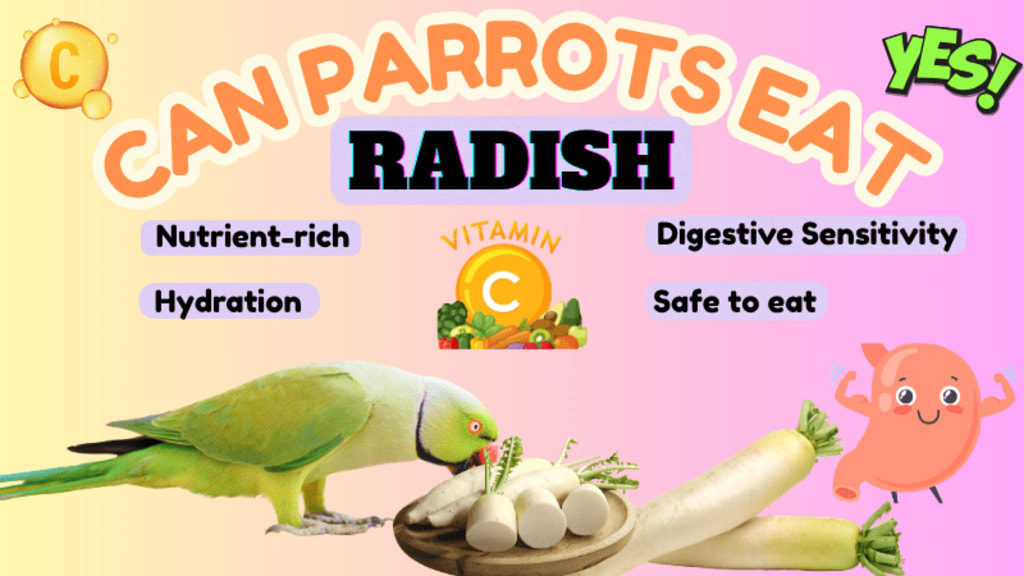
Although some plants are not safe for parrots, many root vegetables are generally enjoyed by them. However, certain plants, while technically safe, might still not be recommended for daily feeding. Radishes, with their crisp texture and peppery flavor, fall into that category. So, the question arises: Feeding Radishes to Your Parrot? Healthy or Harmful In this guide, we’ll explore this in detail.
Yes, radishes are safe for parrots to eat, as they do not contain any toxic compounds. In fact, radishes offer vitamins and essential minerals that can support your parrot’s health. Parrots can enjoy radishes in several forms — fresh, roasted, or even lightly boiled — as long as they are prepared safely.
Can Parrots Eat Radish?
Radishes are juicy, nutrient-rich, and well-liked by many parrots. They contain antioxidants, calcium, potassium, and other nutrients that can benefit their health. Therefore, radishes are not only safe but also potentially beneficial for parrots when served in moderation.
Are Radishes Safe for Parrots?
As dietary experts confirm, parrots can safely eat radishes — including both the root and the green tops. However, they should only be given in moderate amounts. Always ensure the radishes are fresh, thoroughly washed, and free of pesticides or other chemicals.
Note: Many parrots might not enjoy the slightly spicy flavor of radishes, which acts as a natural appetizer. Also, radish leaves contain oxalic acid, which can interfere with calcium absorption, so they should only be given occasionally.
Health Benefits of Radishes for Parrots
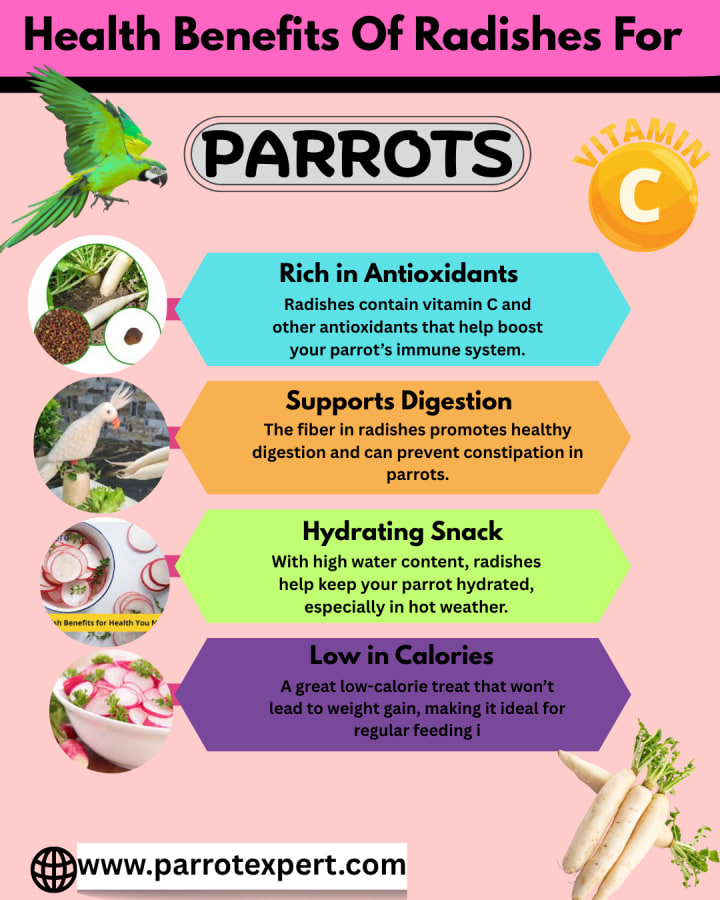
Radishes are packed with antioxidant compounds that help boost parrots’ immune systems. They are rich in vitamin C, supporting disease resistance and overall well-being. Additionally, radishes promote healthy digestion by supporting nutrient absorption and food breakdown, which may help prevent intestinal issues.
As with any new food, introduce radishes gradually, and monitor your bird’s reaction.
Potential Risks of Feeding Radishes to Parrots
While radishes are generally safe, they could upset your parrot’s stomach if fed in large amounts. The portion size should be carefully considered to protect their sensitive digestive systems
Before introducing radishes, or any new food, to your parrot’s diet, it is wise to consult with an avian veterinarian. This helps ensure a balanced diet and supports long-term health.
Can Parrots Eat Raw Radishes?
Yes — parrots can safely enjoy raw radishes. In fact, they are safer and more nutritious when served raw, similar to what parrots might eat in the wild. You can offer raw radishes sliced, shredded, or diced in small cubes. Radishes provide fiber, vitamins, and other nutrients, supporting your parrot’s healthy metabolism.
Always serve raw radishes in moderation and monitor your parrot after feeding.
Can Parrots Eat Radish Leaves?
Radish leaves are edible and nutritious for parrots. However, they are often contaminated with chemicals from pesticides, so they must be washed thoroughly before feeding. The greens contain helpful nutrients and antioxidants, but remember they also have oxalic acid, so offer them sparingly.
Radish leaves can support kidney health and help reduce the risk of some illnesses. When served clean and fresh, they can be a healthy addition to your parrot’s diet.
How to Feed Radishes to Parrots Safely
Parrots can consume radishes in three forms: raw, well-cooked, or pickled (with caution).
Raw: Serve fresh, washed radishes sliced, cubed, or even whole in small pieces.
Cooked: Steam or roast radishes without oil or spices, then cool them before serving in bite-sized portions.
Pickled: If homemade and free of strong spices or preservatives, pickled radish can be offered occasionally in tiny amounts.
Never fry radishes or serve them with added salt or strong seasoning.
Alternative Vegetables to Radishes for Parrots
If your parrot doesn’t enjoy radishes, consider these healthy alternatives:
Carrots: Great source of beta-carotene for vision and immune support.
Cucumbers: Hydrating and fiber-rich.
Leafy greens: Full of vitamins and minerals but serve in moderation due to oxalates.
Bell peppers: Packed with vitamin C and antioxidants.
FAQs
Can all parrot species eat radishes?
Yes — budgies, cockatiels, African greys, amazons, conures, and other parrots can all eat radishes safely in moderation.
Can baby parrots eat radishes?
Yes, but only in tiny amounts and finely chopped to prevent choking. Always monitor young parrots for any digestive issues.
How often can parrots have radishes?
No more than once or twice per week in small portions.
Can parrots eat radish sprouts?
Yes — radish sprouts are safe and provide hydration and nutrients. Serve sparingly and fresh.
Can parrots eat radish greens?
Yes, as long as they are properly washed to remove chemicals or dirt.
Final Thoughts
In summary, radishes are a safe and healthy addition to a parrot’s diet if offered in moderation. They supply important nutrients and can be served raw, steamed, or lightly roasted. Just remember to wash them thoroughly, avoid overfeeding, and monitor your parrot for any unusual reactions.
Radishes, grapes, and figs can all be offered to parrots in moderation — radishes provide a crunchy, low-calorie snack, grapes offer natural sweetness and hydration, while figs are rich in fiber and antioxidants, though all should be fed sparingly to avoid excess sugar or digestive issues.
Radishes can be part of a varied, nutritious diet that supports your parrot’s long-term health and happiness.
About the Creator
Amelia Kosh
At Parrot Expert, we are more passionate about all stuffs parrots. Whether you’re a seasoned parrots owner, considering adopting a colorful friend, or just curious about these adorable creatures, you’ve come to the right place.
Keep reading
More stories from Amelia Kosh and writers in Petlife and other communities.
Is Chocolate Safe for Parrots? What You Need to Know
Chocolate is one of the most popular and the precious sweets all across the Globe. As humans love and enjoy the taste. What about Parrots? Is Chocolate Safe for Parrots? What You Need to Know, they can’t consume.
By Amelia Kosh9 months ago in Petlife
The Ones Left Behind:
Shelters overflow every week with wagging tails and hopeful eyes. The young ones—the puppies and kittens—disappear within hours, scooped up by families eager for a blank slate. The old ones stay behind. They wait days, then weeks, often in silent confusion, still listening for footsteps they recognize.
By Dr. Mozelle Martin6 days ago in Petlife
Velveteen Lop Rabbit Lifespan Size Color Diet and Interesting Facts
As we know when people assume Velveteen Lop Rabbit many time the sweet story of the Velveteen Rabbit comes to mind. The name of this breed is not taking from any rabbit, but the book The Velveteen Rabbit have a very cute, sociable, and friendly nature.
By Rabbits Advisor5 days ago in Petlife



Comments
There are no comments for this story
Be the first to respond and start the conversation.