
Everything to Know About Cats
If you’re new to owning a cat or kitten, this is for you. Everything you need to know from kittens aging, how to domesticate a feral cat, to differing how cats speak, and what their meows exactly mean.

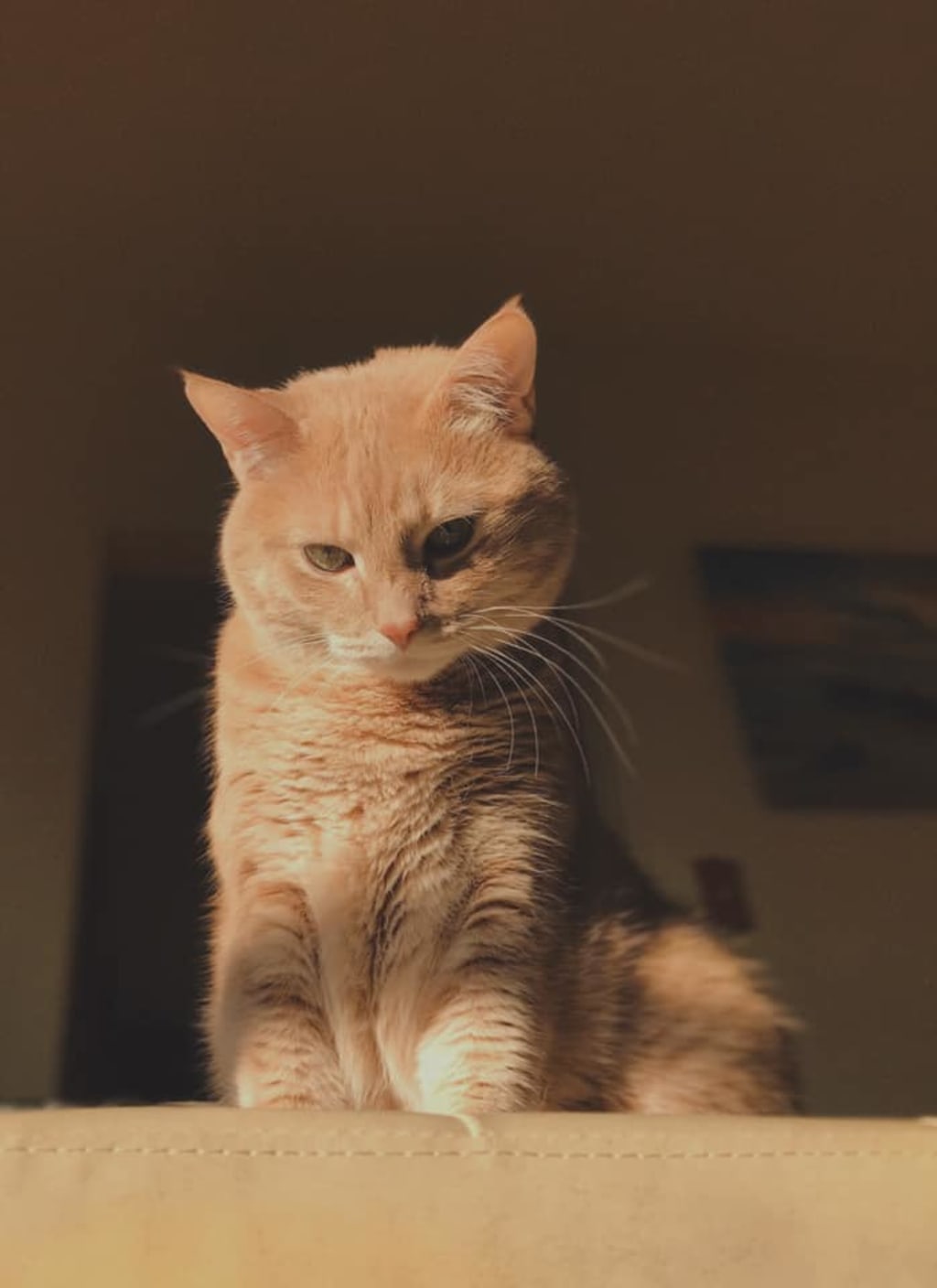
Many people have worries of how their feline friends feel around other pets/humans or surroundings, so this paper is to help those in need.
Meowing
Meowing is what cats use to talk to other animals besides their own species. But, meows are actually known to be demands. “Let me outside!” “Feed me!” “Go away!” “Pet me!” And while cats use meowing to talk to everyone else besides other cats, other cats use body language, facial expressions, and another cat-like thing that humans can’t really hear.
Since cats sleep mostly in the day, at night when they think you both had enough sleep, they will head-bump you, nubble on you a little, push their paws on your body to try and wake you up. But if you don’t wake up, that's when the meows start. Once you’re awake out of annoyance of meows, they quickly run off to notify you of something that needs to be done. (Litter box, food, opening a door for them.)
Cats speak to each other through scent, facial expression, complete body language and touch. The only meowing done amongst cats is done between cat to human, or a mother and her kittens. Kittens use their tiny meows to get attention from their mother, which is why once they’re grown, the meows stop.
Meowing language dictionary:
Short meow or ‘mew’: Standard greeting. “Hello!”
Multiple meows or mews: Excited greeting. “Great to see you!”
Mid-pitch meow: Plea for something. “I’d like to eat.”
Drawn-out ‘mrrroooow’: Demand for something. “Open the door NOW.”
Low-pitch ‘mrrrooooowww’: Complaint of a wrong you have done. “Hey – my bowl is still empty!”
High-pitch ‘RRRROWW!’: Anger or pain (Also being in-heat for female cats). “That’s my TAIL you just stepped on!”
Here is also how a cat communicates with other animals/humans through other languages, and body language:
Chirps, trills, and chirrups: These are sounds a momma cat uses to direct their babies. It can also be used on humans when they want you to see something, and also it means they are really happy.
Chatter: This sound is used by a cat when they are in their hunting mode. LIke, when they are sitting in a window looking out at birds and squirrels. They will use that sound to indicate they want to chase something.
Hiss: A hiss, is what cats use to indicate they feel threatened, and will fight if felt needed. A cat’s hiss really depends on their comfort zone though. Some cats don’t like dogs, so they will hiss. Same for cats who can’t stand other cats.
Yowl: A yowl is more of a drawn out, longer-pitched meow. This one shows that the cat has worries, or discomfort. But it also means they want to mate, too. It can occur if the cat isn’t feeling well, or in-heat.
A scream: A scream is also a sound you would hear from a female cat if they are in-heat. It’s also used sometimes in a cat to cat fight.
The “beep”: This sound is usually a little faint “eck” sound. This is thought to be a little of an “Excuse me” from cats.
Wail: This sound is known for a little “Let me out!” if a cat is ever stuck.
Purring
Cats do purr when they are happy and relaxed, to show a sign they are in a good mood. But that’s not the only reason they purr. If you pick your cat up, are they purring? They are probably nervous about what you’re going to do, not all the time does it mean they are happy. Cats purr when they are doing a lot of different things. A british study has noticed that when cats purr, it’s always different.
Food- Cats purr when they are hungry, but they also add a little crying sound to their purrs in hopes you will feed them. (It also sometimes sounds like a little kitten cry for help.)
Pain- Purring is also a thing cats do to try and soothe their pain they may have by giving them a soft, quiet sound to listen to.
Breathing- If a cat is struggling to take a breath, even though it takes some energy, purring seems to help ease their breathing a lot.
Muscles- Purring can also help build muscles in the cat’s body.
Animal friends- Cats also do purr out of trying to signify to other animals that they are friendly.
- Bigger cats -
Large cats like lions, don’t purr but cats who don’t ‘roar’ can purr, like cheetahs and bobcats. Cats that purr have a hard hyoid bone located in the throat. Cats that don’t purr have a more elastic hyoid bone. That flexibility of the bone enables roaring but not purring. But did you know a raccoon could purr too?
- Kittens -
Once kittens are born, the mother’s purrs are also important due to their survival. Kittens are born blind and deaf but they do feel vibrations. It’s the mother’s vibrating purr that leads them to her body for nursing and critical warmth since they’re unable to regulate their own body temperature yet. It’s also how kittens tell their littermates where to go.
- Humans -
A purring cat can also help humans with stress. Petting them, and hearing their soft purr is a great relaxation.
Kitten to Cat - A Timeline
Cats originated from lions and tigers, but then were domesticated. Domestication is taming a wild animal to be a house-ridden animal, and putting it to human use. Domestication for cats, first started before 3000 BC so it started a bit over 4,000 years ago.
But, unlike dogs.. Cats were only semi-domesticated. Dogs were domesticated from wolves, and all lions, tigers, and wolves like to hunt. But from domestication, dogs lost their hunting traits while cats still have that part of DNA in them.
Being born (1 week to 8 weeks old)-
Week 1-
Kittens are born blind and deaf. Their eyes are closed, and ears are folded. At birth, they usually weigh around 90-100 grams.
Week 2-
Around the second week, their eyes begin to open (although, they still can’t see all well.) And all kittens usually have blue eyes at this age. Weight gain is usually around 7-10 grams a day.
Week 3-
By three weeks, their ears will be up and open. Their baby teeth begin to show, and the sense of smell is also developed around this time. It is also when the kitten starts to notice its littermates, and explores around.
Week 4-
This is the age where the kittens can start grooming themselves, but the mother still helps out. Also, this is a time where the mother starts to leave them alone for short periods of time.
Week 5-
This is where their sights are fully intact, and you can start sneaking in some dry or canned cat food into their kitten formulas (Preferably canned food).
Week 6-
At 6 weeks of age, kittens receive their first vaccinations The kittens are also extremely active, and the mother will leave for longer periods on her own.
Week 7 -
This is around the time a human will be allowed to touch the kitten. So play, and cuddle all you can.
Week 8-
At this age, kittens should be eating four small meals a day. And should be eating mostly solids. They should also have almost all of their baby teeth by now.
Does Your Cat Want To Kill You?
A study from about 4 years ago has shown that your cuddly, fluffy, playful cat might actually want to kill you.
“It’s what cats pretty much do on a daily basis. Things like being anxious, being timid, being excitable, being aggressive towards humans, being aggressive towards each other, all of those characteristics you see in those cute little fuzzy house cats, you also see in lions.” Said Max Wachtel, a Denver psychologist (Who was not a part of the study.)
Why this could be true
As it is known, cats are domesticated from lions and tigers. But, unlike dogs which were domesticated from wolves, cats were only semi-domesticated. (Meaning dogs have lost their hunting abilities, but cats still can.) So cats are used in some places around the world as pest control, and in return for pest control, humans provide these cats food, shelter, and toys to kill.
Why this wouldn’t be true
Even so, cats were only half-domesticated, it’s still domestication. Domestication should’ve solved most of the killing problem. But if not, the rest of it can be solved with toys they can destroy.
And another reason they can’t kill you, they are too small. Which is exactly the reason they would kill you, but won’t. What kind of half domesticated lion wouldn’t want to eat a giant piece of meat just walking around? Their problem is, cats are too small to do too much damage. That is unless they suddenly have the urge to eat you in your sleep, which some dead bodies around the world have actually been found being eaten by a couple of stray cats. Cats may still have DNA of lions and tigers, but as long as they aren’t starved to death and have toys to kill, you shouldn’t be bothered at all.
Pros and Cons of Cats
Cats are that one furry creature that nobody can stop looking at for their beautiful fur and cute acts, but, sometimes their cuteness doesn’t go so well. Then, what are their pros and cons? If you’re ever feeling upset, and need comfort but nobody is around.. The best thing for you would be a cat. Why?
Cats can sense sadness. And once they feel that someone is upset, they go through their ways of the house to find that unhappy human. And actually, to have a cat to play with and cuddle, is quite relaxing for people who are upset all the time.
Though, a bad thing.. instead of just, letting your cat outside, you have to have a box for them to use for the bathroom. And who cleans it, when it gets dirty to the point the cat doesn’t use it? You do. And it does not have a pleasant smell.
Even though you have to take care of their litter box every few days, Leaving them home alone for 1-3 days with full water and food bowls, doesn’t bother them if you need to go somewhere, as long as they have enough food to go on or someone comes by to refill their bowl 2 times a day.
Another thing that’s not so great about cats, shedding. When they get to a certain age, they start to lose their hair. Though, if the shedding is much more than a normal cat would do, they’re probably under stress. So you’ll end up brushing a lot of cat hair out of couches, carpets, and blankets.
Although, minus having to pick up after their shedding hair, there is no need to have to give the cat a bath. Why? They clean themselves, unlike dogs.
Even though cats are all cute and cuddly at times, sometimes.. their paws are not cute. If they don’t like something that’s happening, They have claws to attack it with. Some people do like the idea of declawing their cats so they aren’t scratched, or their furniture isn’t ruined, but then the cat can’t really climb or attack any toys. They’d have to use their mouths.
As what was said about the litter boxes, and the bathing that doesn’t need to be done unlike dogs, they also don’t need walks, unlike dogs. Cats are fine just the space they have indoors, as long as they have space to run around or climb.
Also, though they can be really entertaining while chasing a toy around, it could be a little disruptive and damaging depending on how much space they have.
If they like you, they will show it. If not, they will show that too. And it’s obvious they don’t like you, you’ll probably just be stared at from the other side of the room. But if you’re liked, you’ll probably end up with that cat in your lap.
And lastly, since cats do like to chase things.. you won’t have much of a pest problem either.
Living outside
Living outside is not the best thing for a cat. Even though it means they have more space to run, places to climb, and things to kill, they can still be in danger of many things.
Here’s some things an outside cat could be in danger of:
Being hit by a car , not knowing how the world works with cars and roads.
Being stolen
Getting lost
Fights with other animals (Dogs, skunks, foxes, bears, raccoons.)
Rain, snow, or very hot/very cold weather not able to find great shelter.
Mistreating/abuse by strangers
Infections
Sickness/Disease or injuries
Animal traps
Poison people tend to put in plants.
Rock Salt , thinking it's edible
Fleas
Getting Collar caught somewhere
Cats shouldn’t be outside, because it is a lot more dangerous than it is indoors. Many people consider free-roaming cats pests. They do not want the cats to urinate, dig, eat plants, or kill birds on their properties. Free-roaming cats have been shot, poisoned, and stolen by angry neighbors. I am sure you don’t want your cat stolen, but even if you have a collar on your cat and let them outside, people could still steal because they can’t figure out where the cat came from, and cat’s collars can get caught on things, and all of the other things listed above can still happen.
I very much do not agree with the idea of cats being let outside. Maybe if they had a little cage thing they were in while outside, That would be great but it could still lead to some risks.
Feline awareness- Feral VS Stray
Cats need to be saved. Stop killing cats, no matter if they are a feral cat, stray cat, or just a lost cat looking for their home. Many articles have been seen lately about whether or not people should kill feral cats because they have never been around humans, but some accidentally were in-homed cats.
For a little help, here is how to identify a stray and feral cat and how to tell them apart:
Human interaction:
Stray: Stray cats have been conditioned to be around people, and are likely to approach them for food, shelter, or just attention.
Feral: Feral cats will not approach humans and will likely have a hiding place to avoid contact with people and other animals.
Cat interaction:
Stray: Stray cats typically stay on their own and do not socialize with other animals.
Feral: Feral cats will associate themselves with other cats and find unity within a group.
Body language:
Stray: Stray cats will typically walk around like your average house cat. Walking with its tail up as a sign of friendliness. Like people, they will make eye contact, look at you, and blink.
Feral: Feral cats are more reclusive, not make eye contact, will crawl, crouch, stay low to the ground, and protect their bodies with their tails.
Schedule:
Stray: Strays will be active primarily during the day.
Feral: Feral cats tend to hunt and travel by night. You may catch a glimpse of them during the day, but they are likely to be nocturnal.
Physical features:
Stray: Just like how we’d feel if we were lost in an unknown area without familiar resources, strays will tend to look dirty and disheveled.
Feral: The outdoors have become the way of life for feral cats, so they will have to learn how to keep a clean, well-kept coat.
Why People want Feral Cats gone:
It turns out, feral cats are responsible for 79% of bird deaths in the world. Birds are around here protecting ecosystems from the stresses of climate change, and they save plants from marauding insects that proliferate as the world warms. And since cats like to kill birds.. should we be allowed to kill them? No. Feral cats need food somehow. It’s not like a random hot dog stand will be around the corner for all of them. But it’s not just birds they kill. Mice, squirrels, chipmunks. It’s not the cat’s fault they don’t have a home, they could have been abandoned (Which is what most of the feral cats stories are). And cats were only half- domesticated, so they still have their hunting abilities from lions. And sure, they may have the same DNA as lions but since they need to kill other animals for food, what harm does it do to you? They can’t kill you unless they have a disease and you somehow touch them, which most likely can never happen.
How to tame a feral cat:
Leave food outside for them, along with water. Try to be outside at the same time the cat is eating.
Then another time, if the cat is nearby then sit near the food dish. (Do not get up to try and touch the cat, or even try to pet the cat if they go to the food. Do not touch.)
Another day, if the cat lets you be near them while they eat, let them smell you before you do anything. If you can, try to pet them a little (Only around the head). If you’re now able to pet the cat, the next time they come by, just pet them. Do not pick them up (Also, maybe add a couple toys into the fun).
The next time the cat comes by, try to have a cat carrier by the food. Leave the door open to signify that it’s not dangerous. When the cat goes away, sneak the food into the cat carrier. The next time you see the cat, and they are eating in the carrier, pet them for a minute then close the cage. leave him in there for a few minutes to calm down.
Take the cat to the vet to make sure of any diseases that can be rid of. When you get home, go into a room and make space for the cat to run (It is better for cats to have places to run than hide, so all they can do is explore instead of hiding themselves. If they still find a place to find, just act as the cat is invisible.)
Make sure, you are the only one around this cat. Play with them too when you can. When you start to notice they are getting comfy around you, let everyone else in the house play with them one by one. (Make sure they don’t corner, chase, or force the cat to do anything. Let them smell first, then pet, and so on).
You can let them out of this room now, but make sure the cat has room to run. A bathroom is not the best place for them to be.
About the Creator
Keep reading
More stories from Emily Howell and writers in Petlife and other communities.
Psychology on Relationships (My POV)
This is why you shouldn't get into relationships right away. This relationship you're getting into, without any information of the other person, may not work out after a while. Here's how you can work to see if it's love or just a crush.
By Emily Howell5 years ago in Humans
Velveteen Lop Rabbit Lifespan Size Color Diet and Interesting Facts
As we know when people assume Velveteen Lop Rabbit many time the sweet story of the Velveteen Rabbit comes to mind. The name of this breed is not taking from any rabbit, but the book The Velveteen Rabbit have a very cute, sociable, and friendly nature.
By Rabbits Advisorabout 10 hours ago in Petlife
Helping Your Elderly Cat Who's Going Blind
When Your Cat Loses Its Sight It can be heartbreaking to watch your beloved kitty go blind. When my cat started to go blind, it was really hard to watch her bump into walls, not to mention the constant loud meowing, which made her sound like she was in excruciating pain. She wasn't. However, she was very confused and scared.
By Janis Masyk-Jackson2 days ago in Petlife
Early March 2026: 4 Goals Accomplished
It's early March and I've now accomplished my 4th writing goal for the year of 2026. Before diving into the behind-the-scenes of it... why not tell you up front what that accomplishment was? I was published in a 2nd publication for this year. Published in Helix Literary Magazine out of Central Connecticut State University. You can read it for free right now!
By Stephen Kramer Avitabile5 days ago in Writers




Comments
There are no comments for this story
Be the first to respond and start the conversation.