
Elf Owl: The Tiniest Owl in the World
A Tiny Predator with a Big Personality

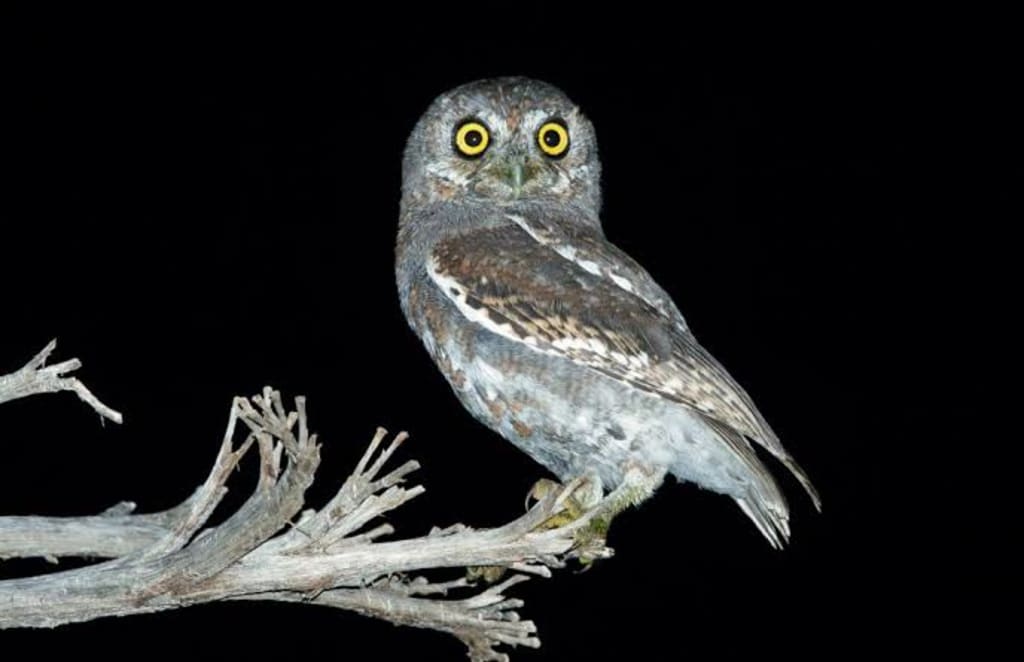
When we think of owls, we often imagine large, majestic birds with wide wingspans and piercing eyes. However, the world of owls is diverse, and some species are much smaller than expected. The elf owl (Micrathene whitneyi) holds the title of the smallest owl in the world, standing at just 5 to 6 inches (13 to 15 cm) tall and weighing about 1.4 ounces (40 grams)—roughly the size of a sparrow. Despite its small stature, this little raptor is a skilled predator and plays a vital role in its ecosystem.
Physical Characteristics
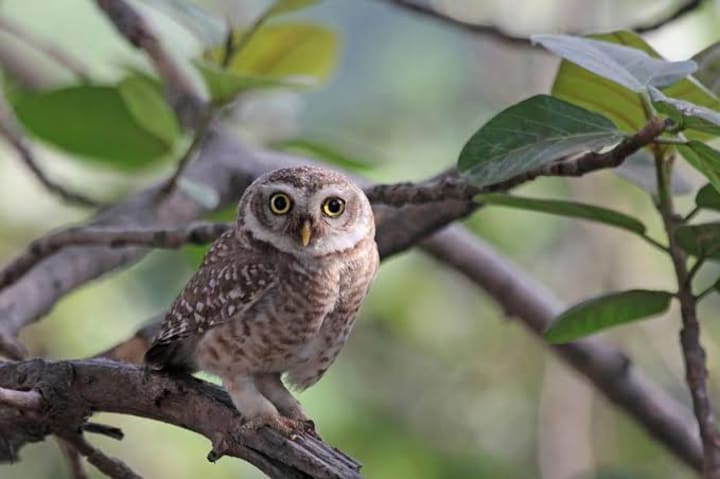
The elf owl has a delicate and compact body covered in soft, grayish-brown feathers that help it blend seamlessly with tree bark. Its round head lacks ear tufts, a common feature in many other owl species. It has large, yellow eyes that enhance its night vision, crucial for its nocturnal hunting habits.
One of the most fascinating things about the elf owl is its incredibly lightweight structure. Unlike larger owls that rely on brute strength, this tiny bird depends on its agility and speed to catch prey. Despite its miniature size, it has a strong grip and sharp talons, making it an efficient hunter.
Habitat and Distribution
Elf owls are primarily found in the southwestern United States (Arizona, Texas, New Mexico, and California) and Mexico. They prefer dry, desert-like environments, including saguaro cactus forests, mesquite woodlands, and thorn scrub habitats. These tiny owls often reside in abandoned woodpecker holes in trees and cacti, which provide safety from predators and harsh weather conditions.
During the winter, elf owls migrate to warmer regions in Mexico, making them one of the few owl species that undertake long migrations.
Diet and Hunting Techniques
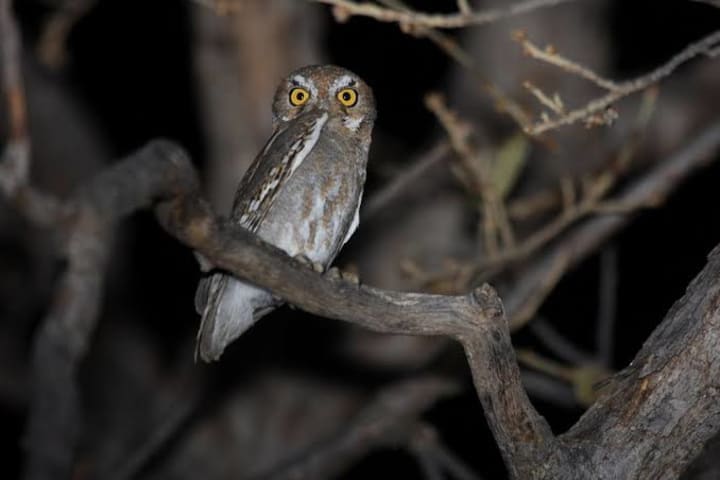
Unlike larger owls that hunt rodents and birds, the elf owl primarily preys on insects and small vertebrates. Its diet consists of:
Beetles
Moths
Grasshoppers
Crickets
Spiders
Scorpions (they are immune to scorpion venom)
Small lizards and frogs (occasionally)
Elf owls are strictly nocturnal hunters, using their excellent hearing and keen eyesight to locate prey in the dark. They are ambush predators, meaning they perch silently and wait for insects to come within striking distance. Once they detect movement, they swoop down with remarkable speed and accuracy.
Behavior and Adaptations
A Master of Disguise
Due to its small size and relatively weak physical strength compared to other raptors, the elf owl relies on camouflage and agility to survive. During the day, it stays hidden in tree cavities, perfectly blending in with its surroundings.
Feigning Death as a Defense Mechanism
One of the most interesting behaviors of the elf owl is its ability to play dead when threatened. If caught by a predator, the owl may go limp and appear lifeless, often causing the attacker to lose interest. Once the threat is gone, the owl quickly revives and escapes.
Vocalizations and Communication
Elf owls are known for their high-pitched, whistling calls, which are used for communication between mates and for defending their territory. Their calls are often described as soft chuckles or repetitive whistles. During breeding season, males produce a series of short, melodic hoots to attract females.
Breeding and Nesting
Elf owls nest in tree cavities or abandoned woodpecker holes, making their homes in oak, sycamore, and saguaro cacti. The breeding season typically occurs in spring and early summer.
Mating and Raising Young
The female lays 2 to 4 eggs and incubates them for about three weeks.
The male provides food during this period.
Once hatched, the chicks are blind and helpless, relying entirely on their parents for survival.
In about a month, they develop feathers and begin their first flights.
Elf owl parents are incredibly dedicated, working tirelessly to feed and protect their young from predators such as snakes and larger owls.
Threats and Conservation
While elf owls are not currently endangered, they do face threats, mainly due to habitat loss. Urbanization, deforestation, and climate change have led to a decline in their nesting sites. Conservation efforts focus on protecting desert habitats and ensuring that large cacti and old trees remain undisturbed.
Many organizations work to preserve the elf owl's environment, and bird lovers can help by supporting conservation groups or participating in programs that protect these incredible creatures.
Conclusion
The elf owl may be the smallest owl in the world, but it is an impressive and resilient predator. With its adaptations for survival, unique behaviors, and vital role in controlling insect populations, this tiny bird is an essential part of the ecosystem. By raising awareness and protecting their natural habitats, we can ensure that the elf owl continues to thrive for generations to come.
If you ever find yourself in the southwestern deserts at night, keep an ear out for the soft whistles of this tiny night hunter—you might just catch a glimpse of the world’s smallest owl in action!
About the Creator
Keep reading
More stories from INFO INSIDER and writers in Petlife and other communities.
Human Foods Dogs Should Never Eat
Dogs are beloved members of our families, and it’s natural to want to share the joys of our meals with them. However, not all human foods are safe for dogs. Some can cause mild discomfort, while others can lead to severe health issues or even prove fatal. This blog will cover common human foods that dogs should never eat and explain why they can be dangerous.
By INFO INSIDER about a year ago in Petlife
Off the Leash: The Essential Gear Guide for Adventurous Dogs
There’s something wildly freeing about unclipping the leash and letting your dog move the way they were built to. If you’re hiking in areas that truly allow off-lead exploration, your gear list shifts. No harness. No leash dragging through dust. Instead, it’s about smart, lightweight essentials that keep your dog safe, hydrated, and easy to manage when adventure gets messy. Long walks off lead are less about control and more about preparation.
By Shabbir Ahmad6 days ago in Petlife
Hottest in the Office
Dear Rafi, You’re very distracting to work around. For the first second I saw you the other day, I thought you were some type of executive. It took a moment to realize no, you were just the new guy, dressed up for the job he wants. Be still, my heart.
By Gabriel Shames5 days ago in Pride




Comments (1)
Hello, just wanna let you know that if we use AI, then we have to choose the AI-Generated tag before publishing 😊