
Dogs of War
Breed Selection is Key if You Expect a Dog to Be Useful in Defense of Your Home

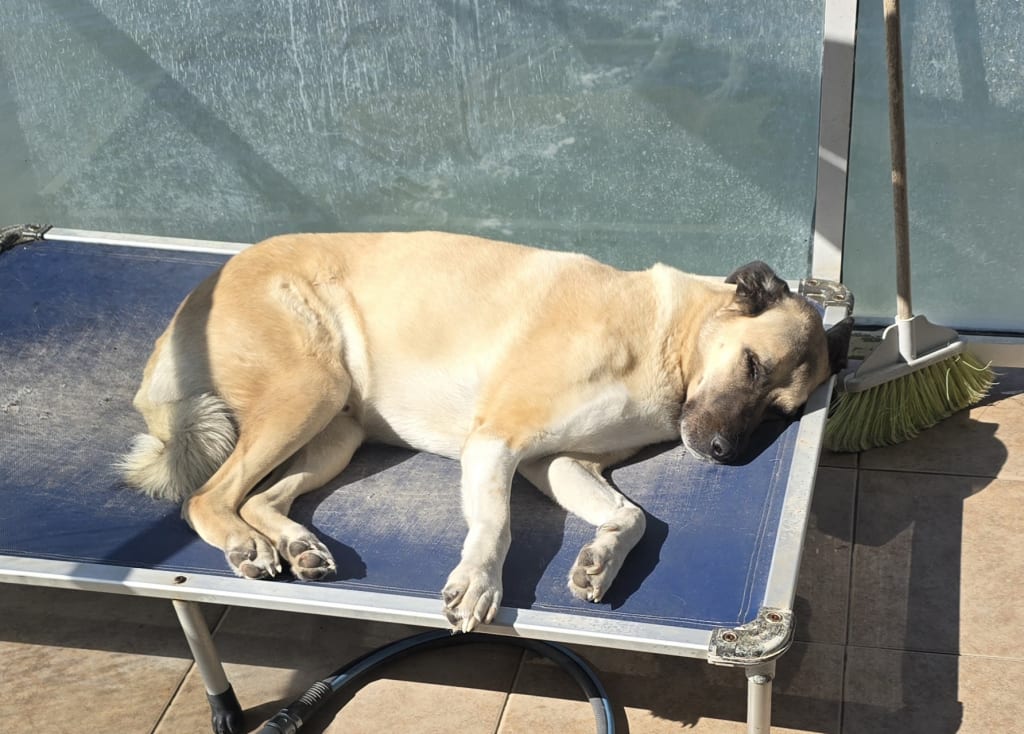
Recently, a friend relayed the story of someone he had known who had been killed in a home invasion. This person had thought they were safe because they had several large dogs on the premises all trained to attack anyone who might foolishly attempt a break in. Relying on dogs as the sole or even primary defense of your home is a very foolish idea. The right breed, used appropriately, can be highly effective as a supplementary tool to a well-designed home defense strategy, but they are never enough on their own. This was recognized even in the ancient world, but it is even more true today. One of the weaknesses of dogs for home defense is their susceptibility to poison. In the case of the story my friend had told me the invaders had simply poisoned his dogs, strolled into the home and killed him. Despite the story, it is not as easy to poison a dog as one might think. Although dogs will eat many things, most poisons have either a very rancid odor or awful taste and very few animals will eat them intentionally. The smells and tastes can be masked, but only to a degree. One of the reasons why it is a good idea to keep your dog well fed is that a well-fed dog is much less likely to eat something with a questionable taste or smell, than a dog which is ravenously hungry. The odor/flavor problem limits the number of potential dog poisons that are available, and that number is reduced even further by the necessity for any such poison to be extremely fast acting, killing or incapacitating in minutes, not hours or days.
It turns out that some dogs are also much less amenable to poisoning than others. For example, one of the dogs I have in my own home is a Kangal, also known as an Anatolian Shepherd. They are one of the oldest, or arguably the oldest, dog breed in the world and originally were found only in the Anatolian plains of modern-day Turkey. Kangal are very large dogs, and are very slow to mature, but once fully grown, non-neutered males can reach 150 pounds or more. My Kangal, Enki, is a neutered male and is (I think) fully grown. He weighs a mere 120 pounds, only about 25 pounds less than me incidentally. They are extremely powerful and have the strongest bite force of all dogs, ten times that of a pit bull. I have seen Enki reduce a giant pig femur to powdery dust in under 30 seconds, so I know that what is said about them is no exaggeration. They were used in the ancient world and still today primarily to guard flocks of sheep from large predators like hyenas and mountain lions. Fortunately, the breed has not drawn the attention of dog fighters, and you will never see one as a police dog. There are several reasons for this but ultimately, I believe it is because they are simply too dangerous to their human handlers. It's basically the same reason you don't see large wild cats used in fighting rings very often. Much like cats, Kangal are also extremely willful and very, very intelligent. They are known to be capable of understanding 500-1000 words or more and are impressive problem solvers. These attributes can make them notoriously difficult to control and train. That is not to say they cannot be trained, because they surely can. It is just that the approaches used in standard dog training don’t always work with them. They do not respond to the same rewards and punishments as other dogs and do not have the same natural desire to please as many dogs. It takes a different set of tools and techniques and a great deal of patience to train a Kangal, but it is well worth the extra effort in my estimation. A well trained Kangal is one of the most joyful and pleasant dogs to be around. Despite their size and fearsome appearance, they have a gentle personality and are great with kids, other dogs, and other people. They are very calm and sleep a lot and they happen to make fantastic guard dogs for the home for several reasons. First, they are natural defenders. They were born and bred to defend and thus have an innate drive to protect whatever space they call home. This drive can get them into trouble and can result in dangerous situations for dog owners who do not know how to handle them or do not train them appropriately as puppies and subadults. Stories of Kangal claiming their owners couch or bed or even entire rooms of their home as their own abound. There have been injuries and even deaths of Kangal owners who did the wrong things and ended up in situations they should not have with dogs that were not controllable.
Resistance to poison is another trait possessed by Kangal that makes them excellent home defenders. It is partly natural and due to their large size and slow metabolism, but because they were also used as dogs of war a certain level of resistance to poisoning has also been bred into them. There's a story from the ancient world of a tribe that kept 20 Kangal as their defenders. A neighboring tribe, thinking to take their land, sent 100 men to attack and they managed to feed poison to the dogs. As the dogs began to foam at the mouth and fall over one by one, they moved past them thinking they would have an easy victory. Suddenly each of the poisoned dogs rose from the ground and attacked the men killing all 100 in a particularly brutal fashion as they had been driven partially mad by the poison. Ten of the dogs were also killed in the battle and those that survived had to be put down as once a Kangal has killed a human it can never be trusted around people again. The dead dogs were buried as heroes and their story has been passed down and is remembered to this day. The point of the story is not to suggest Kangal are totally impervious to poison or invincible because they absolutely are neither. A bullet will kill a Kangal as surely as it will kill a man, though in the case of Kangal you should be prepared to fire several, and bring a large caliber weapon, because they are tough. Very tough.
About the Creator
Everyday Junglist
About me. You know how everyone says to be a successful writer you should focus in one or two areas. I continue to prove them correct.
Keep reading
More stories from Everyday Junglist and writers in Petlife and other communities.
RIP Chester
The oriental short hair cat known to my wife and I as Chester died last week in our home in Mexico from complications of kidney disease exacerbated by malnutrition and abuse. I only knew him for about three weeks but he touched my life in a way few cats ever have and I felt compelled to share at least a part of his story after we lost him. We had rescued Chester from the home of a formerly well respected oriental short hair breeder who had fallen on very hard times and was now living in an abandoned property only a few miles from us. Given the condition of the property, Chester, and the three fellow oriental short hair companions we rescued alongside him it seems that reputation was not deserved. In conversation she revealed a shocking lack of understanding or knowledge of some of the most basic requirements of cat care, especially for a breeder. Moreover she displayed with her behaviors and attitudes a coldness and lack of sympathy which suggested to me that she did not love her cats. I can't even say she really liked them, at least not for what they were, but only for what they could do for her. Moreover, they reacted to her presence with fear and aggression, the exact opposite of what a healthy human cat relationship should look like. It was frankly disgusting and I was appalled beyond words. The property itself was essentially an abandoned mobile home set in a small unkempt lot covered in rusted metal junk, weeds, and a few sad tufts of grass. It had no running water or refrigeration or heat, and was as big a disaster on the inside as the out. It reeked of urine and feces with overflowing litterboxes and trash strewn about, though it seemed she had tried to clean up some just prior to our visit. The place had a very bad feeling about, and an unusual, impossible to place odor above and beyond the cat urine. Natural gas maybe? Each of the two times I went there I was sick for hours after. The bad feeling was of a both physical and let's call it spiritual nature. I hate to say the word 'evil' because it is so loaded with religious connotations, but it is the best I can come up with. I hated it there, and even thinking about it now is making me feel a little nauseous. I believe there is a reason the property has been abandoned for so long, and the ominousness of it made my concern and fear for the cats safety even higher then it already was after talking with their owner.
By Everyday Junglistabout a year ago in Petlife
A Dart at Dusk
Seconds ago, the sullen sun set on the two of us… my exuberant furry companion and me. A fresh breeze embraces us, delivering welcome relief from the day’s oppressive heat. His typical stumbling and staggering along — apace with a sloth — has turned into trip-trapping, high-stepping, almost skipping along.
By Angie the Archivist 📚🪶4 days ago in Petlife



Comments (2)
Dogs are the best!
I love dogs. Dogs are awesome. Dogs of war are cool! They protect