
Decoding the Feline Gaze: How Cats Use Facial Expressions to Communicate
Groundbreaking Research Reveals How Cats Form Bonds Through Subtle Facial Cues

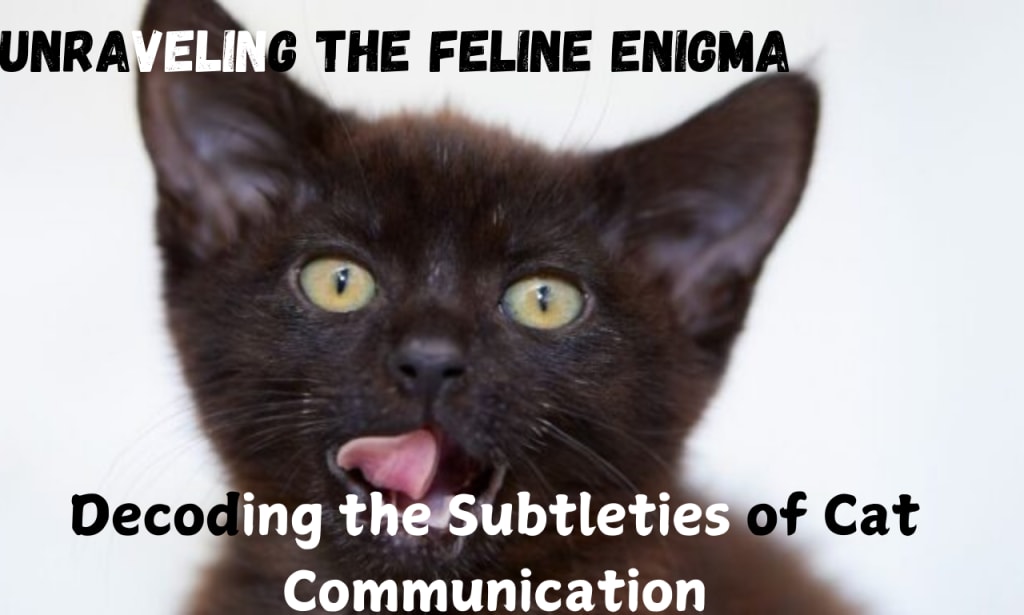
If you’ve ever felt like your cat was silently judging you—or showering you with love—it might not be your imagination. Cats, it turns out, have a surprisingly nuanced way of expressing themselves, not just to humans but to each other. Recent research by the University of Haifa has uncovered that cats use facial expressions and mimicry to communicate and build relationships within their species.
This discovery offers a fascinating glimpse into the secret social lives of cats and challenges the notion that felines are solitary and aloof creatures.
A New Understanding of Cat Communication
For years, cat owners have observed their pets’ seemingly expressive faces, from wide-eyed curiosity to half-lidded serenity. But now, science has given credence to these observations. Researchers from the University of Haifa’s Tech4Animals Laboratory conducted an in-depth study, analyzing how cats communicate through subtle facial movements.
Their study took place over the course of nearly a year, from August 2021 to June 2022, at the CatCafe Lounge, a nonprofit rescue organization in Los Angeles. The researchers used artificial intelligence to analyze 186 interactions among 53 adult domestic shorthaired cats. These cats—27 spayed females and 26 neutered males—offered a diverse range of interactions that shed light on feline social behavior.
AI Meets Feline Communication
The research relied heavily on advanced AI technologies to decode the subtle and complex ways cats use their faces to interact. Facial mimicry, for instance, was a key behavior observed. This phenomenon, where one cat mirrors the facial expressions of another, plays a significant role in developing bonds and fostering trust.
Subtle shifts in a cat’s eyes, ears, and whiskers were all indicators of their mood and intentions. These movements, though often imperceptible to the untrained human eye, were meticulously captured and analyzed by AI, revealing a rich tapestry of non-verbal communication.
How Cats Build Bonds
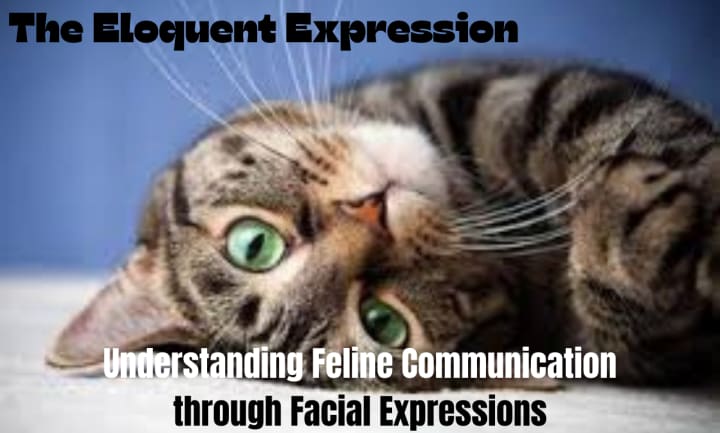
The findings suggest that facial expressions are more than mere reflexes in cats—they are tools for connection. Cats were observed using these expressions to communicate comfort, establish social hierarchies, and even resolve conflicts. For instance, a cat might soften its gaze and relax its whiskers to signal friendliness, while a slight narrowing of the eyes might indicate caution or irritation.
Perhaps most intriguingly, mimicry appears to play a central role in strengthening bonds. When one cat mirrored the facial expression of another, it was often followed by cooperative behavior, such as grooming or resting together. This mimicry fosters a sense of trust and understanding, much like in human interactions.
Implications for Cat Owners and Rescuers
This research has profound implications for cat owners, rescuers, and anyone working to improve the welfare of domestic cats. Understanding the facial cues of cats can help humans better interpret their needs and emotions, ultimately improving the bond between feline and human companions.
For animal rescuers, these insights could enhance strategies for integrating cats into new environments or multi-cat households. Recognizing the subtle ways cats communicate can reduce stress and improve socialization efforts, making it easier for cats to form positive relationships with both humans and fellow felines.
A Window into Feline Empathy
While dogs are often celebrated for their expressive faces and emotional intelligence, this study reveals that cats are just as capable of nuanced social interaction. Their facial mimicry and expressions hint at a level of empathy previously underestimated in felines.
Cats’ ability to communicate through facial expressions underscores their complexity as social beings. These findings challenge the stereotype of cats as solitary and indifferent creatures, painting a picture of animals capable of rich emotional lives and intricate social bonds.
What This Means for Future Research
The study by the University of Haifa is just the beginning. It opens the door for further exploration into the social dynamics of cats, as well as their interactions with humans. Future research could investigate how these facial expressions influence cat-human relationships and whether humans unconsciously mimic their cats’ expressions in return.
Understanding feline communication more deeply may also provide insights into improving the welfare of stray and feral cats, as well as refining methods for their care and rehabilitation.
A Shared Language of Love
The next time your cat looks at you with half-closed eyes or flicks its whiskers just so, consider that they might be “speaking” to you in their own subtle way. Cats are far more socially attuned than many give them credit for, and their ability to communicate through facial expressions reveals a shared language of trust and affection.
This groundbreaking study reminds us that the bonds we share with animals, especially cats, are not one-sided. By paying closer attention to their cues, we can deepen our understanding and appreciation of the animals who share our lives.
About the Creator
mureed hussain
Hi, I’m a creative writer passionate about health & wellness, love, longevity, aging, and pet care. With extensive Quora experience, I craft engaging posts, thoughtful questions, and insightful answers.
Find me at>>[email protected]
Keep reading
More stories from mureed hussain and writers in Petlife and other communities.
Angel in Disguise: A Golden Retriever’s Heroic Act of Love
The wilderness of British Columbia is a place of breathtaking beauty—a sanctuary of towering trees, serene rivers, and an air of tranquility that soothes the soul. But within this idyllic backdrop lies a stark reality: nature’s wild predators, stealthy and powerful, can sometimes invade human spaces. This truth came to life in the most terrifying way for an 11-year-old boy whose quiet afternoon turned into a life-or-death ordeal.
By mureed hussainabout a year ago in Petlife
A Dart at Dusk
Seconds ago, the sullen sun set on the two of us… my exuberant furry companion and me. A fresh breeze embraces us, delivering welcome relief from the day’s oppressive heat. His typical stumbling and staggering along — apace with a sloth — has turned into trip-trapping, high-stepping, almost skipping along.
By Angie the Archivist 📚🪶4 days ago in Petlife


Comments
There are no comments for this story
Be the first to respond and start the conversation.