Beasts of the Wild
Lions and tigers and bears - oh my! Exploring majestic beasts in their natural habitats.
The Red and the White Beauty
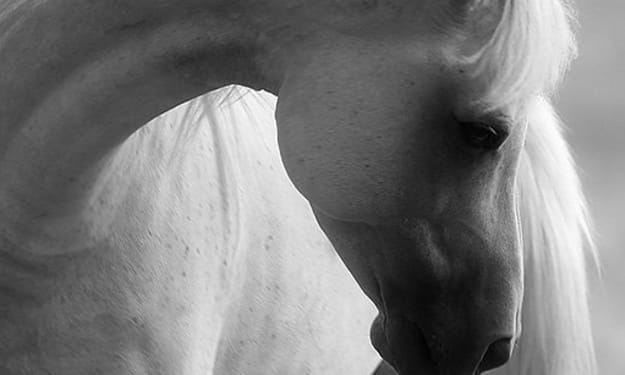
Red flows through the snow covered forest as the snow falls, each footstep silent as the red runs from the evil behind her, the blonde hair flowing around the red, her red lips moist with vapor, blue eyes looks for a safe place to hide. Red runs through the moon lit forest, cold and lost, frightened by the darkness, she runs until she cant run anymore.
By Sierra Costanzo8 years ago in Petlife
Why I Quit My Career in Dolphin Training
Six months ago I left the dolphin industry after twelve years. The reason for me initially leaving was the ending of my contract. However the decision to not roll right into another dolphin job was a long and tough debate with "myself" and who I wanted to be.
By Nefel Ibata8 years ago in Petlife
How Do Zoos Prepare for Hurricanes?
Preparing for a hurricane is hard enough as it is, but it's even more complicated when you have thousands of wild animals to protect and care for. While pet owners are generally urged to evacuate, zoos do not have that ability. For one, the stress of travel, especially a last-minute relocation, can harm and even kill many animals. Hurricanes also are not easily predictable. Relocating animals can end up putting them in greater danger, even if they do survive the evacuation process. By the time zookeepers are positive they're in the path of a hurricane, it's often too late to pack up the animals, enough food and bedding for an indeterminable amount of time, and any other necessities onto a truck and face the hundreds of miles of evacuation traffic. Therefore, zoos generally hunker down for the long haul when a natural disaster is predicted. So how do they protect thousands of animals from something as vicious as a hurricane?
By Chelsea Lynne8 years ago in Petlife
A Flipping Good Time
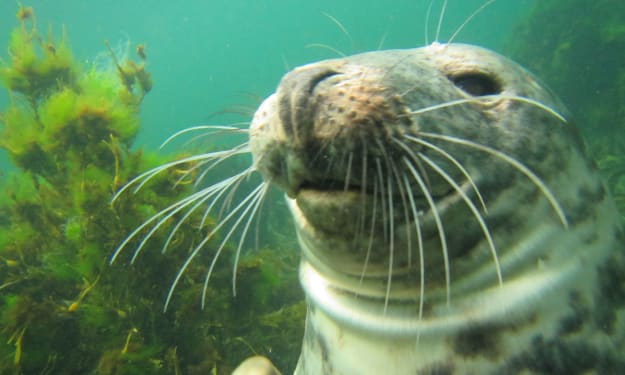
My favourite dive to date wasn’t somewhere exotic and tropical but actually in British waters – the Farne Islands. Anyone who has visited these islands will have seen the large seal colonies that populate the areas and I had the honour of diving amongst these friendly puppy-like creatures.
By Jennifer Rasal8 years ago in Petlife
Mahopac Author and Conservationist Gives Voice to the World’s Big Cats. Top Story - September 2017.
As a child, animals put Alan Rabinowitz at ease. His misfiring neurons would follow suit and put his stuttering problem at bay. This opened an avenue for just about the only conversations had until he was 19, and yielded common cause with the recipients. The captive connection forged with the jaguars at the Bronx Zoo eventually propelled him to becoming one of the world’s leading big cat experts and author of numerous books. Among them is his latest—The Indomitable Beast.
By Rich Monetti8 years ago in Petlife
Largest Creatures in the Sea
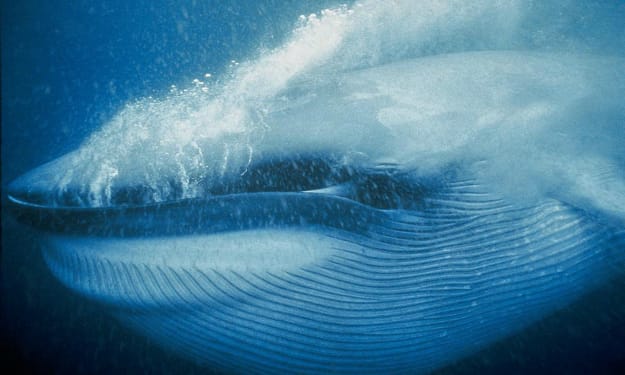
The ocean is absolutely packed with animals of all shapes and sizes. From the smallest plankton to the largest whale, the animals in the ocean show an amazing diversity in size, shape, and lifestyle. This diversity makes them so fascinating to study.
By Clare Scanlan8 years ago in Petlife
Cow Sharks
Little is known about the mysterious cow shark as it spends most of its life in secret living in the deepest, coldest, darkest parts of the ocean well below the depth most divers reach. Some species, however, do come up to shallow water to give birth and to feed at certain times of the year.
By Clare Scanlan8 years ago in Petlife
Exotic Pets: What is a Sugar Glider?
Sugar gliders (Petaurus breviceps) are originally from Australia, Tasmania, Papua-New Guinea, and Indonesia. They have been bred in captivity in the USA and UK for around 15 years. They are part of the marsupial infraclass and their closest relatives include possums, koalas, wallabies, and kangaroos. The name "sugar glider" comes for their preference for sweet foods such as nectar and their ability to glide through the trees, using a membrane similar to a flying squirrel. Sugar gliders are nocturnal marsupials which mean that they raise their young in a pouch and sleep during the day. They are very small mammals, averaging about the size of a hamster. Adults weigh between 4 and 5 ounces, whereas babies are no larger than a grain of rice at birth.
By The 'A' Girl8 years ago in Petlife