Beasts of the Wild
Lions and tigers and bears - oh my! Exploring majestic beasts in their natural habitats.
10 Beloved Animals on the Brink of Extinction
As the planet spins around on its axis, species of all kinds are forced to find new ways to survive. While this is the natural way of things, it seems humans play a larger role in contributing to the future of what our world will eventually become. Whether it be on a political or personal level, our fellow earthlings are going through trying moments, living a life where their very existence has come into danger. While there are organizations dedicated to ensuring protection for some such species, climate change and criminals pose an immense threat to the future of their well-being. By raising awareness, we can come together and join in on the work these organizations are doing, reduce our use of wasteful materials, and approach the way we consume at a more conscious level in order to protect beloved animals on the brink of extinction.
By Michelle Estevez7 years ago in Petlife
Thylacine
Are Thylacine extinct or still alive? The Thylacine are also known as the Tasmanian Tiger. The Tasmanian wolf is a carnivorous marsupial that once lived in Australia and New Guinea. These animals were hunted to extinction by men because we thought of them as killers but there are no reports of a Thylacine attack on people. Also, these creatures are known to be very shy creatures. A marsupial is an animal that has a pouch that their joey stays in until they are a year old. The Tasmanian Tiger is a light brown dog looking creature that has black stripes on its back which is why the Thylacine is called the Tasmanian Tiger. Male Thylacines have a pouch that protects their testicles from harm during mating. The Thylacine has the widest yawn gap which enabled them to open their mouth wider than most animals.
By Maria Johnson7 years ago in Petlife
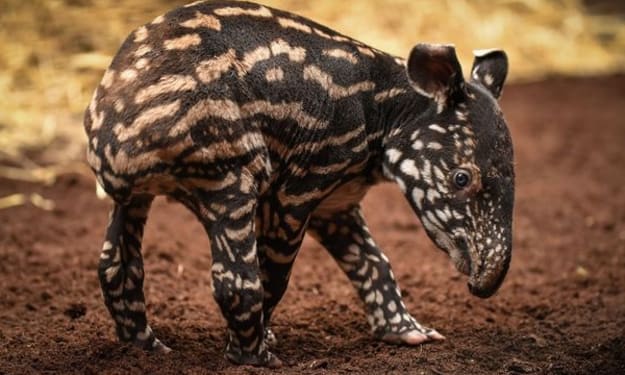
The Cutest Animals You've Never Heard Of. Top Story - October 2018.
I think we should start off by saying I'm a completely terrible person. Here I am praising the Photo Ark and my cover photo isn't even from the Photo Ark. I should be permanently cut-off from society in a large metal box with just enough food to survive but not near enough to be happy.
By Tristan Spohn7 years ago in Petlife
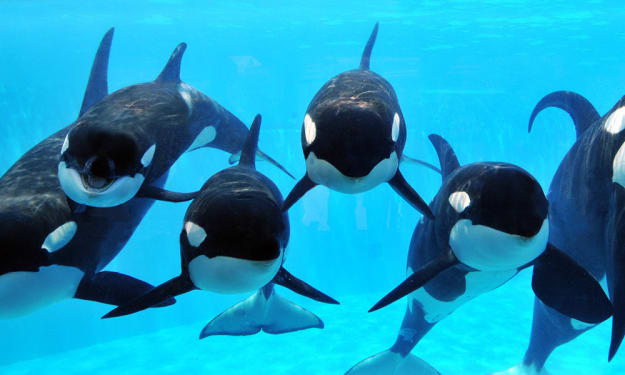
Two More Southern Resident Orcas Are Ailing—and Three Are Pregnant
According to researchers who are focused on the Southern Resident orca population, two more whales are falling ill as a result of the lack of salmon they depend on for their survival. The first animal in question is K25, also known as Scoter. He's a 27-year-old adult male who has been documented in aerial photographs for the last decade. Researchers say that in recent weeks, Scoter has been showing signs of becoming thinner than he was in previous years. The trouble for the endangered mammal began last year when his mother, K13, also known as Skagit, died. This is because Skagit, like all orca matriarchs within the Southern Resident pods, helped her family and other pods in navigating the Salish Sea for salmon before capturing and sharing the newly caught prey. Male orcas rely on help from their mothers, sisters, female cousins, nieces, and aunts to find and track down prey and meet their much larger energy demands. Studies have shown that adult orca males tend to have higher risks of dying following their mothers' deaths. This puts Scoter at a higher risk of dying.
By Jenna Deedy7 years ago in Petlife
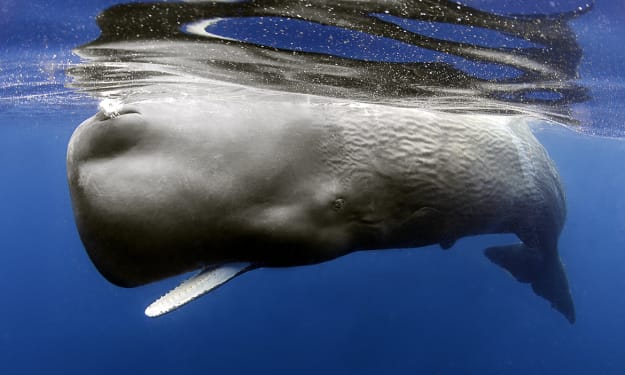
Six Facts About the Sperm Whale
The sperm whale (Physeter macrocephalus), made famous by Herman Melville’s Moby Dick, is the largest species of toothed whale in the world. At around 60 feet in length and weighing in at around 120,000 pounds, these predatory mammals are found throughout all of the world’s deep oceans and are regarded as one of the most extreme animals on the planets, due to being able to dive down to such great depths. So, here are some six facts about the sperm whale.
By Jenna Deedy7 years ago in Petlife
10 Animals We Wish We Could Keep as Pets (But Really Can't)
Many, but not all, states in the US have laws prohibiting adoption of many wild or exotic animals. The popularity of adopting wild animals among people living in these states, or other parts of the world where wild animals can be legally kept, has increased dramatically in recent years. Unfortunately, the decision to adopt these animals is often short-sighted. Adopting a wild animal is not the same as having a pet, and as a result, these animals are often mishandled or abandoned once the adopter realizes how substantial the responsibility is. There are also many instances of adopted wild animals harming humans, either directly or unknowingly through the diseases they carry. With that in mind, here is a list of some of the many animals we wish we could keep as pets.
By Robby Bernstein7 years ago in Petlife
When the Water Turns Red: How Red Tide Affects Florida’s Marine Animals
Karenia brevis is a type of dinoflagellate that is known to produce toxins that can accumulate in marine organisms like shellfish, which can lead to poisoning when eaten by other animals. It’s adapted to get nutrients on the West Florida Shelf Oligotrophic where it feeds on copepods and their feces. In order for it to thrive, it also needs low light and an upwelling to initiate a bloom. The bloom occurs in four stages which include initiation, growth, maintenance and termination. Yet researchers have yet to determine which stage could serve as a primary factor to a bloom maintenance since there are multiple sources that are involved in the process. What is known, though, is that once a bloom begins, a combination of winds and current push the newly formed red tide to shore. As a result, the dangers it can have on animals begins to arise when K. brevis gets ingested because after all, they do produce a neurotoxin that bioaccumulate up the food chain of Florida’s marine ecosystem. This toxin can also be airborne when the cell breaks up from wave activity.
By Jenna Deedy7 years ago in Petlife
Silent No More
Loro Parque. Situated in Puerto de la Cruz, Tenerife, it is apparently considered "the best zoo in the world" according to the park's website and numerous posters plastered across the island. It's hard to ignore the appeal of such a place that offers the world's largest indoor penguin enclosure and Europe's largest shark tunnel, whilst also playing host to a variety of different animal shows throughout the day. So, having been in Tenerife myself recently on holiday with family it seemed only right that which should pay a visit of our own to such a thrilling place. And to be quite honest, from the family-friendly exterior it's hard to imagine that anything could be wrong with a place so driven by the conservation of endangered animals. However, as most people should have come to understand by now, all is not as it seems from the outside looking in and after doing my own research off of knowledge I vaguely had already I discovered something that needs to be uncovered.
By Beth Titchmarsh7 years ago in Petlife
Behind the Scenes
The first elephant to be born in captivity in the western hemisphere went by the name "Packy", he was an Asian elephant who lived until the age of 44, which is premature for this breed of elephant as they normally live up to 60 years. Although Packy was the firstborn in captivity in the US, elephants being subjected to capture and taming started more than 4,000 years ago. Many people assume because an elephant has been tamed that its natural place is with humans, which isn't the case because elephants aren't domesticated animals as it takes generations after generations for an animal to become domesticated. Now there are still over 15,000 elephants in captivity for our own entertainment.
By Lillie Maria7 years ago in Petlife