
cat with long whiskers - (A Feline Marvel!)
cat with long whiskers
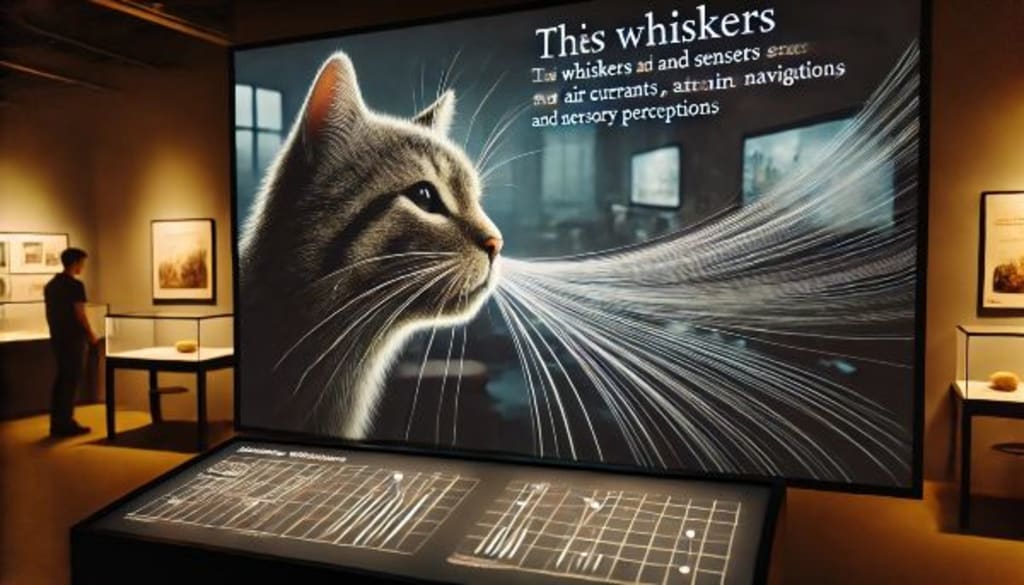
Whiskers are one of the most fascinating and vital features of a cat. Their unique and prominent presence often captivates cat lovers and animal enthusiasts alike. When you look closely at a cat, you may notice how their long, fine whiskers seem almost magical, twitching with every movement, picking up the slightest changes in their environment. They aren't just adorable; these whiskers are a key part of how cats interact with the world, aiding in navigation, communication, and survival.
In this article, we’ll dive into the world of cats with long whiskers, exploring how these whiskers contribute to their behavior, health, and hunting abilities. We will also discuss why they are such a marvel of nature, and why every cat lover should take the time to appreciate these amazing sensory tools.
Related: you may also read
The Function of Whiskers
Whiskers, or vibrissae, are specialized sensory hairs that serve a variety of purposes for cats. Unlike regular fur, whiskers are deeply embedded in the cat’s skin and are connected to sensitive muscles and nerves. This makes them far more sensitive than regular hair and allows them to detect even the smallest changes in the environment.
Whiskers play an essential role in a cat’s sense of touch and spatial awareness. When a cat moves through its environment, its whiskers help it gauge the width of spaces and detect objects in the cat's path. This is why you often see your cat pausing to feel its way around a narrow opening or when it is about to squeeze through a small space. The whiskers tell the cat if it will fit through or if it should turn around.
Beyond navigation, whiskers also help cats in hunting. As natural predators, cats use their whiskers to assess the proximity of prey. When a cat catches a mouse or any other small animal, the whiskers around the face and especially on the legs provide vital sensory feedback. The whiskers tell the cat if the prey is still alive or if it's in a vulnerable position, ready to be caught. This makes whiskers essential to their survival instincts.
The Length of Whiskers
One of the most striking features of cats with long whiskers is the sheer length of these sensory tools. In many cats, the length of the whiskers is proportionate to the width of their body. This is why larger cats tend to have longer whiskers compared to smaller ones. Breeds like the Maine Coon, the Norwegian Forest cat, and the Ragdoll often have whiskers that measure several inches long, which helps them navigate through their surroundings with greater ease.
Interestingly, whisker length is not just a measure of size. It is also an adaptive trait that plays a role in a cat’s environment and lifestyle. A cat’s whiskers are designed to be as long as necessary to perform their function of measuring space and detecting objects. In fact, the whiskers’ length correlates directly to how much space the cat needs to navigate. This means that long whiskers in larger cats help them explore larger areas and squeeze through tighter spots that smaller cats might not be able to navigate.
Why Do Cats Have Long Whiskers?
Whiskers are not just for show—they are an essential part of a cat’s sensory system. Long whiskers are used to detect vibrations in the air and sense environmental changes. For example, when a cat moves into an area where the airflow changes, such as near a wall or during a gust of wind, the whiskers pick up on these subtle movements. This allows the cat to adjust its body accordingly, aiding in maintaining balance and awareness.
For cats, long whiskers are also crucial for hunting. Cats are predatory animals, and they rely on their whiskers to sense small movements or disturbances in the air, which may indicate the presence of prey. Cats are often nearsighted, meaning they can't always rely on their vision to detect prey that is too close. Their whiskers allow them to sense vibrations in the air or shifts in the environment, which helps them target their prey even in low-light conditions.
How Whiskers Affect a Cat’s Communication
A cat’s whiskers are also a major component in its communication with humans and other animals. When cats are happy and relaxed, their whiskers tend to be in a neutral position, pointing forward or relaxed. However, when a cat is frightened or feeling threatened, its whiskers will often move back toward the cheeks. Similarly, if a cat is excited or curious, its whiskers might extend forward or fan out in a display of alertness.
This ability to adjust the position of their whiskers helps cats convey their emotions. A cat with whiskers pulled back is likely to be stressed or frightened, while one with whiskers pointed forward is often more curious or in hunting mode. This is why paying attention to a cat’s whiskers can give you insight into how the cat is feeling. It’s a subtle but important way in which cats communicate their mood and intent.
The Health Implications of Whiskers
Whiskers are so sensitive that they can be affected by a variety of factors, including stress, injury, and illness. For example, cats who experience whisker fatigue may show signs of stress and discomfort. Whisker fatigue happens when the whiskers are overstimulated, such as when they brush against objects too much or when the cat experiences constant pressure, like when eating from a narrow bowl. This discomfort can make a cat feel disoriented or even anxious.
It’s also important to note that whiskers are not permanent fixtures; they go through natural growth cycles. Whiskers shed and regrow just like any other hair on a cat’s body. If a cat loses a whisker due to injury or stress, it will typically grow back over time. However, sudden or excessive whisker loss could indicate health problems such as allergies, infections, or even trauma, which should be addressed by a veterinarian.
Fascinating Facts About Cats with Long Whiskers
Whiskers Are Proportional to Their Body: As mentioned earlier, the length of a cat’s whiskers is often proportional to its body size. Larger cats like the Maine Coon can have whiskers that measure up to six inches or more, helping them navigate larger spaces.
Whiskers Are Specialized for Sensing: The whiskers on a cat’s face are highly specialized sensory tools that help cats detect air currents and feel their surroundings. In fact, whiskers are even more sensitive than a cat’s paws!
Whiskers Aid in Social Behavior: Cats use their whiskers to help communicate with other animals. Whether they are interacting with another cat or expressing their mood to humans, whiskers provide valuable social signals.
Whiskers Are Not Just for Cats: While cats are perhaps the most famous users of whiskers, many other animals, including dogs, seals, and even rodents, use whiskers for similar purposes. Whiskers help these animals interact with their environment and perform specific tasks, such as hunting or avoiding obstacles.
Whiskers Are Used to Judge Gaps: When a cat encounters a narrow gap or opening, it will often pause and use its whiskers to gauge whether or not it can fit through. This is an incredibly useful skill for cats when navigating their territory or escaping danger.
Conclusion: The Marvel of Cat Whiskers
Whiskers are much more than just adorable features on a cat's face; they are incredible tools that help cats navigate their world with precision, grace, and awareness. From measuring spaces to sensing changes in the environment, whiskers play a vital role in a cat's ability to hunt, communicate, and protect themselves. Whether it’s a Maine Coon with its six-inch-long whiskers or a playful kitten exploring its world, each cat’s whiskers are a marvel of nature, fine-tuned to enhance its survival and well-being.
About the Creator
Keep reading
More stories from writers in Petlife and other communities.
The Summer I Was Chosen by a Northern Mockingbird
During the long, suspended days of the pandemic, a wild mockingbird began visiting my driveway and chose me, again and again. What started as a strange encounter became a brief, meaningful connection that I still carry with me.
By Erica Roberts 7 days ago in Petlife
Bird's advice
A man once set up a trap to catch birds. By chance, a small bird became ensnared, and the man quickly captured it. The bird, trembling but calm, looked at him and spoke: “O human! You have eaten countless deer, goats, and chickens. Compared to all that, what difference does my little body make? The small amount of meat on me will barely fill your stomach. But if you release me, I will give you three pieces of advice—advice that, if you follow, will be extremely beneficial to you.
By Sudais Zakwan7 days ago in Petlife




Comments
There are no comments for this story
Be the first to respond and start the conversation.